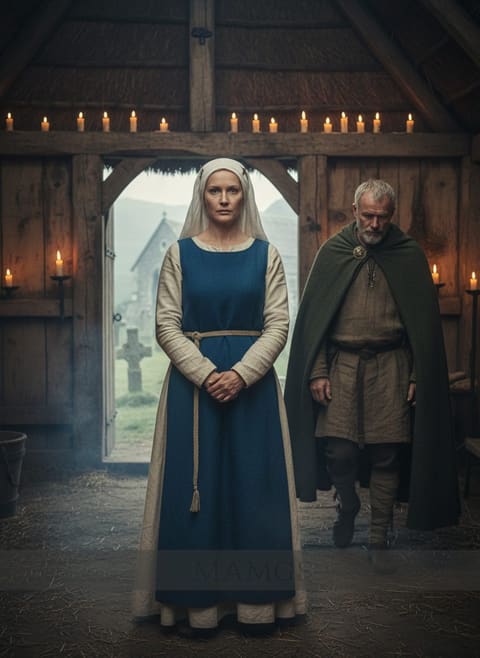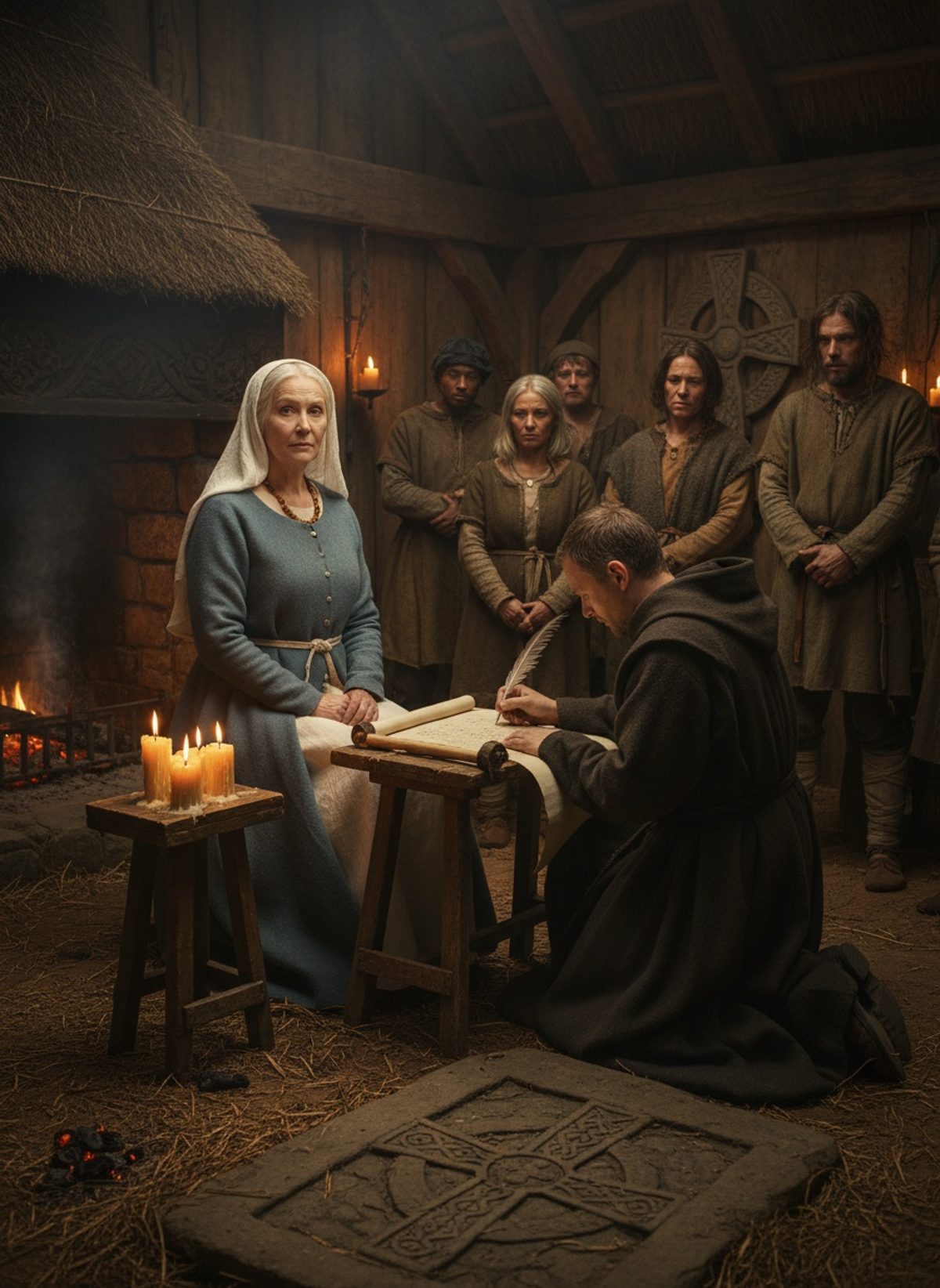
Anglo-Saxon England was a land of rigid hierarchies and unforgiving social norms, bound by tradition and duty. Yet, on her deathbed, Æthelgifu of Hertfordshire reached beyond these confines to leave a lasting legacy of compassion. Her remarkable act of freeing her enslaved people, one by one, by name at the altar, echoed through the halls of history in ways no tapestry of war or royal decree has done.
The Unsung Heroine of Hertfordshire
Æthelgifu was, by the standards of her time, a woman of significant means. As a noblewoman in tenth-century Hertfordshire, she commanded respect and resources, including the ownership of several enslaved people. Enslavement was a grim fact of life in the medieval world, deeply interwoven into the fabric of society. It was not just a nod to tradition; it was a necessity — a means to power and an indication of status. But little did her contemporaries know, Æthelgifu's thoughts wandered far from these conventions, toward the higher altar of morality.
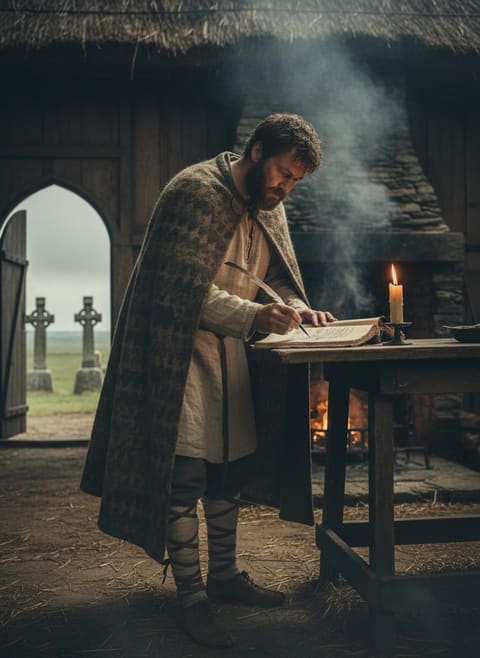
The specifics of Æthelgifu's life remain largely cloaked in mystery, the tapestry of her existence woven from scant threads of historical record. Yet her will stands out like a bright stitch, a preserved testament to her extraordinary final act. There, penned with intention and care, one can find the delicate inked lines naming each of her enslaved individuals, crafted with a dignity and individual humanity that history too often erased.
Æthelgifu’s decision reflected not merely an act of personal virtue but a defiance of societal expectations. In a world where a person's worth was often calculated in livestock and landholdings, letting go of such assets voluntarily was both audacious and bewildering. Yet her will reveals a quiet rebellion against the norms that dictated her life and times, freeing the men and women who had served her so faithfully. This was no reckless gesture. Each name lovingly recited and inscribed was a bold declaration of individual worth — an assertion that in the eyes of Æthelgifu, their own destinies mattered too.
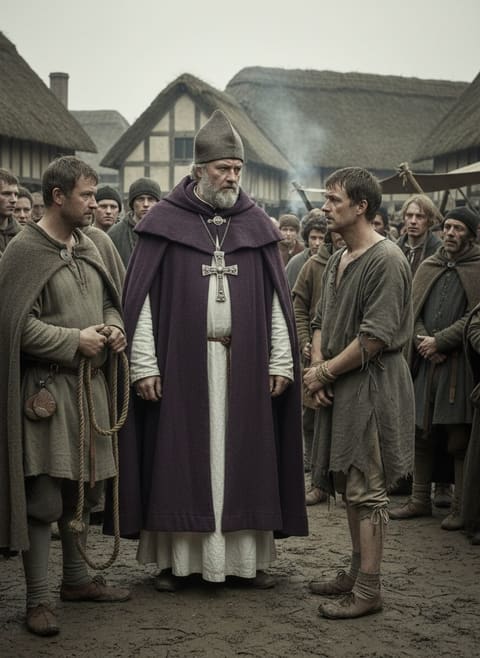
Read next: The Day a Saxon Bishop Stood Alone and Freed a Market Full of Slaves
A Testament Written in Names
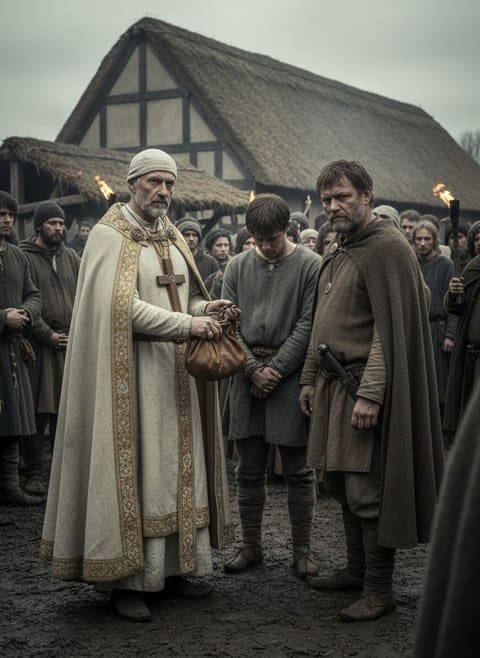
In the stone echo chamber of the church, with the solemn whisper of holy chants as a backdrop, Æthelgifu’s priests oversaw a ceremony unprecedented in scope and spirit. Each name called was a person unshackled, each a story untangled. Through parchment, Æthelgifu not only released their physical bonds but also offered a testament to their personal identities — each name a beacon of individuality in a world where enslaved people were often anonymous.
But why did Æthelgifu take such an unusual step? Was it the whisper of her own conscience that guided her hand? Perhaps an intrinsic understanding of what it meant to rise above the legacy of one’s ancestors, to mold an identity not constrained by wealth and status, but enriched by compassion?
This act must have resonated in profound ways, for the enslaved people in question were woven into her life tapestry, critical to the functioning of her household and estates. We can only imagine their emotions, tethered between disbelief and hope, as they heard their names lifted in freedom. This was not only a legal act; it was a deep moral statement — one that echoed long after her death and highlighted an otherwise neglected narrative amid the grand chronicles of kings and warriors.
Such unorthodox benevolence ripples through the ages, offering a glimpse into the complexities of medieval life beyond the swords and shields, beyond the monasteries and markets. It forces us to reconsider the roles women like Æthelgifu played, not just as passive inheritors of estates but as active shapers of their destinies and those under their care.
Read next: The Day a Saxon King Waded Into the Sea to Prove a Point
The Legacy of Compassion
The parchment bearing Æthelgifu's final wish survived the ravages of time, weathering the Norman Conquest and the dissolution of fiefdoms. It remains today not because of the sweeping political landscapes it altered, but for the quiet revolution it inspired. Æthelgifu’s story is a stark reminder that even in eras thought impervious to individual attempts at social change, powerful acts of kindness could indeed alter perspectives.
Her actions invite us to reflect on the unrecorded narratives that history often forgets. While palaces and battlefields capture our imaginations, it is in the everyday acts of humanity that the true spirit of a civilization rests. The names Æthelgifu took the time to record were more than formality that day — they were acknowledgments of the enslaved people as individuals worthy of identity and autonomy.
While the world around her was rooted in rigidity, Æthelgifu’s last wishes sang of flexibility and understanding. And so, her legacy is not etched merely in lineage or land but in the moral courage to challenge the status quo, to lend a voice to those unheard. Her actions offer a potent reminder that within the sweeping annals of history, singular moments of grace and defiance can shine through, urging us to reconsider the narratives we pass down. In doing so, she left a subtle yet persistent impact, speaking directly to the heart of what it means to lead with compassion in an incomprehensibly complex world.