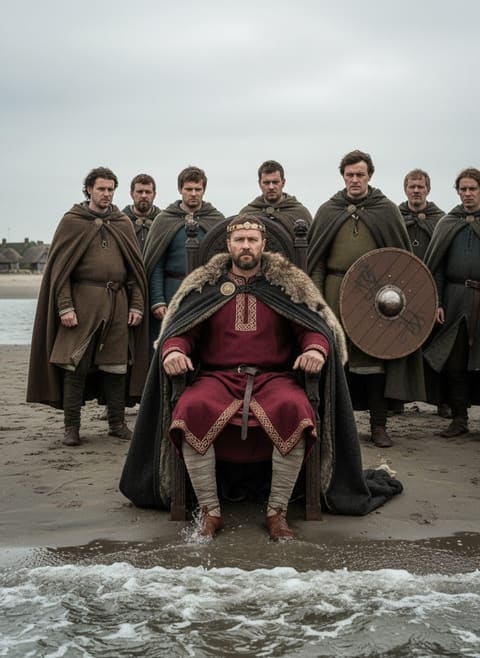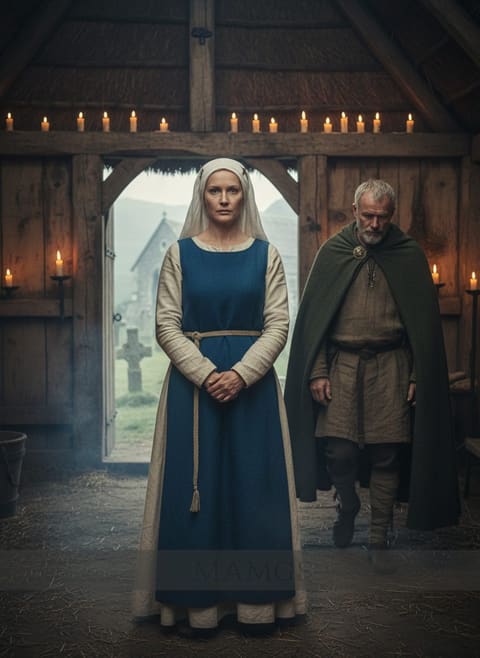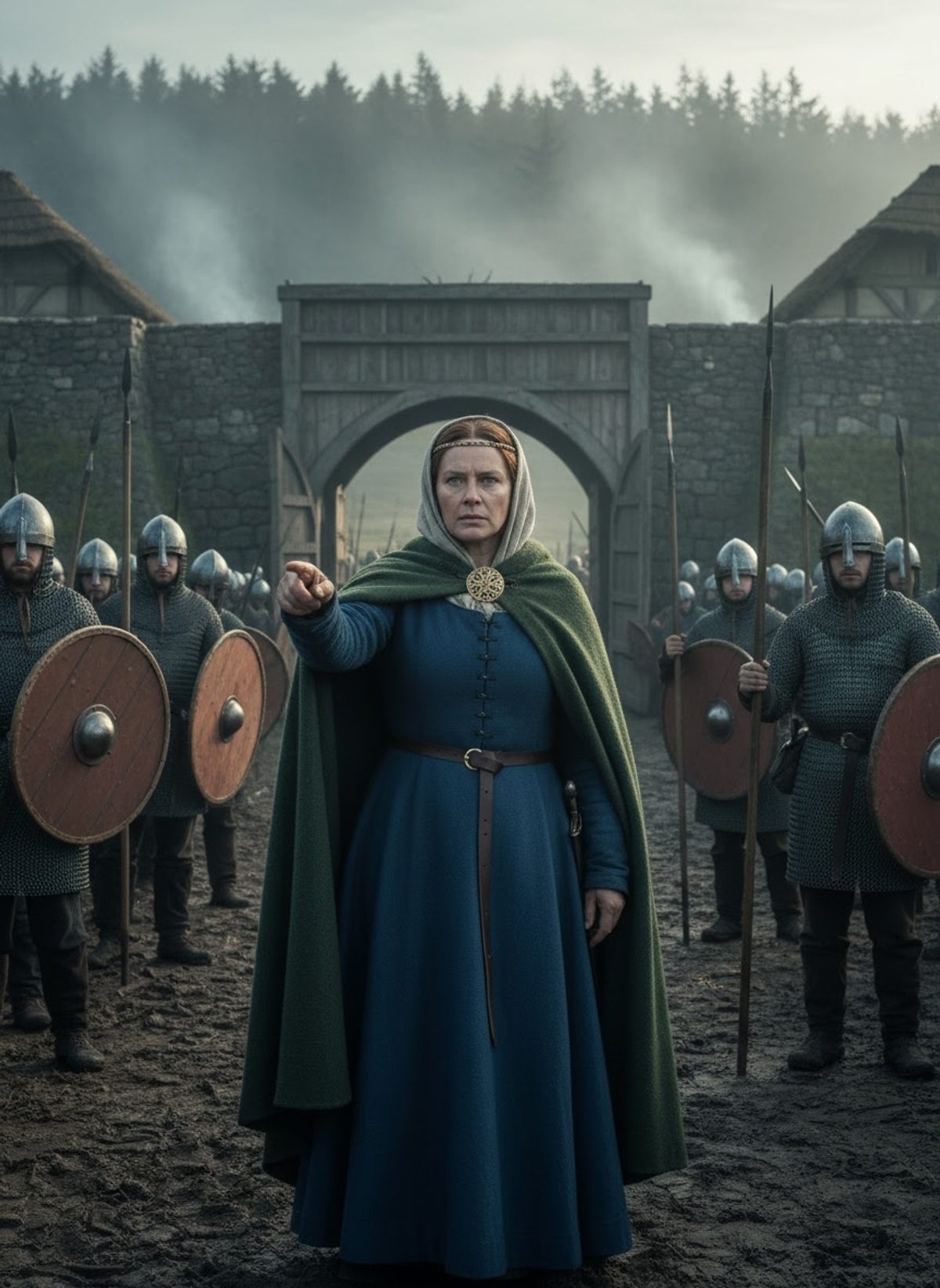
June 918. A mist clung tightly around the battlements of Derby as the sun rose, casting its muted light on a scene of anticipation.
The Warrior Lady of Mercia
In the early 10th century, the British Isles were a patchwork of warring kingdoms, from the Saxons to the Danes, each vying for dominance. In the midst of this tumultuous landscape, a remarkable leader emerged: Æthelflæd, the Lady of the Mercians. Unlike any woman of her time, she commanded respect both on and off the battlefield. Daughters rarely wielded swords in Anglo-Saxon England, and even less often did they command armies on behalf of their people.
Æthelflæd, whose very name evoked strength and authority, was the daughter of Alfred the Great. Educated, astute, and as capable in governance as in warfare, she broke the mold of her era. Her reputation was built on her intelligence and strategic prowess, a fact undeniably proven on the day she and her forces rode towards Derby. Her leadership shone brightly not just as Alfred’s daughter, but as a ruler who would define a kingdom.
A Conquest to Remember
When the day came to face the Vikings controlling Derby, Æthelflæd’s resolve never wavered. Her army stood at the gates, their breath visible in the chill morning air, infused with a warrior's anticipation. The task ahead was daunting, yet the Lady of Mercia led with an unyielding gaze, her plan meticulously crafted and ready to execute.
Read next: The Day Hild of Whitby Turned a Cowherd Into a Poet
Æthelflæd’s campaign was not an isolated endeavor; it was the fourth in a series of conquests against Viking strongholds that year alone. Her strategy was simple yet formidable: where Viking strength could not be outnumbered, it must be outmatched with strategy. Dartmouth's defenses were challenging, yet not impregnable. The Lady of Mercia knew how to find the weaknesses in their defenses, leveraging both her forces and the element of surprise.
As the battle raged, it was Æthelflæd's presence that spurred her troops on. No king or male lord oversaw or claimed her victory. It was unmistakably hers, a testament to her capability and courage.
The Heart of Anglo-Saxon Resistance
Æthelflæd’s victories transformed the landscape of Anglo-Saxon England, shifting the balance of power in favor of the Saxons during a time when Danish incursions threatened their very existence. Her intelligence and leadership were, quite literally, a bulwark against the tide of Viking expansion.
Her approach to leadership was unorthodox yet effective, insisting on fortifying her territory both physically with defensive burhs and intellectually by cultivating alliances. Each stronghold she reclaimed from Viking hands acted as another bastion for her people. The capture of Derby was not just the reclamation of a city but also a strategic chess move that safeguarded Mercia's western borders and disrupted the Viking stronghold pattern.
Read next: The Saxon Princess Who Became England's Shield Against the Danes
Moreover, Æthelflæd was much more than a military mind; she epitomized the strength of a sovereign who valued cultural enrichment. Her court became a beacon of learning and diplomacy, blending strategy with governance.
The Legacy of a Warrior Queen
Æthelflæd’s triumphs were more than a series of military acquisitions; they were vital assertions of what a leader could accomplish against great odds. Her life and campaigns profoundly impacted the fabric of contemporary and future society, inspiring both respect and emulation. Her achievements were wrought not just with sword and shield, but with a vision that propelled her warriors forward.
While the textbooks remember her father, Alfred the Great, as a unifying force, Æthelflæd's story tends to whisper rather than shout. Yet, the significance of her victories, not least the reclaiming of Derby, taught invaluable lessons. She demonstrated that leadership, regardless of gender, is defined by action, vision, and determination—a narrative that continues to resonate through the annals of history.