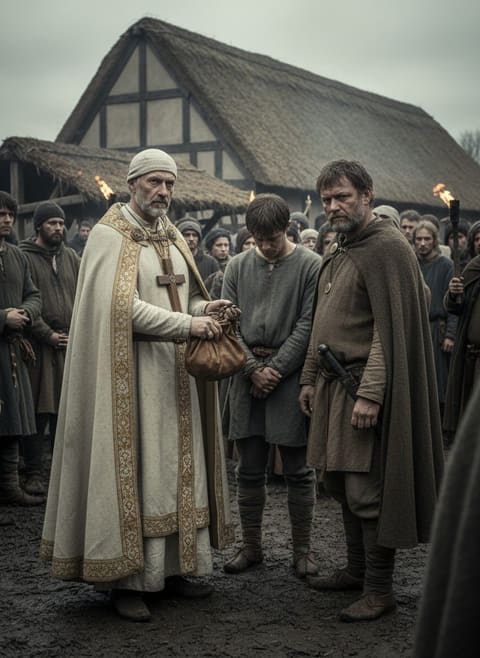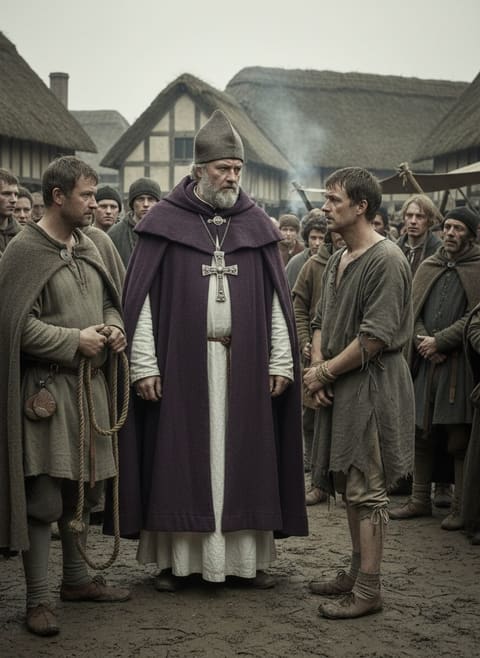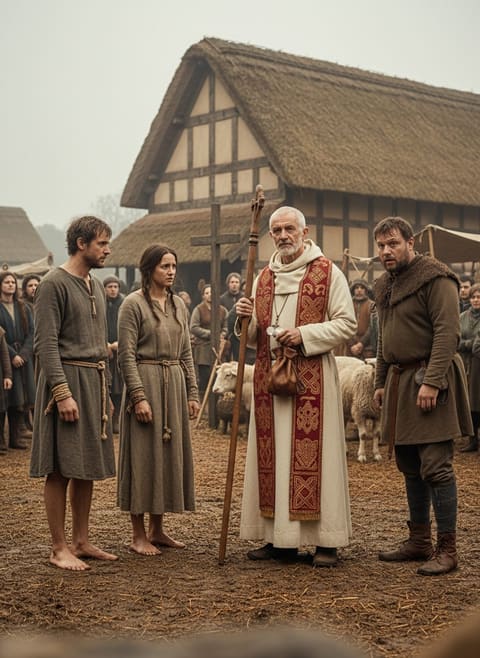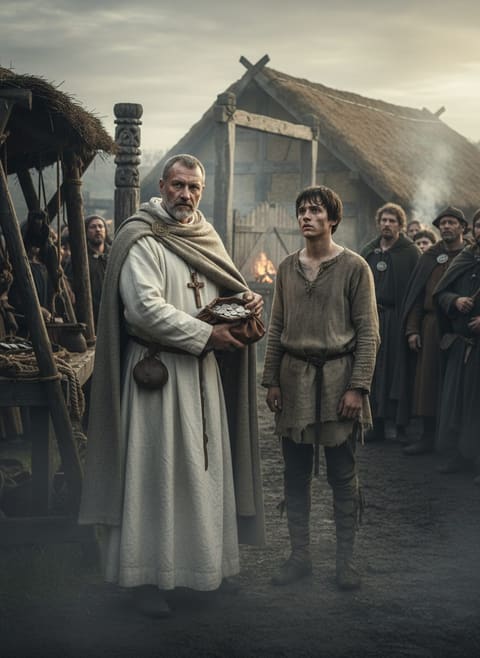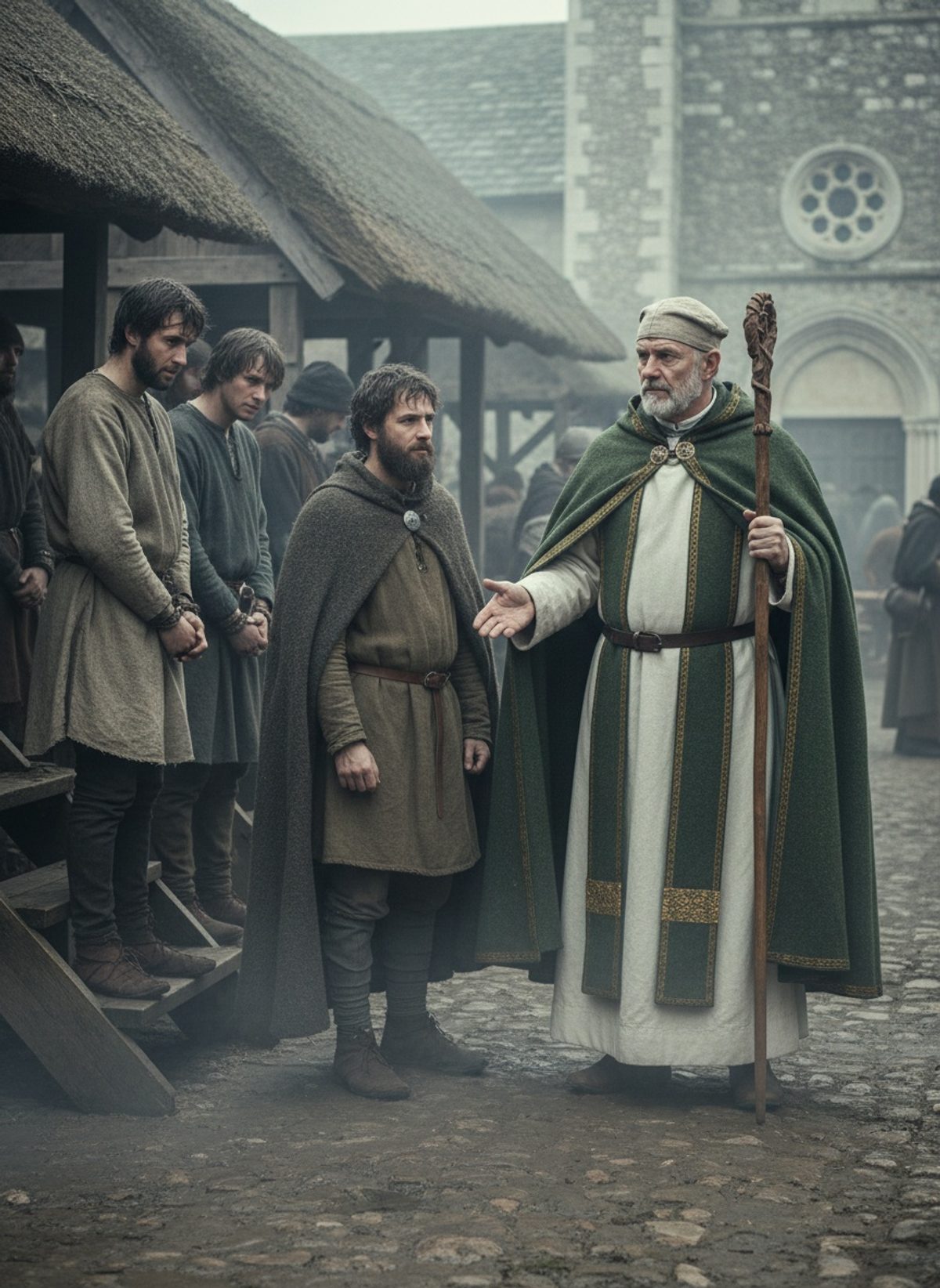
He was a bishop who wore humble robes. His voice, far from the grand boom of proclamations, was gentle, yet it carried the weight of conviction and fierce compassion.
In the heart of Worcester, in the year 1017, the market buzzed, a confluence of sounds and smells that mirrored the chaotic tapestry of the time. Stalls brimmed with goods and produce, the air thick with the shouts of vendors, the bleating of penned livestock, and—a horror that was all too commonplace then—the cries of men and women offered for sale. They were Anglo-Saxon like the traders themselves, yet bound in chains, their humanity diminished in the clink of metal and muted despair.
Among the bustling throng, Bishop Wulfstan stood out, not just for the simplicity of his clerical garb, but for the sheer incongruity of his mission. Unlike others who hurried past such dismal sights, he saw the suffering and steeled himself toward it. Wulfstan had long abhorred the slave trade that festered openly throughout England. It was a common practice, a fixture of life that many chose to ignore, making a cruel normalcy of human bondage.
On this particular day, as the sun cast long beams that caught the beads of sweat on weary brows, Wulfstan approached the market steps where the slaves stood chained, exposed to more than just the elements. The crowd parted for him, some in reverence, others in dismissive disbelief. A bishop meddling in the affairs of trade was as peculiar then as it might be seen even now.
Read next: The Day a Saxon Abbess Stood Between a King and His Rage
Wulfstan did not need to shout or gesture wildly to draw attention. Instead, he made his way to the auctioneer with the quiet determination of a man resigned to his noble duty. True to his custom, he offered payment for every enslaved person, a transaction that exchanged coins not to perpetuate bondage, but to unravel it. He would pay. Every last one. It was an act that repeated countless times over the years, each occasion echoing his unwavering commitment to the cause.
As he led the former captives away from the market, Wulfstan was more than just a rescuer; he was a redeemer in the eyes of those who, only moments before, feared a future chained to an abusive master. Old parchment accounts speak of his belief in the universal Christian dignity—that all were deserving of freedom regardless of their pasts or origins. He did not judge them by the crimes that perhaps delivered them here or the ambitions of a society willing to commodify its own people.
Yet Bishop Wulfstan was not content with the quiet slipping away of these souls from the marketplace. His resistance to the slave trade transcended merely buying freedom for individuals. In his sermons, he wielded words like a master craftsman, shaping them into moral fortresses that aimed to withstand and deflect the greed and indifference of his contemporaries. His powerful homilies, filled with rich Biblical allegory and the stark reality of human suffering, resonated with all who heard them. Communities found themselves wrestling with their own complicity in the system they allowed to persist.
Read next: The Day a Small Island's Language Conquered the World
Wulfstan's unwavering campaign to quell this market of human misery was initially met with derision from the societal elite and traders, the very people whose status and wealth were often intertwined with the existence of slavery. Yet, his persistence bore fruit as the sentiment slowly shifted. It became impossible to ignore the growing distaste for the practice among those whose consciences he pricked unrelentingly. Over time, Wulfstan’s efforts planted seeds not just in Worcester but throughout the English lands, seeds that would sprout into moral questioning and, eventually, legislative action.
While his contemporaries might have seen his acts as peculiarly isolated incidents of charity, history records them as a movement. A ripple in the fabric of Anglo-Saxon society that spoke louder than iron chains clinking in a marketplace. It would be oversimplified to say Wulfstan single-handedly ended slavery in England—legal abolishment involved many factors and layers in later centuries—but his ceaseless advocacy reshaped perspectives in a land that had long shut its eyes and hearts to the plight of the enslaved.
Few stories from this period shine as brightly with such moral clarity. Here was a beacon in Anglo-Saxon England, a bishop whose acts of redemption destroyed chains and elevated conversations on human worth above market value. Bishop Wulfstan’s legacy is not simply one of charity but of courage—a challenge to all who encounter injustice cloaked in the guise of economic inevitability. It is a reminder that change often begins with a lone voice willing to disrupt the common silence. Long after the market stalls were dismantled and the last auctioneer uttered his final cry, the echoes of Wulfstan’s valiant stand continued to reverberate through English conscience, sowing hope that justice could indeed supersede tradition.