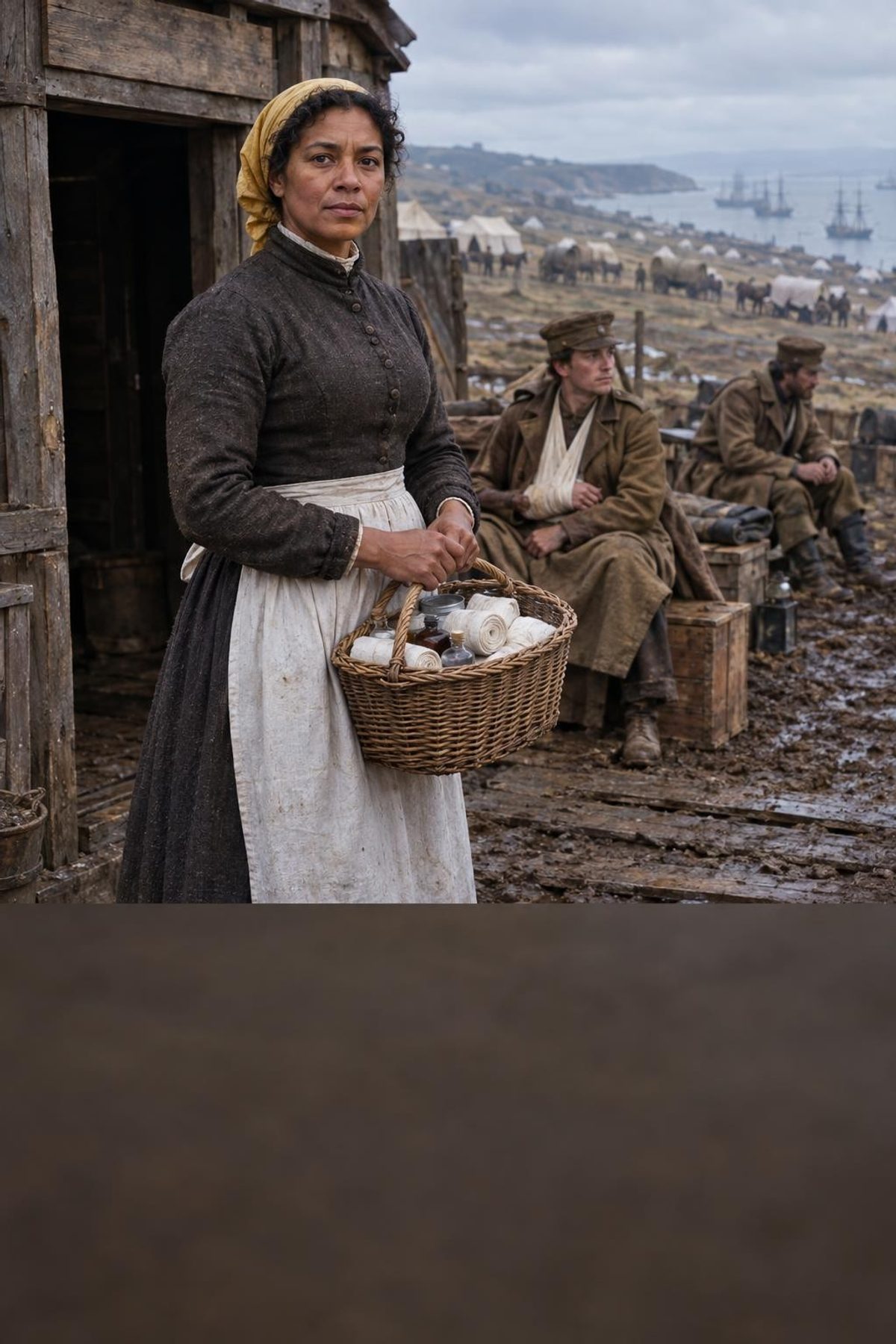
In the harsh light of the Crimean sun, the earth lay scorched and barren, punctuated only by the rough outlines of tents and the distant clatter of battles. Here, at the precipice of war’s chaos, Mary Seacole was about to alter the course for many wounded souls.
With the air thick with the acrid smell of gunpowder and despair, and the relentless echo of cannon fire, Mary carved out an oasis of care and compassion from the unforgiving landscape. In 1855, as the Crimean War ravaged armies at Sebastopol, she was undeterred by closed doors and cold shoulders, her determination unyielding even in the fiery arena of war.
A Road Denied
Jamaica was the home where Mary Seacole learned the art of healing from her mother, a traditional healer whose skills inspired Mary’s early passion. Yet, it was in the crucible of conflict—thousands of miles away—that she would earn her place in history.
Upon arriving in England, Mary faced rejection from the British war office, a bureaucratic snub that would have disheartened many. Florence Nightingale’s revered nursing corps, those guardians of proper Victorian morality and protocol, twice turned her away. The reasons were not spoken aloud, but her Creole heritage placed her at a disadvantage, an unwritten bias hardly concealed by polite refusals.
Read next: The Shoemaker Who Built a School With His Own Hands
But Mary was not one to be discouraged. The allure of service called her like a siren of old, urging her towards the battlefield where few women dared to tread. She shrugged off the dismissals, instead choosing the unlikely path of becoming both benefactor and caregiver. Gathering her own funds and assembling medical supplies, she sailed from Jamaica with a vision that went beyond caring for the sick—it was about restoring dignity and humanity in a place devoid of both.
Her journey to the Crimea was not marked by fanfare or triumphant welcomes. Instead, she arrived quietly, the hardened resolve writ upon her brow. It was here that she conceived an idea so bold, its very essence defied the paternalistic norms of the time—a hotel, a place of healing just steps from the front lines, ready to offer sanctuary amidst the storm.
The British Hotel: A True Sanctuary
Within sight of the battlefield, Mary Seacole’s British Hotel stood as a paradox, a station of calm amidst chaos. Crafted from wood and good intentions, it was both ramshackle and reassuring, a gathering spot for weary soldiers seeking solace.
With food, fresh clothing, and medical care, she offered comfort that military rations and munitions could not provide. Her ‘hotel’ functioned more as a haven for the injured, her caring hands skilled in the science of recovery and the art of compassion.
The soldiers soon affectionately dubbed her “Mother Seacole,” a testament to her nurturing spirit. Unlike conventional hospitals defined by stark beds and regimented routines, this place thrummed with life—Mary’s laughter was infectious, her presence a balm for broken spirits. Tales spread of her indomitable spirit and her culinary wizardry, with some saying the food she cooked restored strength to battle-weary limbs more effectively than any medicine.
In a corner of the bustling hotel, Mary Seacole could often be found treating wounds sustained in battle, dusting off grime and wrapping bandages with deft fingers honed by experience. No ailment seemed beyond her reach—whether cooling fevered brows or easing broken bones.
Her remedies combined traditional Jamaican medicines with Western practices, a blend as unique as the woman herself. Through nights that bled into days, with only the flicker of candlelight to keep the oppressive darkness at bay, she tended to her brave charges, embodying an unwavering strength that became legend.
Read next: The Estate That Burned — and What Britain Did Next
Defying the Odds
Mary Seacole’s legacy extends well beyond her medicine cabinet. Her actions boldly challenged the constraints of her era, dismantling barriers that sought to keep her contributions at bay. The British Hotel at Balaclava wasn’t just a physical construct; it symbolized resilience against systemic indifference. The lack of permission or authority didn’t deter her—what mattered were the lives saved, the spirits raised, and the profound sense of humanity restored in a war-ravaged world.
History, relentless in its march, rarely paused to celebrate those who defy its strictures. Yet, Mary’s story resonates as an enduring beacon of courage, a narrative preserved not merely in textbooks but in the hearts of those who recognize the power of individual resolve. Her defiance of societal constraints wasn’t an act of rebellion but of necessity—an embodiment of the idea that heroism often dances at the edge of extraordinary will.
Mary Seacole’s impact grows even more poignant today, reminding us to look beyond the boundaries that seek to define worth. In her time, she sowed the seeds of change by acting when few dared.
From the humble huts at the gates of hell, she reached for something enduring—a vision rooted in compassion. It's a legacy that calls us to acknowledge and honor those who toil in the shadows, often overlooked, yet whose efforts weave the fabric of humanity richer for their courage.