The cobbled streets of Portsmouth in 1811 shimmered with rain, each drop leaving its mark in the early morning light. A chill wind swept through the narrow alleys, where the cries of vendors mingled with the playful shouts of children and the faint clink of bootmakers' tools. It was here, in a humble workshop squeezed between towering brick buildings, that a remarkable Victorian story unfolded.
The Humble Cobbler's Workshop
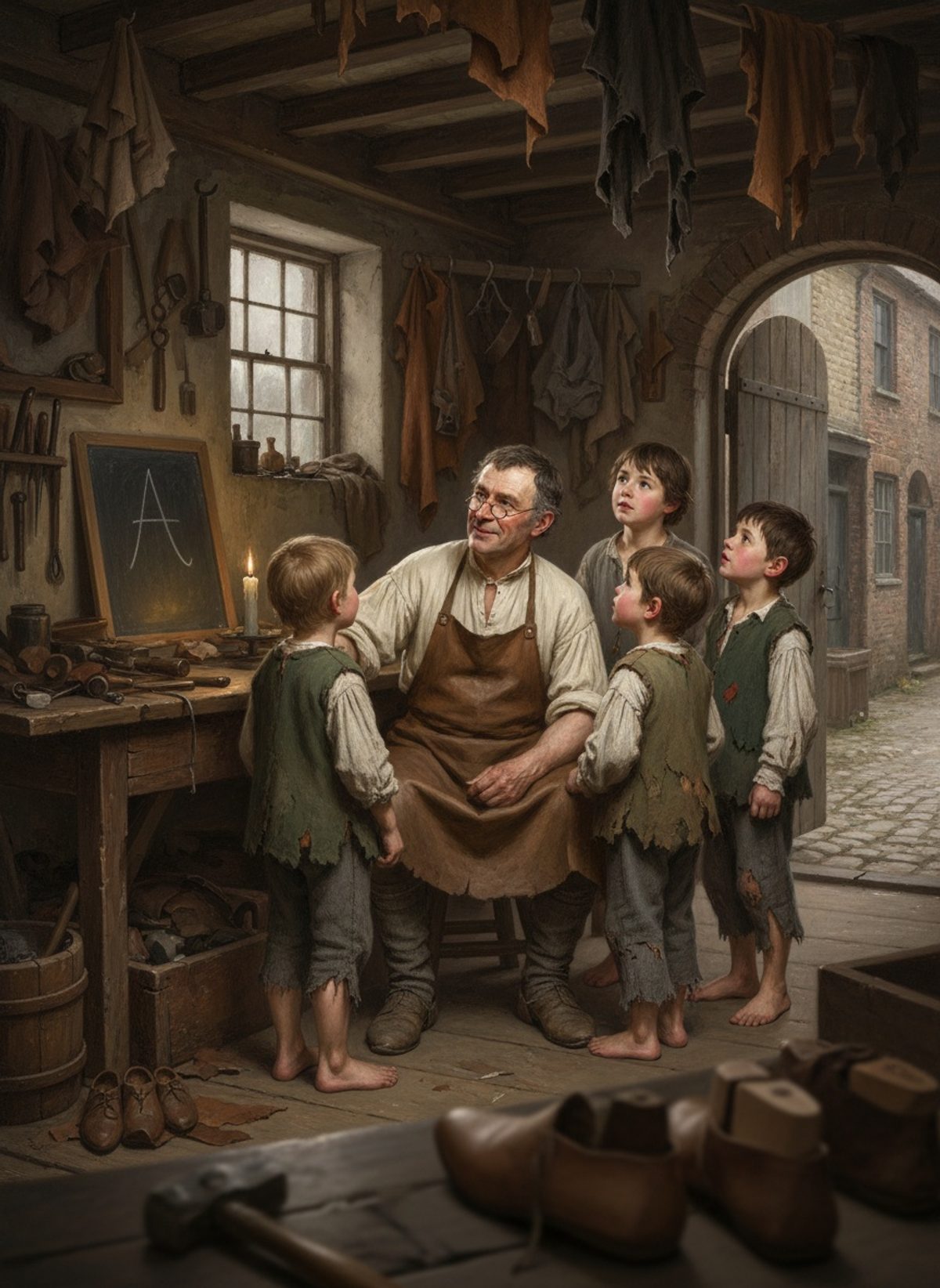
John Pounds, the stooped and weathered shoemaker, known to all in these parts, worked quietly in his shop. His hands, skilled yet gnarled from years of labor, transformed worn leather into sturdy shoes. But it wasn’t just cobbling that occupied his time. He watched the street’s children—scavengers and beggars clad in tatters—as they wandered past, their futures as narrow and bleak as the alley itself.
Born with a disability after an accident in his youth, Pounds understood hardship. Yet, he gave little thought to his struggles. His heart, boundless compared to his means, reached out to those street children. Without funds or formal authority, John made a choice destined to ripple through time: he would teach them. He opened his shop to these children, offering them more than just warm lessons—he bestowed hope.
A School Like No Other
Inside John's confined shop, every nook became a classroom. The scent of leather mingled with chalk dust as he devised lessons from scraps. His classroom bore no resemblance to the lofty halls of formal education. Instead, a worn bench promised a respite from the unyielding ground. By teaching them to read and write using whatever materials he could gather, he equipped the children with skills needed for a better life.
Read next: The Quiet Liverpool Clerk Who Became British Comedy's Dark Heart
John's teaching methods were as inventive as his lessons. He believed in learning through doing, introducing arithmetic through counting nails or measuring leather. John possessed a remarkable ability to explain complexities in simple terms, which encouraged even the most reluctant child to learn. Over time, word spread throughout Portsmouth: the best lessons often started with a simple knock at the shoemaker's door.
A Community Transformed
The shop soon became a haven in the bustling chaos of Portsmouth. Families, once torn apart by poverty, found a semblance of solace knowing that their children had a place to learn. With tenderness, John cradled his pupils in knowledge and warmth. His unyielding kindness never faltered, even when supplies ran low or donations trickled.
With diligence, John taught not only educational subjects but the essence of community. He instilled values of kindness and hard work, cultivating a sense of self-worth. Former pupils often returned to tell tales of success, carrying with them the lessons that began on a cobbler's dusty floor.
One Man's Enduring Legacy
As the years passed, the story of the shoemaker school spread, igniting a movement known as "Ragged Schools." Others inspired by John's example established schools dedicated to the education of impoverished children across Britain. These institutions, rooted in compassion and John's seminal work, transformed the educational landscape for the underprivileged.
Read next: The Day a Cornish Fisherwoman Rowed Out and Saved 11 Lives
John never sought accolades. His gentle insistence on a better future for each child was simply an act of love. When he died in 1839, he left not wealth, but a legacy of change that graced the lives of countless individuals, shaping future generations with the principles of kindness, resilience, and education for all.
In reflecting on John Pounds, we glimpse the profound impact of quiet deeds and simple intentions. His life was an ode to the difference one individual can make, using only what lies within their heart and hands.
The shoemaker's legacy reminds us: true wealth comes not from what we possess, but from what we choose to share. As Portsmouth's streets continue to echo the hum of life, they carry the whisper of a cobbler's humble act that once carved a path of change.