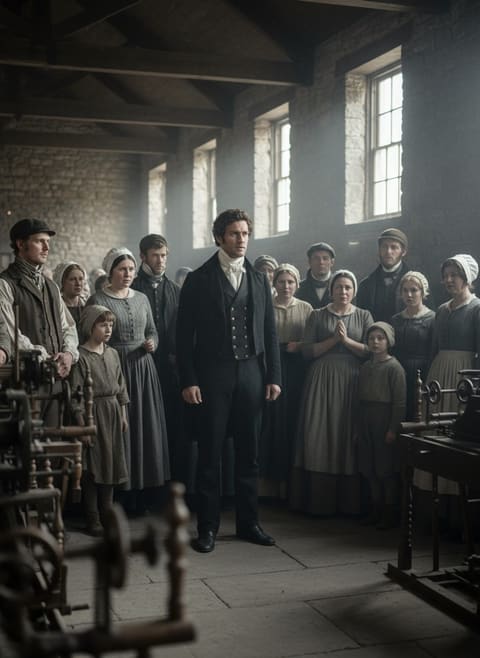
A gentle mist clings to the rolling hills along the River Clyde, the water shimmering beneath the pale Scottish sun. The rhythmic hum of machinery mingles with the soft murmur of the river—a peaceful sound masking the roar of a revolution unfolding within the stone walls of New Lanark. In 1800, the looms spun cotton here, but it was Robert Owen’s radical ideas that truly set this mill town weaving a new pattern of industrial harmony.
A Radical Beginning
Robert Owen arrived in New Lanark with a vision that would defy the grim realities of the Industrial Revolution. At a time when child labour was justified as necessary and wages were squeezed under heel, Owen dared to dream of something different. This young mill owner inherited not just a business but a broken community, fatigued by exploitation and neglect. For many, the fabric of life here was threadbare and frayed.
Unlike his contemporaries, who saw workers as mere cogs in a relentless machine, Owen saw potential in the faces of those in his care. He imagined a society where dignity accompanied labour, where education could brighten even the dimmest corner of poverty. His decision to eschew child labour was not just unusual; it was revolutionary. The whispers in factory corridors spoke of madness or genius, as industry leaders watched with a mixture of skepticism and intrigue.
Building a Better Tomorrow
Owen’s vision took shape brick by brick, starting with profound changes to the lives of the mill workers. Fair wages were introduced, reflecting his belief that a well-paid worker was a more productive, happier one. He transformed the community into a sustainable model, where the benefits experienced by the workers reverberated through every family in New Lanark.
Read next: The Night Samuel Crompton Gave Away the Invention of the Age
Education, for Owen, was the cornerstone upon which to build a brighter future. Against the prevailing winds of the era, he erected schools that opened doors to learning and opportunities previously unimaginable to the children of mill workers. These institutions were vibrant places of discovery, far from the dark, oppressive classrooms that typified the education of the poor elsewhere.
The Eyes of a Nation
New Lanark soon became the focus of scrutiny and admiration across Britain and beyond. Visitors from far and wide descended upon the town, drawn by tales of Owen’s unusual management style and the thriving community it fostered. What they saw challenged their perceptions of industrial possibilities, leaving many in awe of what practical utopia could look like in the heart of the smoke and soot.
Owen transformed the moral compass of business ethics, sparking debates in plush boardrooms and factory floors alike. How could other factory owners ignore the proof burgeoning on the banks of the Clyde? His success begged a question that echoed through the skeletal framework of the industrial landscape: Could there be a more humane, progressive path?
The Ripple Effect
The influence of New Lanark rippled outward, reaching beyond the immediate improvements in workers’ lives. Owen's model of enlightened industrial duty inspired reforms in factory legislation, pushing child labour laws to the fore of political agendas. It wasn't just the machinery in the mills that Owen had set into motion, but a societal cog that would gather speed throughout the 19th century.
Read next: The Night Josiah Wedgwood Smashed His Own Finest Pot
His efforts illustrated the power of reform from within, showing how collective welfare and industrial progress need not be mutually exclusive. The seeds he sowed in the fertile soil of New Lanark prompted others to experiment with integrating ethics into economics. These conversations, nascent in Owen’s time, would slowly and steadily grow, influencing labor rights movements in the decades that followed.
Reflections at the Crossroads
Why does this story of a mill town on the banks of the Clyde still resonate with us today? Robert Owen's experiment at New Lanark beckons us to consider the responsibility of leadership and the transformative power of vision tempered by empathy. His story is a rallying cry for innovation blended with humanity, challenging us to look beyond profit margins to the human faces that build the very foundations of industry.
As we stand at the crossroads of technological advancement and social equity, Owen’s narrative encourages us to question what values we weave into the fabric of our modern world, asking whether we, too, might turn our workplaces into visions of beauty and justice.