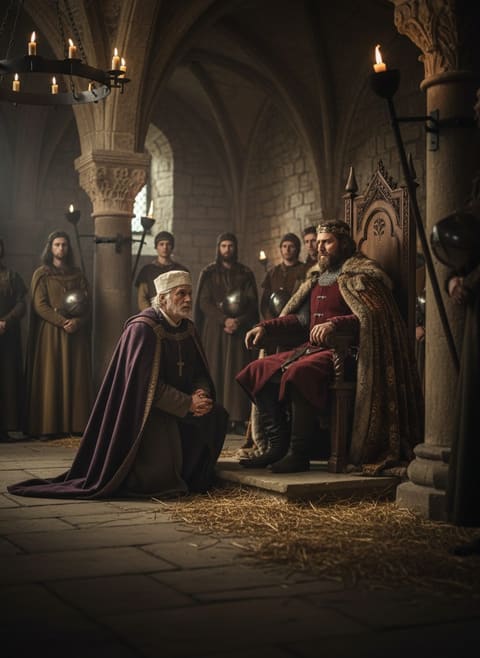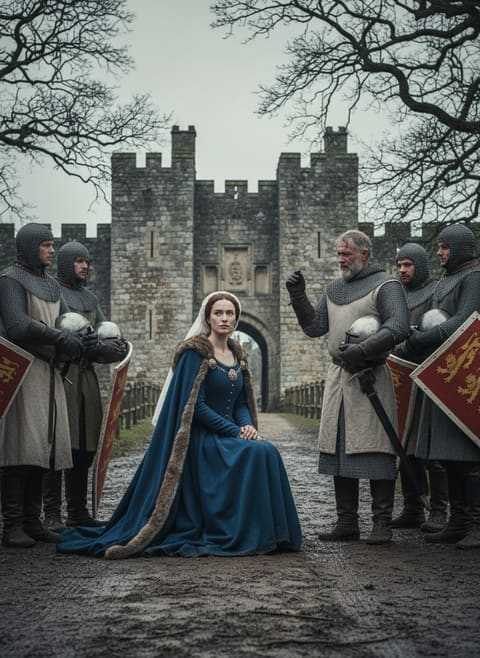
He was not a seasoned warrior. None of them were—just merchants, fathers, and unassuming citizens. But on that fated day in 1347, with Calais teetering on the brink of destruction, these six men became unwilling heroes, their sacrifice echoing through the annals of time.
The story began with the grinding tension of the Hundred Years' War, a seemingly interminable conflict between England and France. Day in and day out, battles ebbed and flowed. Yet, in the heart of this turmoil, Calais became a chokepoint, a beleaguered city caught in Edward III’s relentless grip. The siege dragged on for eleven long months, slowly wringing the life out of Calais's inhabitants. It was as if time itself had paused, leaving the city suspended in a desperate plea for salvation that never came.
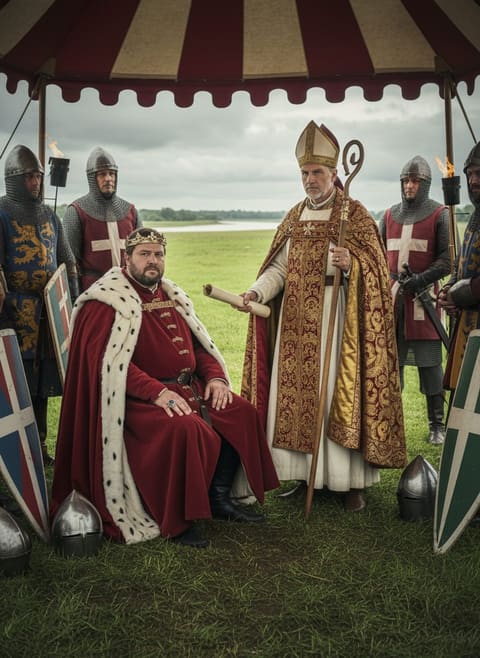
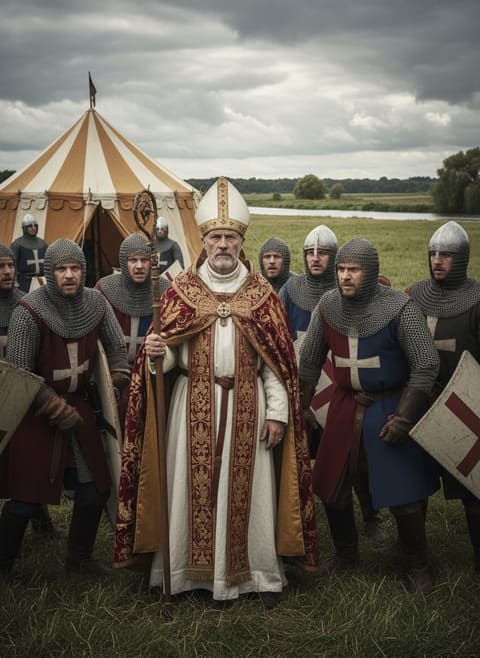
Edward III, the English king, was unyielding in this siege. He understood the strategic value of Calais, a gateway into France, and intended to make it his entry point. The English forces surrounded the fortified city like a noose, cutting off any avenue of escape or the desperate hope of reinforcement. Day by day, the city's pulse grew weaker. First, the horses were slaughtered for sustenance. Then, the dogs and what few other animals remained disappeared into Calais’s makeshift cooking pots. As the harsh grip of starvation clenched tighter, even the rats became a feast to be eked out.
Calais was a city under siege not only physically, but psychologically. The echoing cries of ravenous children and the framed desperation in their parents' eyes formed a macabre symphony of human suffering. Famine gnawed at already weary souls, hollowing out hopes until nothing but desperation remained. The city's defenders held out with a grim determination that bordered on madness, each day a fight against the quiet insinuation of despair.
Read next: The Day a Welsh Girl Barred the Door on a King's Army
When hope was at its lowest, Edward III offered a grim bargain. Not a merciful surrender, but an ultimatum cold and calculated: the lives of six of Calais’s leading citizens in exchange for the safety of the masses. It was a cruel arithmetic of survival, a somber demand that reverberated through the city’s narrow streets and huddled crowds. The citizens of Calais, driven by an agonizing love for their city and kin, faced an impossible choice.
From the depths of this crisis, six figures emerged. The most notable of these was Eustache de Saint Pierre, the eldest and most respected merchant of Calais. With stoic resolve, he volunteered alongside five others to bear the burden of their city’s salvation. Word of their decision spread like wildfire, a mixture of admiration and heart-wrenching grief rippling across every corner of the besieged town.
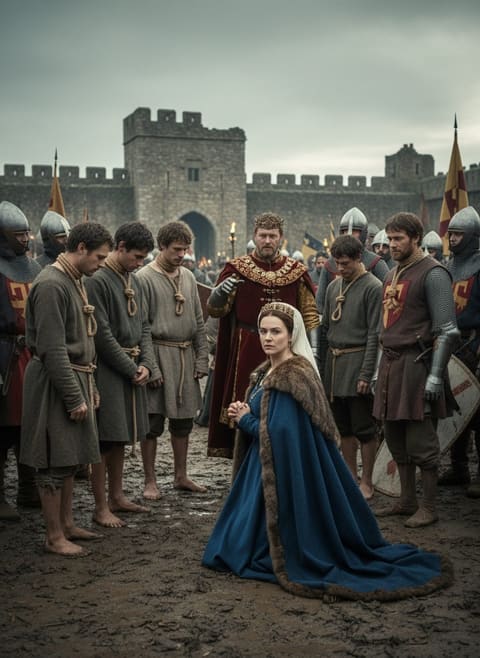
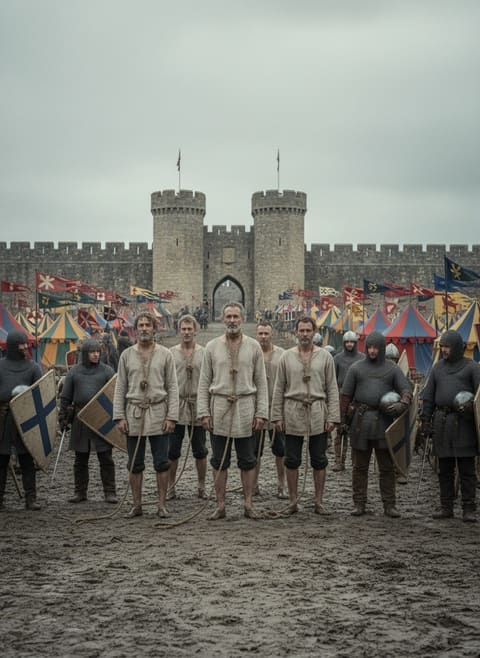
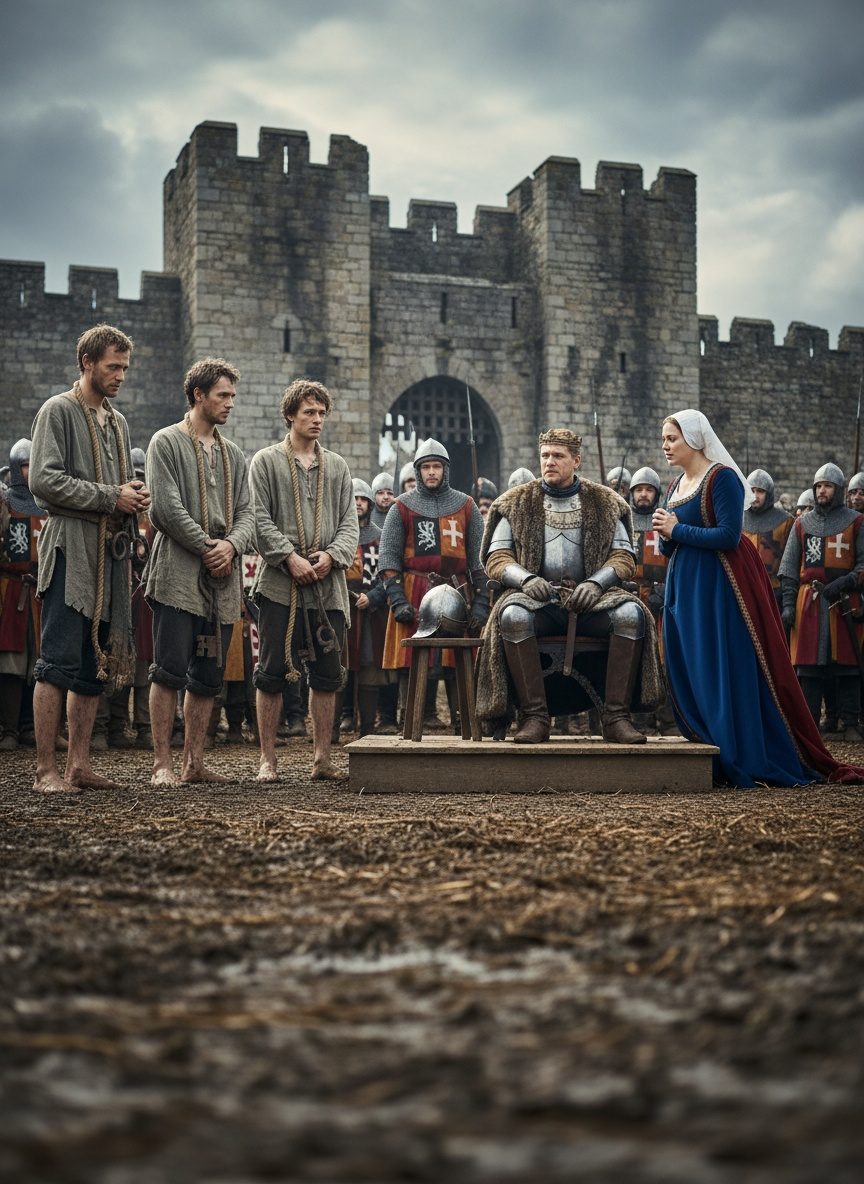
The six men stripped to their shirts, barefoot and bareheaded, symbolizing their utter submission to the mercies of their besiegers. Around their necks, they placed nooses, the raw, twisted ropes biting into their skin like a cold premonition of their doom. A silent procession to the English encampment marked their passage, a path lined with the stricken faces of their townsfolk, each one bearing the weight of gratitude and sorrow.
The scene that unfolded at the English camp was one of stark contrasts: six humbled men against the backdrop of a triumphant king. Their offering was not gold or treasure, but flesh and blood, tangible evidence of their unspoken resolve. These men stood before Edward, prepared to meet their fate with dignity, but within that moment of heightened tension, an unexpected plea for mercy resounded.
Read next: The Day a Medieval Mayor Knelt and Saved Six Condemned Men
Philippa of Hainault, the queen consort of Edward III, was moved by their courage and desperation. With tears in her eyes, she implored her husband to show mercy. Despite the hard-edged calculations of war and conquest, human compassion dared to find a foothold. Her plea revealed an opening in the impenetrable armor of royal decree—a reminder that beneath the banners and battles, humanity had a place.
The plea was granted. The six men, these selfless martyrs in waiting, were spared. Their return to Calais was not marked by the triumphant music of victory, but by the solemnity of a city's quiet sigh of relief. They had faced what seemed an inevitable end and turned back, previously foreordained fate yielding to the better angels of human nature. Their act, while specific to that time and place, spoke to universal themes of sacrifice, humility, and shared struggle.
Seven hundred years on, the story of the Burghers of Calais continues to be told and retold, each time with the glistening echo of its moral resonance. It challenges the separation often assumed between those we deem ordinary and the gallery of historic greats. For at their heart, these men were simply individuals overwhelmed with an extraordinary task, with no accolades or titles to underscore their worth—but whose actions molded the historical tides.
This narrative reminds us that history is not only written by the victors but by those who endure beyond the battles, acts of self-sacrifice imbued with an enduring light. Through time's passage, whether embellished by dramatists or contrasting historians, the core truth remains a compelling testament to the human spirit’s potential to transcend desperation through courage and compassion, a lesson not relayed through textbooks but rather etched into the very fabric of human consciousness. The mythical echo of ropes brought so close to death’s embrace still hangs in the air to remind us of our collective capacity for both sacrifice and hope—a light of resilience against the darkness of dire odds.