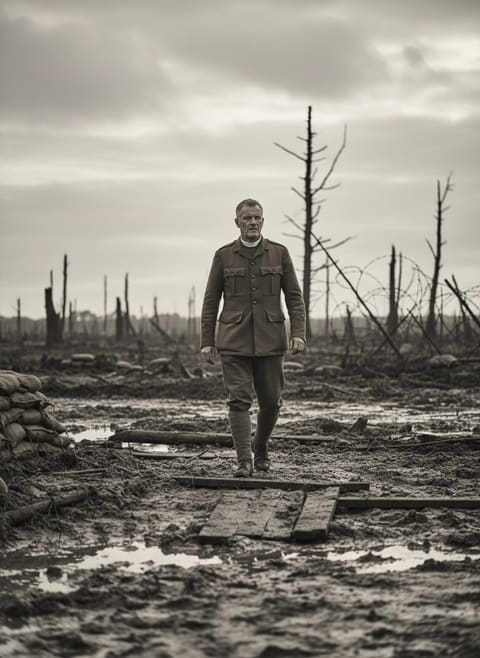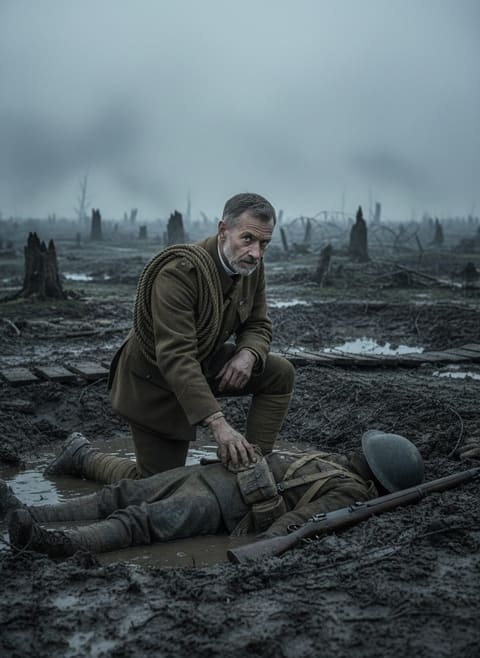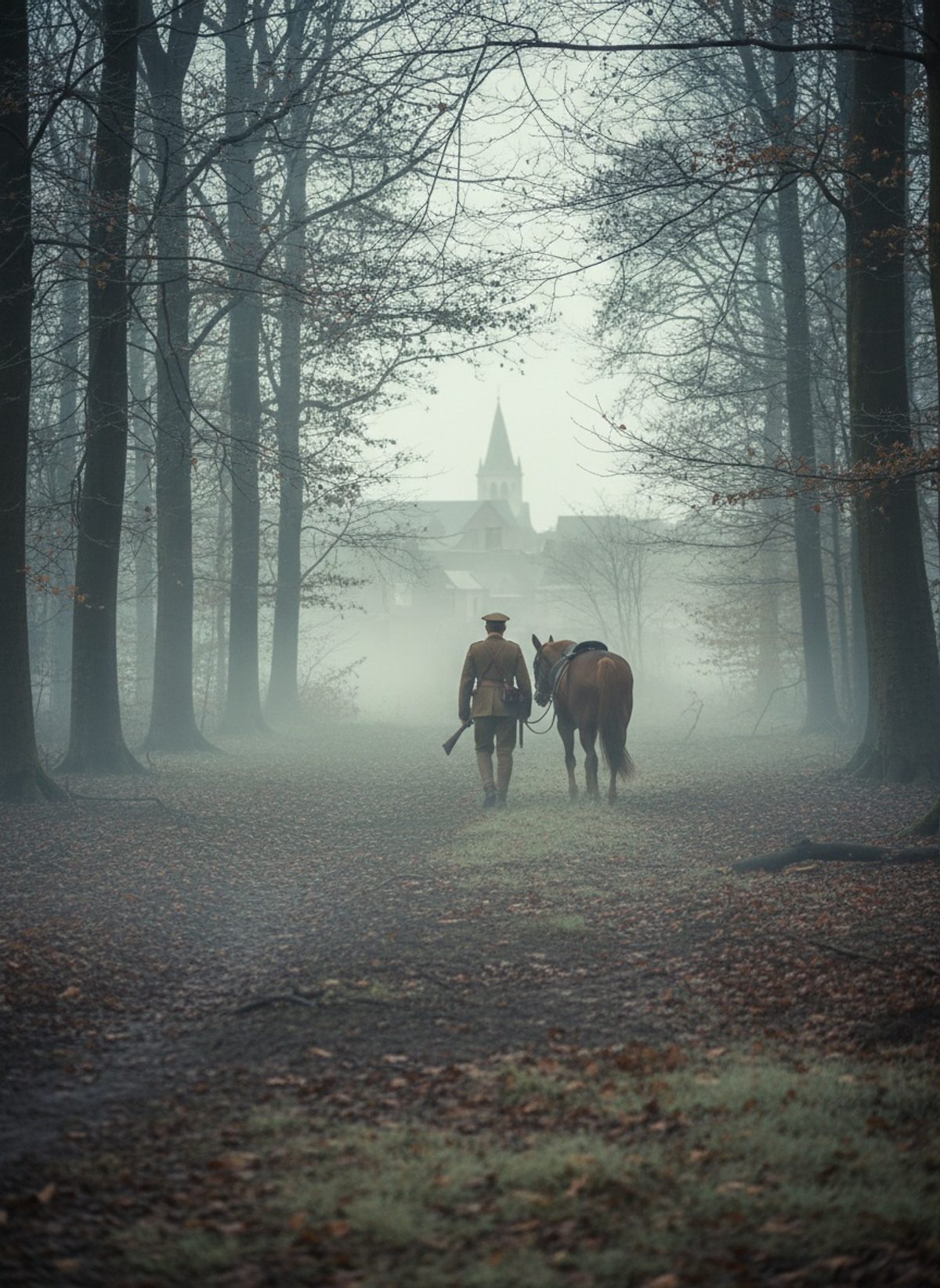
The November morning brimmed with tension as a whispery mist hung low over the outskirts of Mons, Belgium. Private George Edwin Ellison, a man seasoned by four grueling years on the front lines, moved cautiously through the dense woodland. His heartbeat synchronized with the distant rumble of guns and the sporadic crack of rifles—sounds that had become the infernal symphony of his life. As Ellison slipped quietly between the trees, taking care to remain hidden, a sudden echo of gunfire erupted. The bullet found its mark with cruel precision, and Ellison’s world faded to silence ninety minutes before peace was due to break.
The Journey of a Regular Soldier
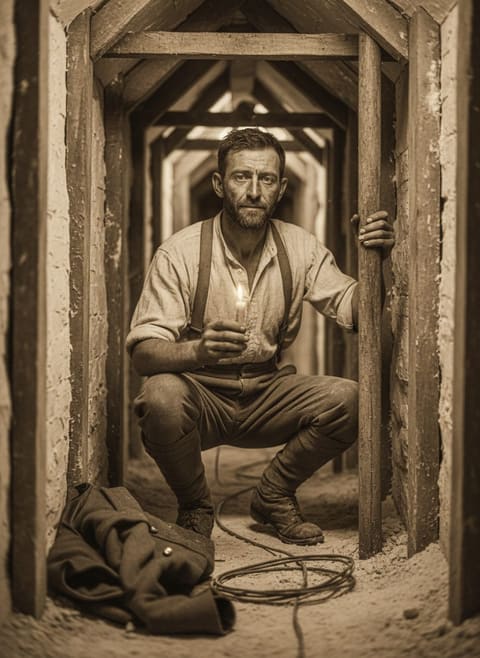
Born in York on 10 August 1878, George Edwin Ellison was destined to be a soldier whose name would resonate through the annals of history. Unlike many, Ellison’s path to the military was neither familial tradition nor youthful adventurism. Instead, it was a chapter in a life marked by resilience and adaptability. By 1902, Ellison had enlisted in the British Army, where he served three years with the colours before transitioning to a reservist status. This move allowed him to return to civilian life in Leeds, where he took up coal mining—a common occupation in industrial England at the time.
Married to Hannah Maria Burgan in 1912, Ellison swiftly embraced the roles of husband and father. Their son, James Cornelius, born in 1913, symbolized a future of possibilities, much like the hopeful pre-war years. But the call of duty was relentless. In August 1914, as the specter of war loomed over Europe, Ellison found himself once again donning the uniform of the 5th Royal Irish Lancers. Deployed to France, he served through a relentless cycle of battles, his biography lists Ypres, Armentières, La Bassée and later Cambrai. Each confrontation etched itself into his memory, a tapestry of hardship faced by millions caught in the chaotic whirl of the First World War.
On that fateful November morning, none could have anticipated the silent marker Ellison’s death would become. As the war neared its conclusion, Private Ellison’s presence in Mons was part of a strategic hold, retaking territory seized by the Germans in 1914. Ironically, this very location saw the conflict's beginning, at least for the British. Mons had witnessed the first battle of the British Expeditionary Force in August 1914, and among the first fallen nearby was John Parr, a young reconnaissance cyclist, forever linked to Ellison by the strange hand of fate.
Read next: The Unknown Warrior Britain Buried Among Its Kings
The Bitter Symphony of War's End
The hours before the Armistice took effect on 11 November 1918 were fraught with eerie anticipation and relentless conflict. For many on the Western Front, the thought of peace seemed surreal amid the artillery’s relentless chorus. Yet, for Private George Edwin Ellison, these closing acts held no symphonic relief—only the staccato of enemy fire penetrating the cold autumn air as his life ebbed away in those final moments.
As Ellison’s family in Leeds awaited news from the front, anxious letters crossed the Channel, carrying hopes of survival and lingering fears. Tragically, the dreaded confirmation of his passing would not reach them until the heart of December, turning what should have been a season of peace into a period of mourning.
Ellison’s death did not mark just one more casualty but mirrored the war’s vicious irony. Though peace was imminent, hostilities continued with intense fervor across the lines. British forces were engaged in ongoing action, attempting to regain lost ground, affirming strategic positions even in the wake of announced accords. The war had bred an inertia of violence, an inability to halt despite the declaration of its end. Amidst this chaotic backdrop, Ellison fell, his demise blending with those of others—George Lawrence Price, a Canadian, was shot minutes before the Armistice came into effect, and lies in eternal rest just meters away from Ellison at St Symphorien Military Cemetery.
George Edwin Ellison's life, concluding amidst the shadows of a coming peace, offers a poignant metaphor for the futility and abrupt finality war imposes. The ground where he fell was at once historical, haunted by past battles and later a symbol of loss’s permanency. As he lay, Ellison, the last killed, faced John Parr, the war’s first British casualty—a celestial alignment reflecting the circular nature of historical narratives.
Read next: The Soldier Who Carried 300 Men From the Wire at Gallipoli
A Legacy in Shadows and Light
The narrative of George Edwin Ellison’s life and death reverberates with a profound significance not solely due to its tragic timing. In 2008, a BBC Timewatch documentary with Michael Palin, made with Ellison's granddaughters, brought his story to a broader audience, preserving his legacy amidst a sea of forgotten lives. The timing of his death—an occurrence overshadowed by the joy of peace—now serves as a historical bookmark, urging remembrance and reflection.
Amid commemorations marking the centennial of the Armistice, Ellison's story has been immortalized in intriguing ways. In 2018, at Leeds railway station, a memorial plaque was unveiled, marking his journey, sacrifice, and the indelible impact he left on history. The plaque, olive green to reflect military service, not only honored Ellison but also the countless souls echoing his path of duty and silence. A local artist, Suman Kaur, drew from the lone photograph of Ellison, crafting a charcoal portrait that reimagined him in contemporary visual storytelling, adding layers to his narrative that now defy time’s erasure.
Ellison’s journey represents far more than a singular moment at war’s end. It stands as a witness—silent, haunting—to the full sweep of destruction and hope, embodied in life remembered and sacrifice acknowledged. His story compels us to look deeper at history’s quieter moments, revealing the poignant truths within. It urges us, not simply to remember the war’s conclusion, but to honor the perseverance of individuals within its folds—the tales left out of textbooks yet carried forward through threads of familial memory and civic honor. As time marches onward, figures like Ellison remain custodians of lessons history demands we bear witness to, lest we forget the true face of conflicts and the people who render it human.