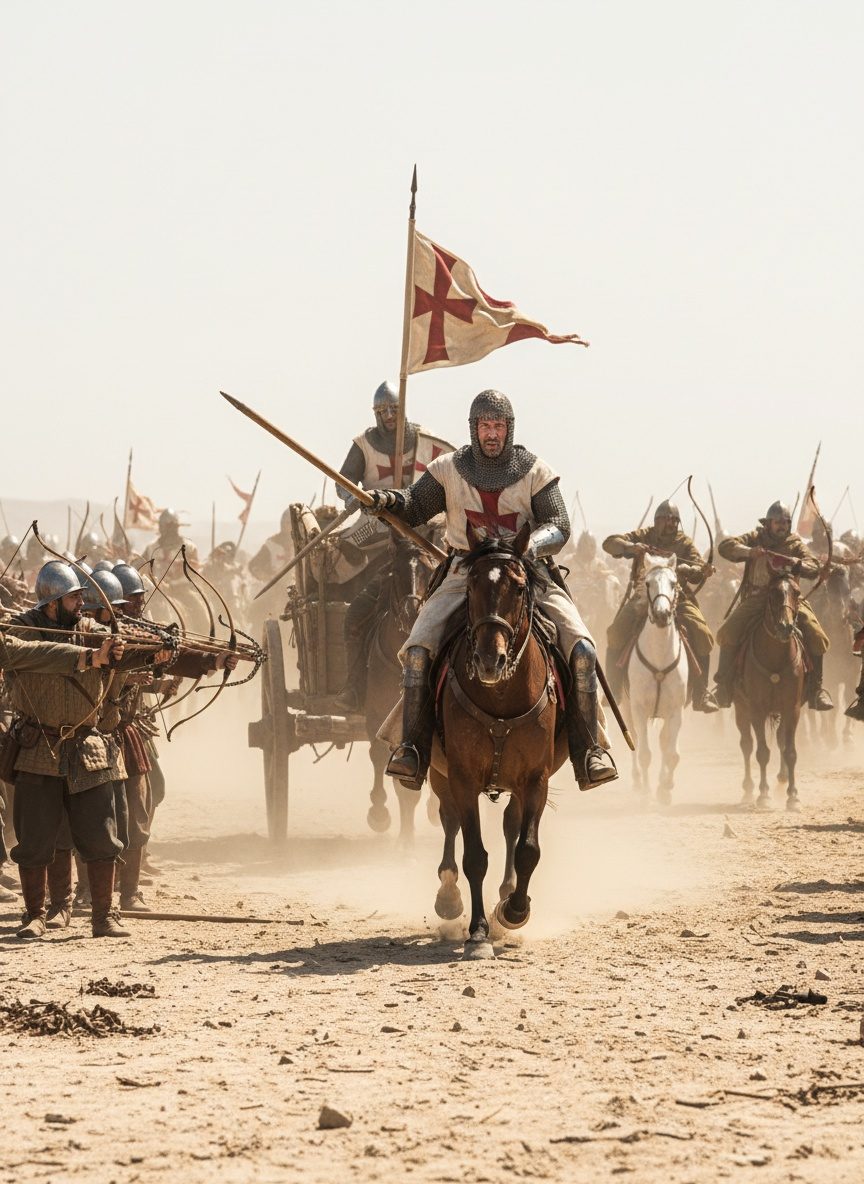
The Mediterranean sun bore down with an unrelenting heat, painting the landscape in hues of gold and shadow as the waves lapped rhythmically against the coast. August winds swept inland, carrying the scent of salt and the faint cries of gulls from the azure expanse. Yet the serenity belied the tension crackling through the air on the dusty plains near Arsuf. Here, amidst the shimmering air, the stage was set for a dramatic confrontation in the summer of 1191, where myth would meet its shattering reality. King Richard I, often remembered as the Lionheart, was about to test his mettle against Saladin, the most celebrated general of the age, and rewrite the annals of military legend.
The Relentless March
Richard's journey along the coast from Acre to Jaffa was a masterclass in patience and strategy. Eighty miles under the scorching sun, with each step potentially a step closer to doom. Richard's army marched tight, their rear to the sea, an unyielding serpent of men and horses, glinting steel and fluttering banners. Saladin's forces rode parallel, a silhouette of cavalry on the distant hills, ready to pounce at the slightest sign of weakness. Morning to evening, for nearly a month, Saladin tested the mortal endurance of Richard's men, raining arrows from horseback and seeking every opportunity to divide and conquer. Still, Richard held firm, refusing each time his knights begged to turn and charge, containing their simmering thirst for battle with an iron grip. His critics whispered of cowardice, yet Richard's eyes were set farther, upon the promise of a lasting triumph.
The Temptation of the Charge
As the heat mounted, so did the pressure within the ranks. The knights of Richard's army, clad in heavy mail and disciplined as any in Christendom, felt the weight of the arrows and the sting of the sun. Saladin's taunts came as dust-stirred phantoms, vanishing before they could be seized, leaving only a sense of besiegement and frustration. Many knights, worn and weary, saw battle as the path to release—a frenzied clash that would decide the matter in blood rather than the desert's lethargy. Yet Richard, warden of their intentions, saw through desperation to the possibility of annihilation. Each skirmish shed the weaker parts of his force, yet deftly he tended the whole, weaving a deliberate march into a decisive strike. It would be patience, not rashness, that sowed the seeds of victory.
Crafting the Killing Grounds
As September unfurled, with the sea beside them and Arsuf cresting the horizon, opportunity ripened. Richard sensed a turn in the dance—a moment when Saladin, convinced of his enemy's weariness, might overreach his reach. On that chosen day, Richard orchestrated a tactical marvel. His vanguard became an irresistible bait for the overconfident Saracen charge, while his rearguard, hidden behind a natural rise, coiled like an unseen viper. The lines of knights, once held in check, now braced at the ready. As the enemy closed in front and began to unravel, Richard called the charge into their midst—a keening horn cry that unleashed a tide of armor and lance. Here was the moment when strategy forged from past restraint bore its brutal fruit; the air was thunderous with the clash of arms and the cries of men.
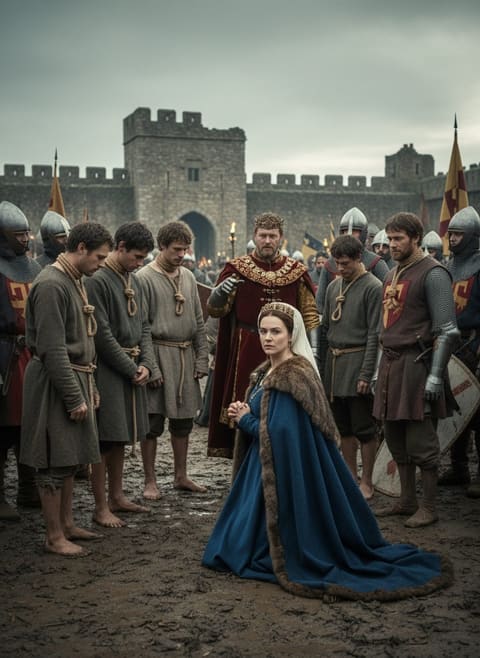
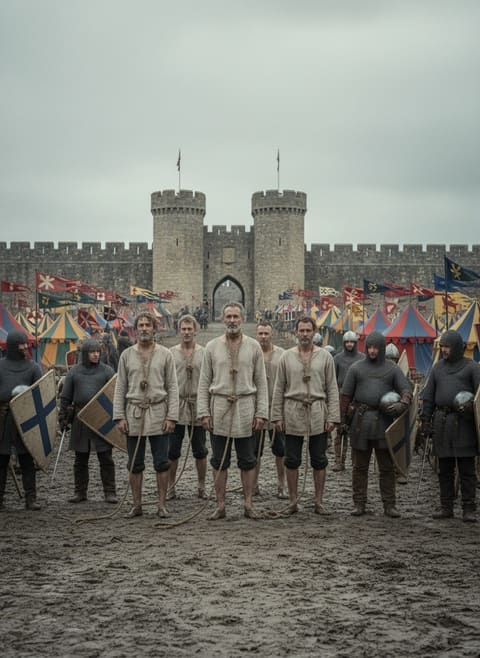
Read next: The Day a Medieval Mayor Knelt and Saved Six Condemned Men
Breaking the Legend
It was on that rolling field that Saladin's legend met its first falter. Richard had waited, not for a withdrawal, but for a culmination. In the wild melee that followed, Saladin's forces buckled beneath the weight of Richard's inspired strategy. Where Richard's knights finally rode, the enemy disintegrated in panic and confusion. The once unassailable Saladin, undefeated in four years, discovered his limit amidst the grasses of Arsuf. The legend lay as fractured as the lances littering the ground, the echoes of which would resonate back through the eastern steppes and the courts of Europe alike.
Lessons of Patience and Power
The legacy of Arsuf is richer than mere military victory. It is a tale reshaping the narrative of inevitability, where one man's patience and vision upended the order of perceived invincibility. Richard's triumph was not defined just by martial prowess but by a keen understanding of when to wait and when to strike. Today, the march that led to Arsuf whispers secrets of leadership to those who would listen: About the power of deliberate patience over impulse, the cultivation of readiness over fear, and the timing of opportunity—which turns a battle into a legend.