Richard I, known as the Lionheart, wasn't supposed to be in the Holy Land — not if he listened to the formalities and politics of medieval Europe. Yet here he was, commanding a march that would etch his name into legend. He wasn't merely a warrior-king; he was a tactician capable of turning desperation into destiny.
The Relentless March Towards Arsuf
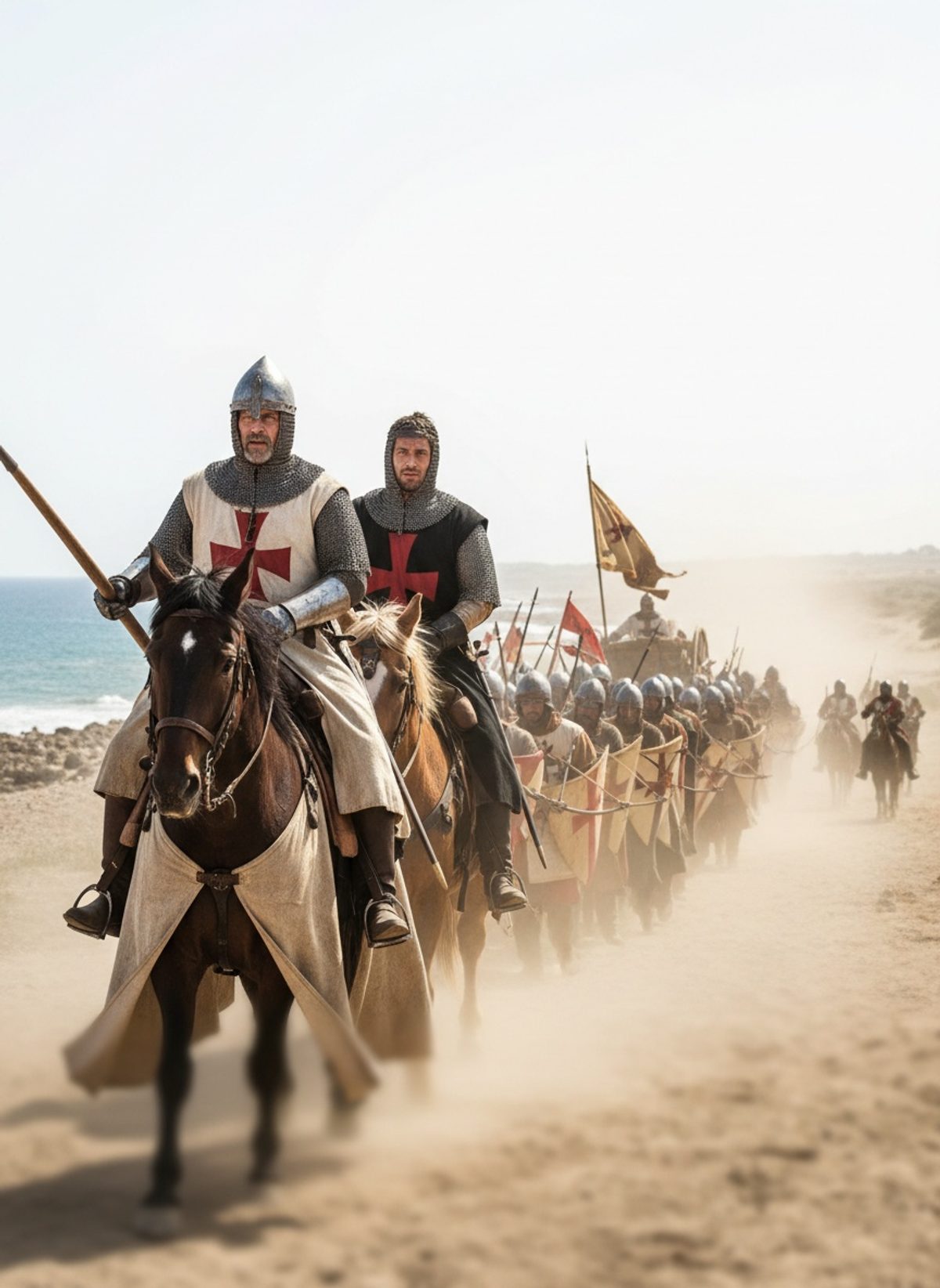
In the blistering summer of 1191, Richard I embarked on a march that seemed sheer madness to many — eighty miles under the burning Holy Land sun, clad in full mail armor. His determination to press south along the coast was unwavering; it was a journey that tested not just military endurance but human limits. As the sweat dripped and metal seared skin, each step became a testament to Richard's resolve. In a time when logistics were perilous, his forces advanced like an iron serpent, gliding along the coastal sands with a semblance of order that defied their harsh environment.
Saladin, the legendary Muslim leader, had watched Crusader expeditions falter and crumble before him. He saw in Richard a new challenge; one not just willing to face him but daring to defy the crushing defeat endured by the Crusaders at Hattin four years prior. Saladin deployed his forces, orchestrating ambushes and skirmishes that nipped relentlessly at their heels. Yet, Richard’s discipline held firm. His forces moved as a cohesive unit, fortified in spirit as much as in mail, resisting the allure of breaking formation even as arrows rained down like a deadly summer shower.
The path was marked by the graves of fallen soldiers, but the army pressed on, faithfully burying their dead as if each burial was another stone reinforcing the foundation of their commitment. It was a moving fortress designed by a master tactician, who understood that their strength lay not in speed, but in tenacity. This march wasn’t just a military maneuver; it was psychological warfare that tested Saladin’s ability to provoke a lapse in Richard’s disciplined ranks.
Read next: The Day a Welsh Girl Barred the Door on a King's Army
A Storm Brews Around Arsuf
As the Crusader army neared Arsuf, the tension in the air grew thick — a storm was brewing, not just in the heavens but across the plains where two formidable forces prepared to clash. Richard knew the stakes; he understood the weight of history pressing against him, the countless eyes upon this moment. For Saladin, renowned for his ability to shatter foes through tactical brilliance, facing Richard meant confronting the unfamiliar: an enemy unyielding to the chaos of battle.
The plan was audacious. Richard’s forces arranged themselves with precision, knights and infantry forming a layered defense designed to absorb the initial shock of the battle and hold, just long enough. Shouting commands over the din of clashing steel, the Lionheart embodied calm amidst the chaos, his banner a rallying beacon for those who might have faltered. The earth beneath Arsuf trembled under the weight of charging steeds, while the sky's azure cloak bore witness to the relentless dance of combat.
Read next: The Day a Medieval Mayor Knelt and Saved Six Condemned Men
Saladin launched his full force, hoping to crack the Crusader’s resolve with relentless waves of attacks. Yet, each charge met a stalwart wall of defiance, a testament to Richard’s unwavering command and the disciplined cohesion of his troops. Just when the tendrils of doubt might have crept in, Richard unleashed his counterstroke with surgical precision. It wasn't merely a thrust of military might but a strategic crescendo that caught Saladin's intelligence off guard. The timing was flawless; the force, devastating. It was a moment where legend overtook record, where the audacity of bravery outshone the certainty of defeat.
The End of Invincibility at Arsuf
By the day’s end, the myth of Saladin’s invincible dominance was shattered on the fields of Arsuf, scattering with the evening winds. Richard had achieved the impossible, delivering a blow that not only halted Saladin’s campaign but also restored hope and momentum to a Crusade faltering since Hattin. The Celtic lion roared across the ages, a reminder that discipline in the face of despair was a weapon unmatched in its potency.
History might often tell tales of kings and conquests with the air of inevitability, but Arsuf was different. Richard had shown that through resilience, strategic patience, and sheer will, even the mightiest legends could be challenged and unmade. This wasn't merely a victory of arms but a triumph of the human spirit in the face of overwhelming odds. As fires burned away the remnants of battle, and the ash settled like a mournful veil upon the battlefield, what remained was more than the echo of war cries. It was the whisper of a legend refashioned, a story of steel endurance and the man daring enough to stand, unyielding, to seize the narrative for his own.