The winds were restless across the English Channel, stirring the waves with a chill. The sea salt mixed with a fine mist, carrying with it whispers of fate and future. The solemn procession along the docks of Southampton was evidence enough of the importance of the day's journey. Philippa of Lancaster, with her auburn hair catching the diffuse grey light of an overcast sky, was boarding for a voyage that would pave the corridors of history in both Europe and beyond.
A Royal Alliance Across Waters
Born to noble lineages, Philippa was no stranger to the majestic balls and diplomatic intrigues that bred alliances. Her father, John of Gaunt, a pillar of the compelling House of Lancaster, had secured this marriage not only for alliance but for the stability it promised. Within the political teeming of medieval Europe, such unions were common. Yet, as Philippa stepped aboard the ship to Portugal, few could envision the global threads this marriage would weave.
King John I of Portugal awaited in his sun-drenched court in Lisbon, a city thriving under the rekindled spirit of the Reconquista. By the time Philippa arrived, the air of Lisbon buzzed with anticipation, not only for their nuptials but for the merging of two legacies. In times where nationhood was still forging its identity, this union between Portugal and England was ripe with potential — a compass point towards future exploration and greatness.
The Day of the Union
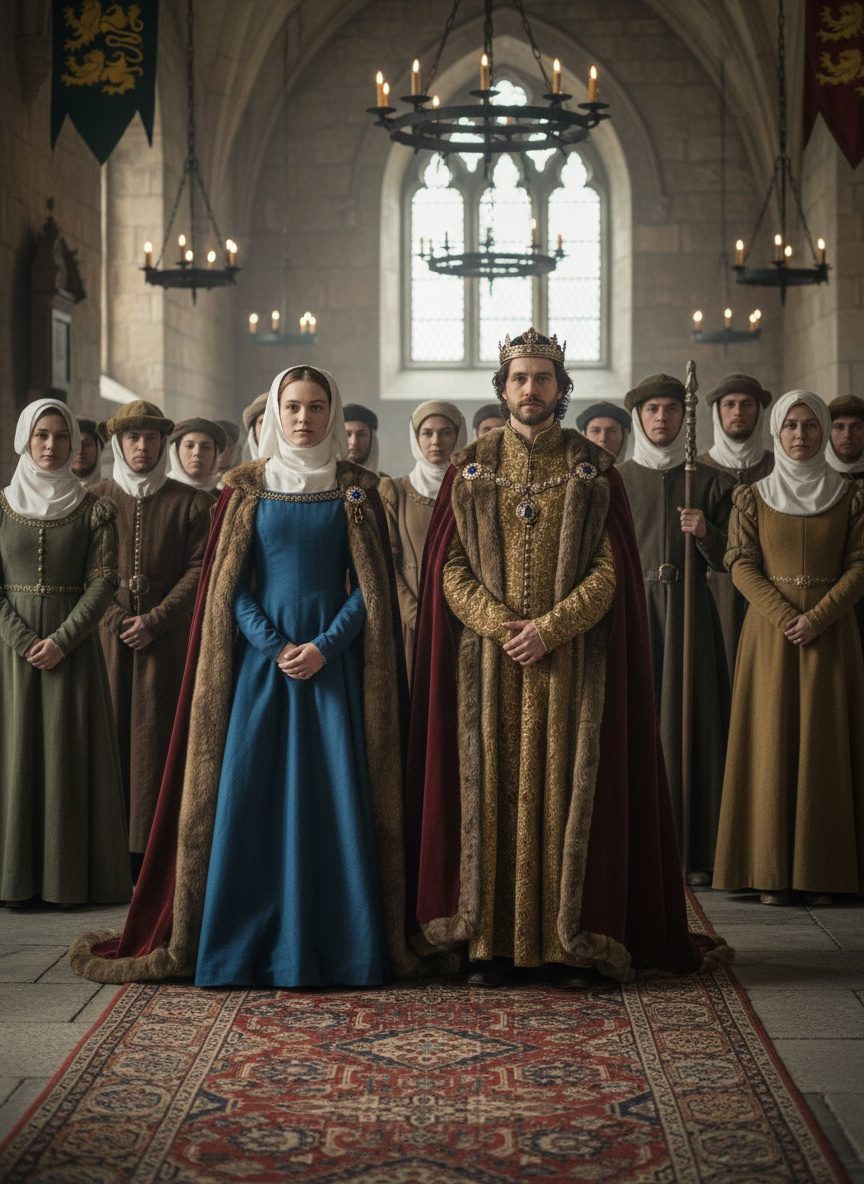
On their wedding day, the sun baptized Lisbon with a golden hue, the scent of lilies and lemon groves drifting through the air. The cathedral echoed with the solemn vows exchanged, a promise that stretched beyond the earthly bounds. Philippa and John I, hand in hand, stood amidst the murmured Latin prayers, uniting not only two dynasties but setting into motion an era that would transcend their own time.
Read next: The Day a Welsh Girl Barred the Door on a King's Army
The new Queen of Portugal was no mere figurehead. Philippa's strength and wisdom were whispered in court circles, reflected in her patronage of arts and education. They called her the "Mother of Princes" for a reason; her brood, the Illustrious Generation, possessed the fog of destiny clinging to their very essence. As she established her roots in Portuguese soil, Philippa sowed dreams of exploration and enlightenment in her children.
The Nautical Loom of Ambition
Their offspring soon became known as progenitors of an era that would break Europe's insular edges. One among them, Prince Henry the Navigator, kindled a passion for seafaring exploration. With an insatiable hunger for the maps and mysteries of the wider world, his ambitions were a tapestry woven from the threads of both Lancaster temperance and Portuguese daring.
Under his gaze, ships began to venture further from familiar coasts. The early 15th century saw these endeavors grow bolder, forming the bedrock of what history now remembers as Portugal’s Age of Discovery. This subtle current, born from the royal union of 1387, began to erode the confines of the known world. New maritime routes glided beneath skies unfamiliar yet inviting, lines were drawn on maps that had been blank slates mere decades before.
Into the Azure Unknown
Across oceans, Portuguese caravels cut through the sapphire miles, their sails filled with quests for spices, knowledge, and new lands. The vessels that charted these historic voyages bore witness to an unprecedented curiosity — a venture that linked the nooks and crannies of the globe. The voyages were a beacon for kingdoms beyond Europe to awaken to the burgeoning concept of a connected world.
Read next: The Day a Medieval Mayor Knelt and Saved Six Condemned Men
Back in Portugal, fragranced with tales from West African coasts and whispers of lands yet to be reached, the royal court was vibrant. Philippa's legacy lived fluidly in these exploits, the fusion of English prudence and Portuguese seafaring daring reaching heights. The navigators and explorers who followed carried her mark, transformatively allowing the first trickle of British-Portuguese alliance to become a deluge of exploration.
A Legacy Cast Wide
Philippa of Lancaster did not merely oversee a court nor rule from a throne polished by centuries of tradition. Her influence serrated through the very sinews of history, charting new courses for the world’s nations. The union forged on the ships of 1387 became more than a tale of dynasty and domain, but an ethos unfurling like sails against an uncharted horizon.
As nations upon nations unfurl their histories, connected yet unique, we find in Philippa’s marriage and its offspring the threads of interwoven destinies — genealogical and exploratory. The marriage gave light not only to children who would map the world but to a legacy enshrined in history as one of quiet profundity. The ocean, vast and encompassing, was their canvas; the past, a symphony echoing through the waves of time.