He was one of the most defiant men of his age—and yet, he wielded no sword. In the 13th century, this Welsh bard stood against a king who had silenced nations.
As the last embers faded on the bloody battlefield of 1282, an uneasy quiet enveloped the rugged landscapes of Wales. Edward I of England had dealt a crushing blow to Welsh resistance. His armies were relentless, his strategy unforgiving, and his ambition seemingly boundless. But Edward’s conquest was more than a military campaign; it was an assault on the very essence of Welsh identity. An enduring tradition, the bards were the living libraries of Wales—keepers of history, culture, and pride. For Edward, who sought to cement his rule by erasing the cultural fabric of the Welsh, this was a threat that could not be ignored.
Yet amidst the falling shadows of castles and keeps emerging under English control, a solitary voice resonated against the desolation. A bard, whose name has been whispered through the valleys and hills, dared to continue his song. This bard not only defied the edicts of a king but became a symbol of cultural endurance that Edward could not have anticipated.
His defiance was as lyrical as it was audacious. The Welsh bardic tradition was not merely a pastime of poetry and song; it formed the backbone of the nation's historical consciousness. Bards were the honored chroniclers of lineage, the exalted judges of valor, and the unwavering voices at the great courts of the princes. To silence them was to rob the people of their identity. Edward planned to break this chain: he could quell uprisings and dismantle armies, but the spirit expressed through verse was harder to conquer.
Read next: The Day a Welsh Girl Barred the Door on a King's Army
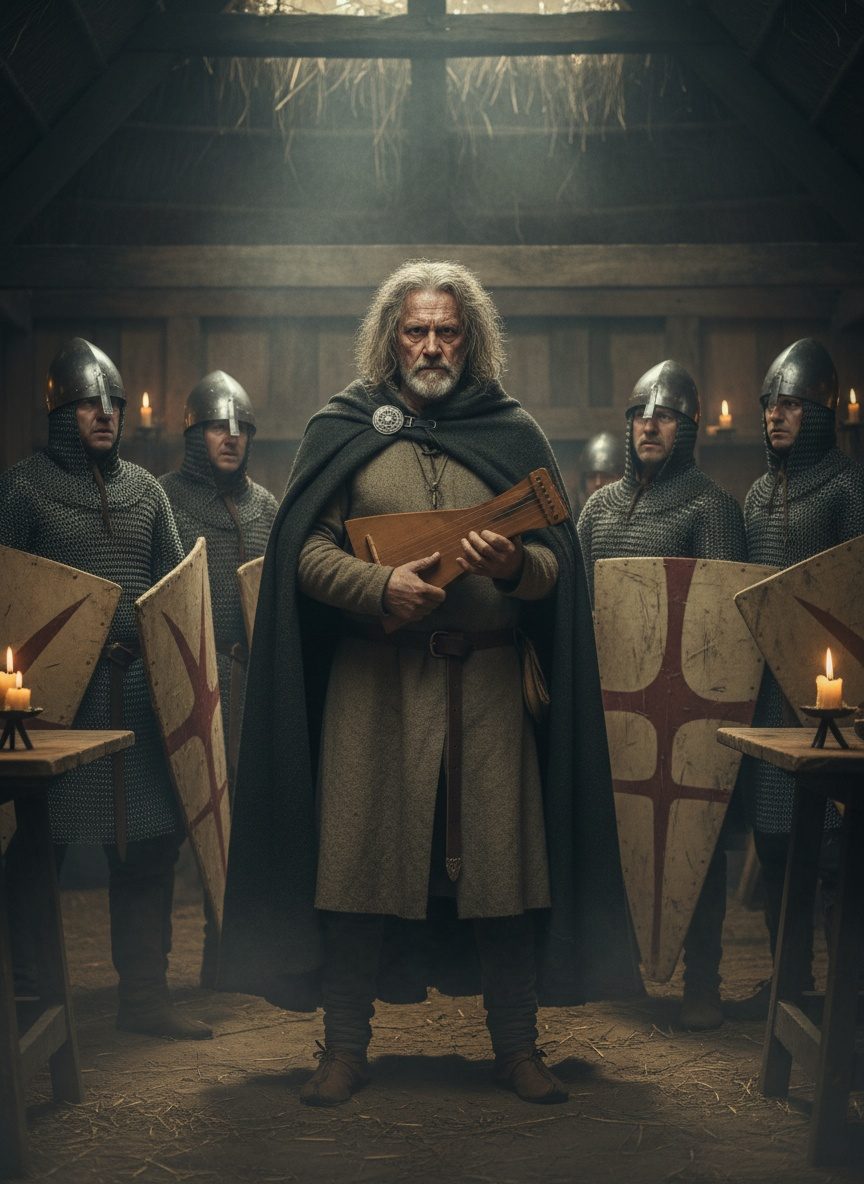
The bard, with cloak flapping like the wings of a raven against the wind, would have seemed an unlikely insurgent. Armed only with his harp and verses, he treaded paths laden with risk. Loyalists whispered of his courage, while the royal ears bent to catch the drift of dissenting syllables. His words were his weapons, and his ballads, a battlefield. They told of the valor of Welsh warriors, the wisdom of their ancestors, and the boundless beauty of their lands. His songs became a clandestine rallying cry echoing across ridges and villages.
Edward’s measures to suppress the Welsh poets grew ever more stringent. His officers discerned that as long as these songs lingered, true peace—a peace of submission—eluded them. Orders went out: stamps to the rhythms of rebellion, quell the cadence of independence. But for every bard silenced, the murmurs of their verses only spread further, permeating court halls and finding new life in hidden gatherings by moonlight.
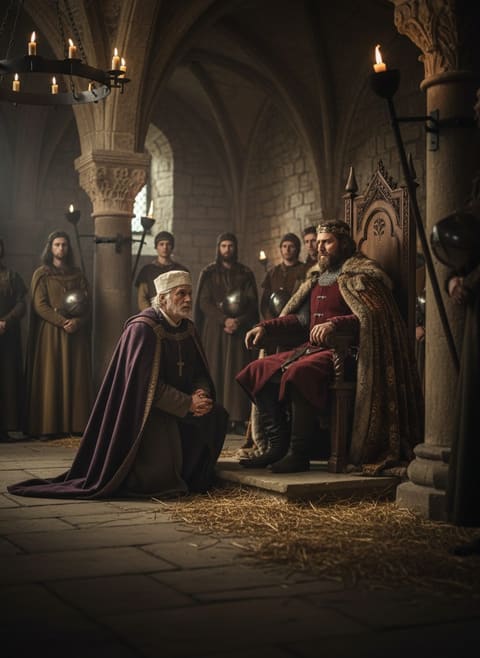
There was a night, preserved in legend and memory, when the bard confronted royal power face to face. He was bold, some might say reckless. He demanded an audience not with hostility but with the dignity and intensity of a people unwilling to let their heritage be erased. Edward, intrigued by the audacity of this musician-turned-messenger, listened. The bard sang of lands unbowed, of identities that outlive the sword. Courtly laughter faded as the bard's words painted pictures in the minds of those present.
Read next: The Day a Medieval Mayor Knelt and Saved Six Condemned Men
If only for a moment, Edward realized the essence of what he could suppress but never truly possess. A nation still existed within the hearts of its people, nurtured by stories passed from one generation to the next. In failing to silence the bards, Edward inadvertently ensured their survival. As he left the audience chamber, a smile playing at the corners of his mouth, it was clear the bard lived to sing another day—and with him, the spirit of his nation.
This tale might have been lost had it not been echoed, embroidered by centuries of recounting around hearths and markets. And what was intended as cultural erasure strengthened a resolve unique in history. With each passing generation, the mythology around the bard shaped Wales’s identity, demonstrating the power of words over kingdoms and history over hubris.
The lesson lingers: to erase a culture is never as simple as conquest. It is a battle of idea against idea, of silence against song. And in this Welsh bard’s resistance, a vital truth emerges for people everywhere: Stories endure as long as those who hear them cherish their echoes.