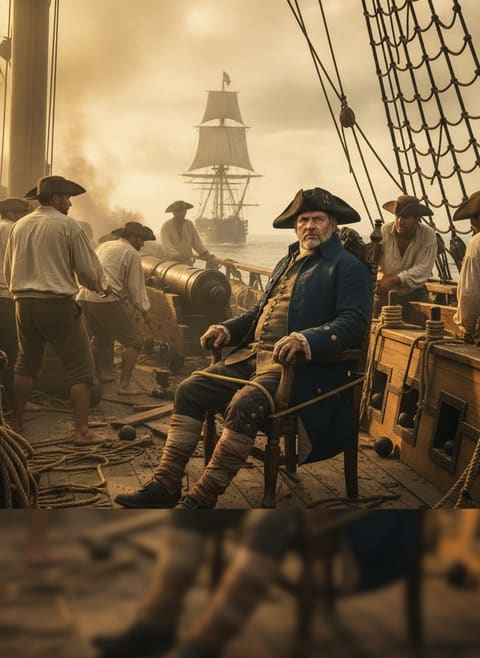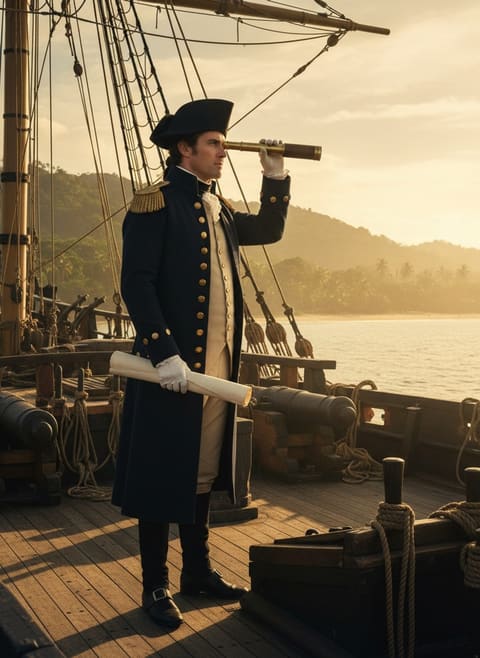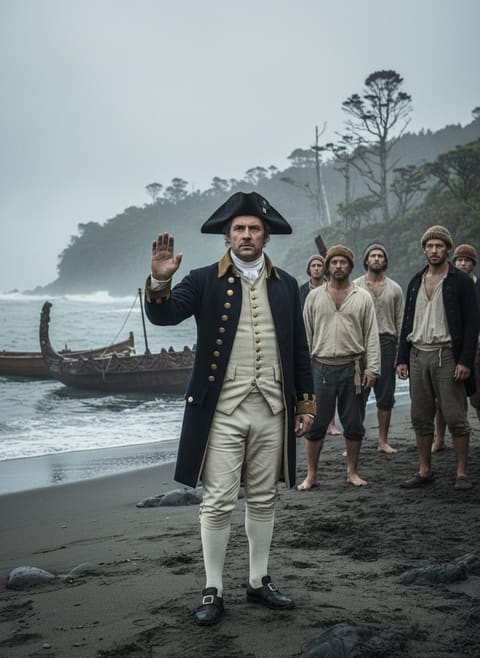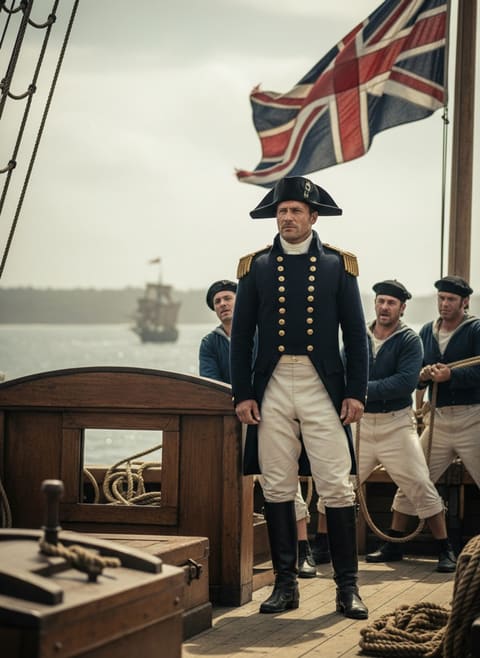
April 28, 1789. The swell of the Pacific shone under the merciless arc of the sun.
The Mutiny Unfolds
On that fateful morning, Lieutenant William Bligh awoke aboard His Majesty's Armed Vessel "The Bounty" feeling uneasy. The murmurs of discontent had been a thorn in his side during their voyage to Tahiti, where for months the air had been thick with fruit and warm breezes. New plans developed far from his watchful eye, fomented by unhappiness and the allure of island paradise.
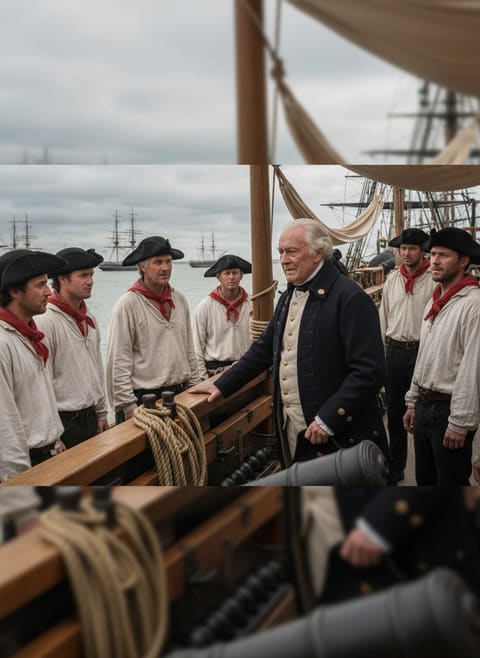
As the sun firmly claimed the horizon, Bligh's worst fears came crashing down like the thunderous surf. Fletcher Christian, his former ally, now stood over him wielding the authority of the blade. What unfolded on the frayed boards of the ship was no less than mutiny; Christian and his dissenters had seized control.
Bligh, along with 18 loyal men, was unceremoniously cast adrift. Given only the sloop's launch—a small open boat and scant supplies—Bligh faced the limitless expanse of the Pacific with minimal provisions and no charts. A vessel designed for shoreline jaunts now bore the hopes of survival across unfathomable distances.
Read next: The 2,000 Sailors Britain Sent to Die Hunting the Slave Trade
Seamanship and Survival: A Treacherous Voyage
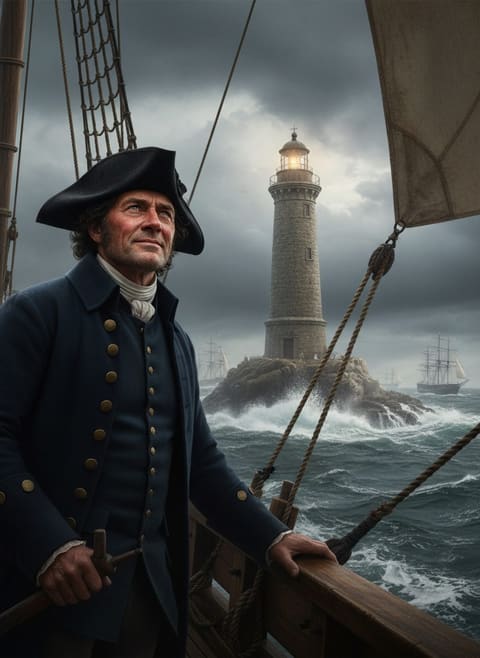
The notion of navigating 3,618 miles of open sea with no charts and only a sextant would test the limits of even the most ardent naval officer. Yet Bligh did not falter. His resolve forged in the crucible of command, he leaned heavily on the knowledge accumulated from years beneath the mast.
The "library in one's mind," as Bligh would later call it, contained every island, every current, every tempest he could recall. Each knot sailed brought them closer to the destiny he vowed would not end in oblivion.
Balancing survival with navigation became an intricate dance. The men, ravaged by hunger and exposure, consumed what meager sustenance they were granted: meager hands of salt pork, the occasional rain-fed gulp, and the desperation to carry on. Every shred of fibrous bark and every raw morsel was savored like manna. Miscalculating days or overstaying precarious landfalls could spell doom of an unseen attacker.
In witnessing Bligh's indomitable spirit, his men's loyalty did not waver. Their captain, their lifeline, harbored more than the instruments of sailing; Bligh commanded all with a rare blend of paternal command and rigorous insistence on duty. Strictures adhered to kept disorder at bay—only through perseverance and discipline could they hope for salvation.
Land in Sight: The Shores of Salvation
After 41 days at the mercy of the oceans, the weary mariners sighted the bleached sun-baked shores of Timor on June 14. The cavernous gulf between feral hope and tangible reality closed with each stroke. Isla Timor suggested a realm of refuge—a place where water flowed and soil could sustain once more.
Read next: The Navy Man Who Sailed Into Algiers and Freed 1,000 Slaves
Upon landing, the small boat became a sanctuary for the journey's survivor tales. Though legs trembled and faces bore sun-etched lines of tired dignity, each would recount in successive years the exquisite power embodied in a sailors' redemption. Their shared saga added flesh to the bones of maritime lore: a testament to human perseverance and the art of sea craft.
The unimaginable odyssey earned Bligh a revered place in nautical chronicles. His triumph over adversity demonstrated an unyielding will, capable of mustering hope against Nature's turbulence. Timor was not just a geographic coordinate; it became a lifeboat buoying the souls of those who risked everything, led by a man who refused to forfeit them to the abyss.
Why We Still Sail by the Stars
In the end, the voyage of William Bligh extends beyond the sum of its dramatic milestones. It distills into one eloquent truth—the realm of possibility rests not in the tools we command but within the soul's unbending tenacity. In an age reliant on celestial navigation, Bligh needed no charts; only the light of the stars and constellations' embrace guided him.
Such narratives echo into the present, sparking imaginations and rousing ambitions, an affirmation that the indomitable spirit of discovery endures. Thousands of leagues sailed in an open boat illuminate how one man clung to his crew's collective survival. His story sails on through history, reminding us that the human spirit often finds its strongest wind when faced with stormy seas.