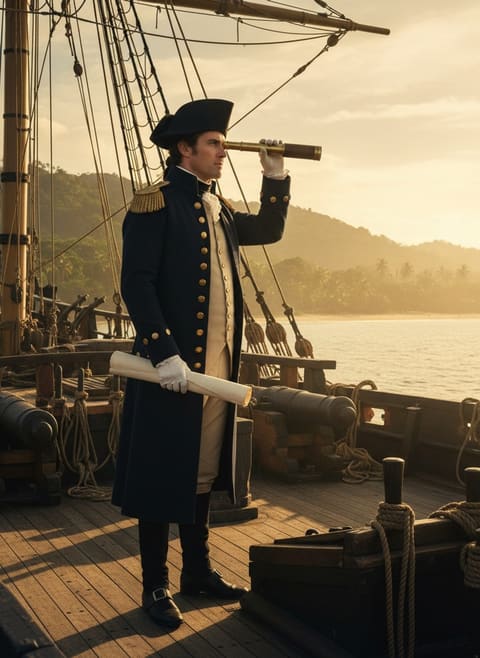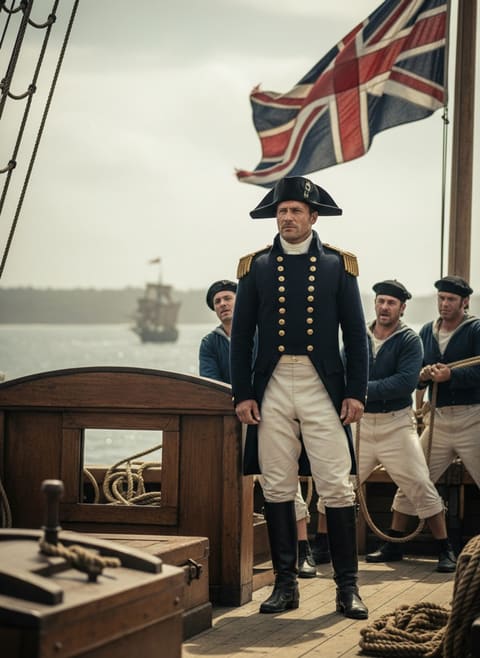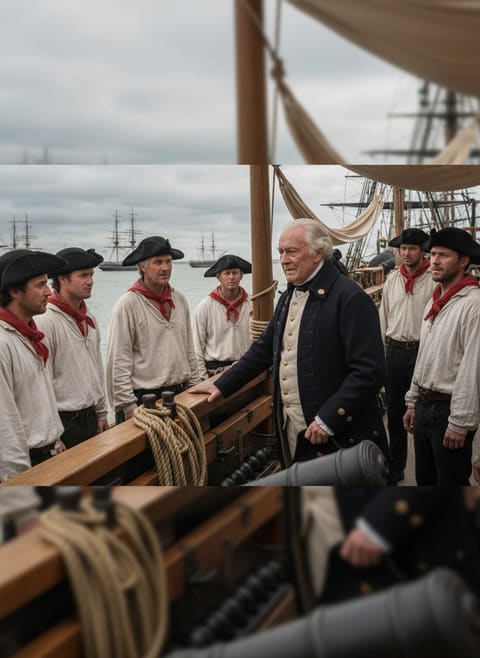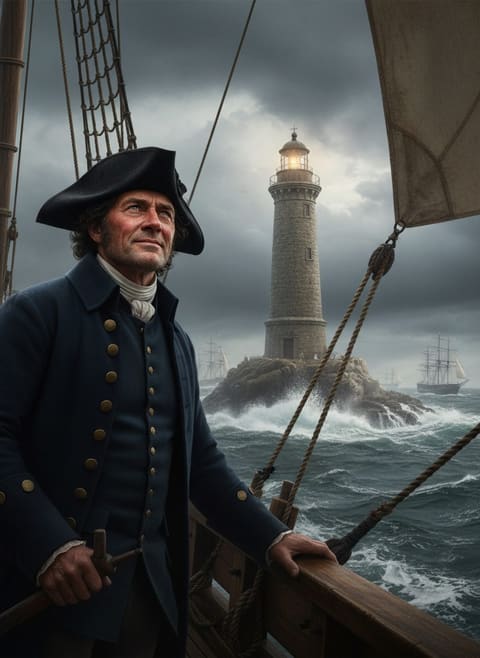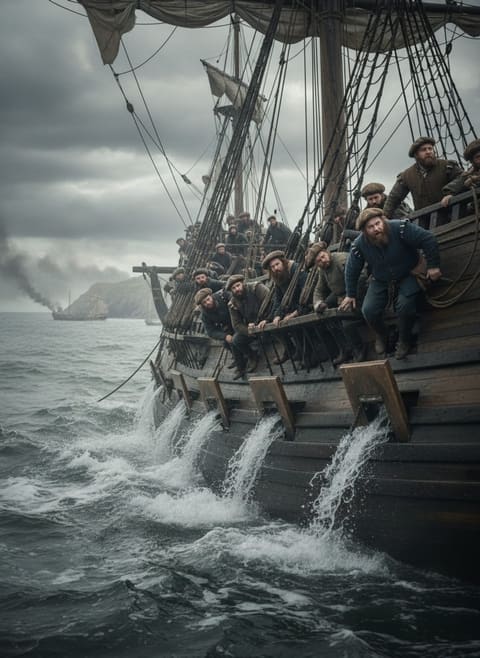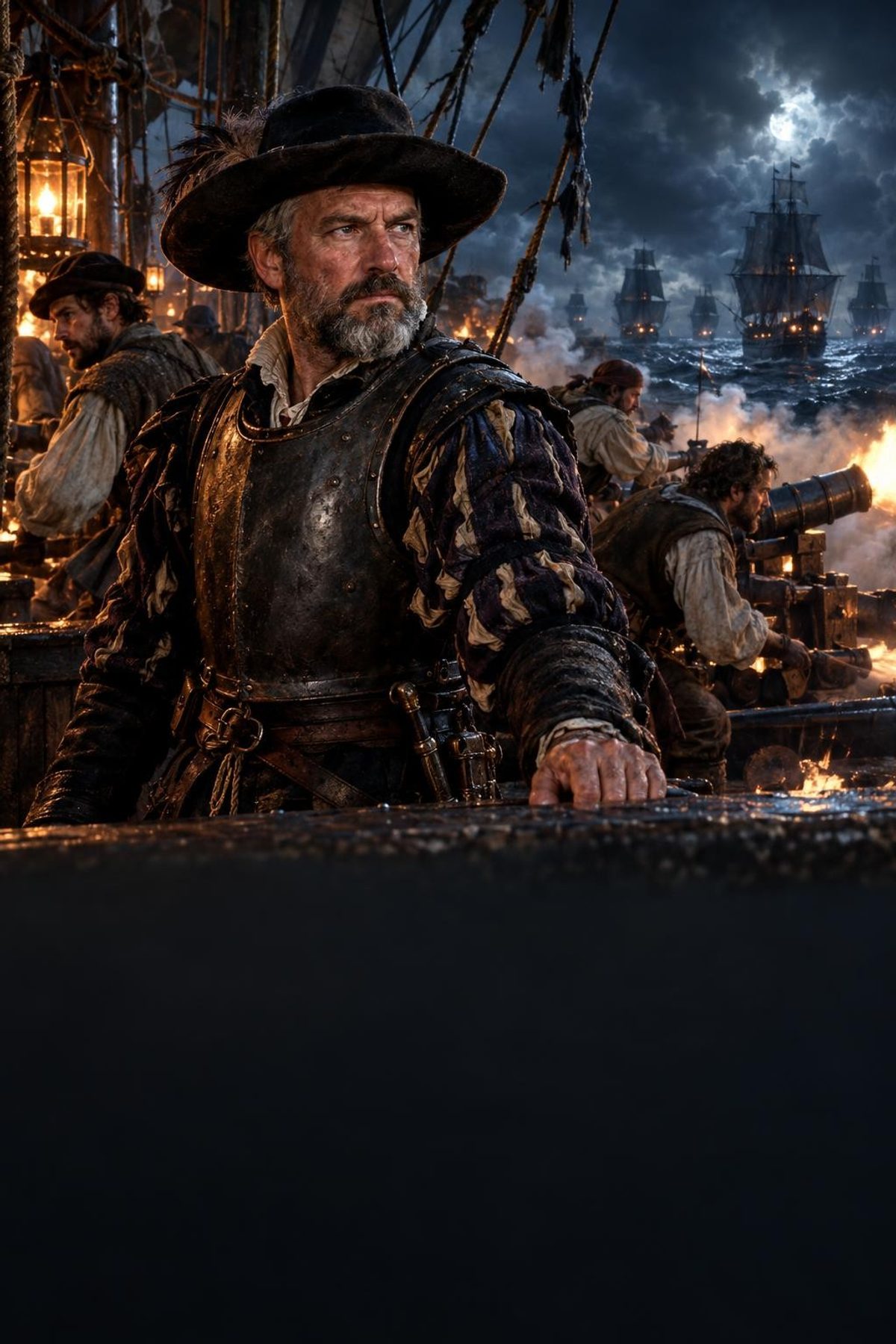
The Revenge was just one ship. Grenville made her famous by fighting alone.
The Calm Before the Storm
It was August 1591, and the Atlantic was restless. Pack clouds loomed over the sea near the Azores. Ships from the English Navy searched for Spanish treasure-fleets. Among them was the Revenge, a warship renowned for her sleek build and fierce reputation. Her captain, Sir Richard Grenville, was a man of distinct character. With a crew numbering just over 190, the Revenge embodied the spirit of defiance and innovation that defined the Tudor era.
The English fleet hoped to intercept the Spanish ships, laden with treasures from the New World. But fortune was not on their side. The English commander fell ill, delaying their operations. Supplies ran low, and the discontent was palpable across the fleet. It was under these tense conditions that the English discovered a Spanish armada of 53 ships was approaching. The unexpected arrival of such a colossal force left Grenville with a daunting decision.
While the majority of the English ships managed to evade the Spanish, the Revenge, alas, was caught at a disadvantage. With her sails worn and tattered from previous encounters, retreat was barely an option. Some say Grenville, refusing to leave behind sick and injured men ashore, chose to steer directly into the heart of the enemy. Whatever the motive, Grenville faced the storm head-on, embodying a defiant spirit that surprised even his enemies.
Read next: The Navy Man Who Sailed Into Algiers and Freed 1,000 Slaves
A Night Drenched in Cannon Fire
As both navies squared off for the impending clash, the likelihood of victory for Grenville seemed grim. Yet, in the fading light of dusk, with the setting sun casting its final rays over the ocean, the Revenge began her audacious stand. Cannons roared into life, their thunder echoing across the water. The Spanish ships, with overwhelming numbers, circled like hungry wolves around their prey.
Grenville's men fought with dogged determination, each broadside firing blast after relentless blast into the surrounding sea. Each Spanish ship that drew close bore the brunt of her wrath. The fight raged on into the depths of night, the ocean illuminated by the fiery glow of guns and burning embers. As cannonballs whistled and crashed, the crew of the Revenge fought as if their very existence hung in the balance.
Over fifteen grueling hours, Grenville directed his ship through the narrowest escapes, artfully using her nimbleness to weave between their assailants. His efforts were not without cost, though. The gun decks ran thick with smoke, men worked tirelessly under the burgeoning heat, and Grenville himself was wounded more than once. Yet, he refused to yield. The Spanish leaders, impressed by the grit of their lone adversary, sent repeated calls for surrender, each met by Grenville's steadfast refusal.
A Legacy Carved in Salt and Steel
By dawn, the relentless siege had taken its toll. The Revenge, battered and shipwrecked in spirit, remained afloat as a monument to unyielding courage. Fuel and ammunition were nearly exhausted, her decks littered with fallen men. And still, Grenville stood resolute, prepared rather to sink than surrender. In a desperate final bid, amidst the ruins of his command, Grenville sought to destroy his beloved ship, hoping to take as many foes with him as possible.
Read next: The Day Admiral Benbow Refused to Strike His Flag
Ultimately, the Englishmen ended the fight on Grenville's terms. Recognizing the fierceness of their adversary, the Spanish boarded the crippled vessel. Sir Richard Grenville, now gravely wounded, was taken aboard the flagship of his foes. He passed some days later, honoring a personal code of valor to the last.
The remarkable stand of the Revenge echoed through history. It was said that her fight held back the Spanish from pursuing the remainder of the English fleet, avoiding potentially greater disaster. Grenville's defiance was more than naval combat; it was a message that rang far beyond the shores of England. It reminded Europe of the emergent force across the channel, not just in naval might, but in sheer determination.
These waters, turbulent and boundless, held countless stories of maritime conflict. Yet, this tale, of a single ship that dared defy an armada, remains unforgettable. Grenville's battle showed a spirit not easily silenced by overwhelming odds, etching a legend into the annals of naval warfare — a reminder of courage and will, anchored firmly in history.