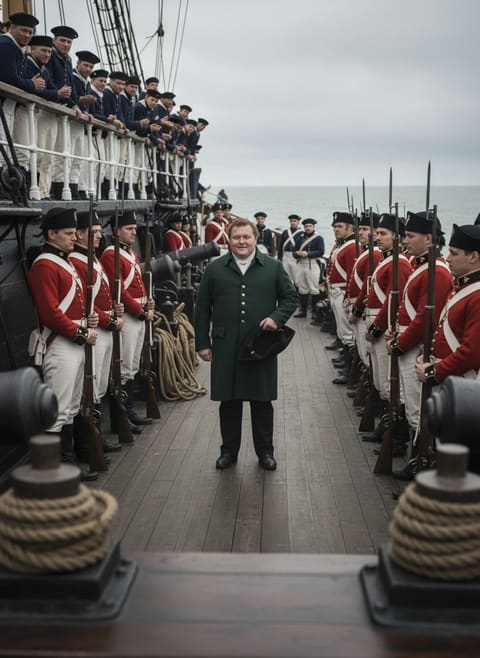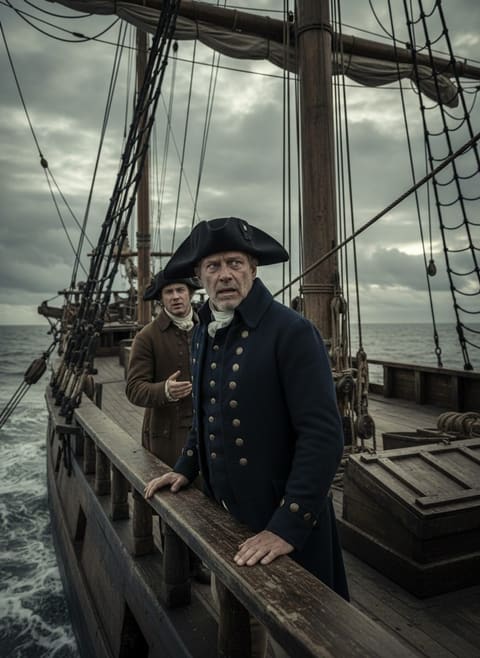
A vision of maritime chaos had gripped England, where a volatile blend of politics, youthful sovereignty, and foreign ambition threatened its very existence. The royal diadem weighed heavily on the small head of King Henry III, a boy of just nine years, whose grasp on power was as delicate as a fiddlehead fern unfurling in spring. England seemed ready to fall into the hands of Prince Louis of France. Yet, on this fateful day, it was neither king nor prince who would decide the kingdom's fate, but rather the daring seafarers of the Cinque Ports and their fiery resolve.
The Brewing Storm: England at the Brink
England in the early 13th century was a tinderbox, simmering with discontent and ripe for upheaval. Following the disastrous reign of King John, his young son inherited a kingdom fraught with division. A consortium of rebel barons, resentful of the crown's overreach and exorbitant taxation, had allied with Prince Louis of France, offering him the English crown in a treasonous twist. By 1216, Louis had been proclaimed 'King of England' in London, an act that found dubious legality but alarming acceptance. London, along with much of the southeast, lay in French hands, while the Crown's legitimacy teetered on the brink of collapse.
In this fractious landscape, the French believed their naval dominance was assured. With their fleet stationed in the strategic harbor of Sandwich, they prepared for a final thrust into the heart of English resistance. Yet, unbeknownst to them, a locust-like swarm of ships gathered in quiet rebellion along the Kentish coast, ready to contest control of more than just the sea.
The Pirate Monk and His Fleet
At the center of this tempestuous tale is the enigmatic figure of Eustace the Monk, a man whose life read more like folklore than fact. Described as both monk and pirate, Eustace's journey from the cloister to commanding French vessels adds a layer of intrigue to the annals of medieval naval warfare. This ex-monk-turned-mercenary captained a formidable French fleet, his knowledge of the treacherous English Channel exceeded only by his ruthless reputation.
Read next: The Night the British Ate the President's Dinner
Yet, for all his cunning, Eustace did not foresee the audacity of his English adversaries, who, driven by desperation and resolve, were concocting a fiery retort to his plundering plans. The Cinque Ports, a venerable confederation of coastal towns with a proud maritime heritage, marshaled forty ships to thwart the French occupation. These were not conventional warships but merchant vessels retrofitted for battle, guided by skilled mariners who knew every ripple and eddy of the coastal waters.
Fire in the Water: The Battle Unfolds
As dawn broke on May 24, 1217, the English fleet emerged from their hideaways, sails blossoming on the horizon like the wings of a majestic waterfowl. Their mission: engage the French fleet at Sandwich and sever the lifeline of Louis's impending domination. The battle that ensued was both brief and brutal, underscoring the unpredictable might of determination over sheer numbers.
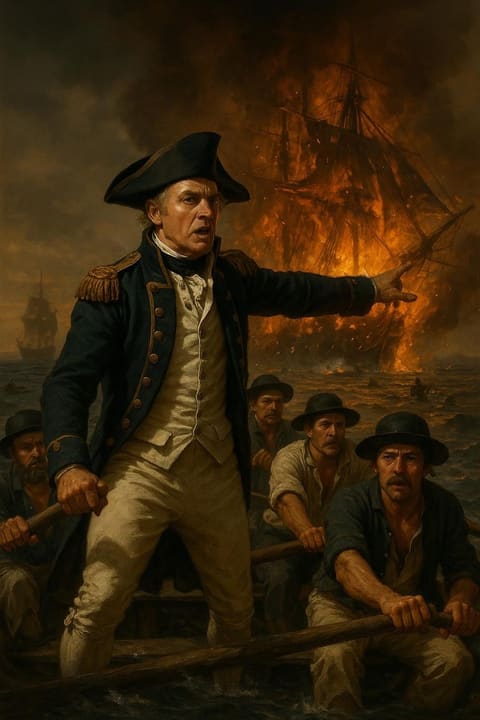
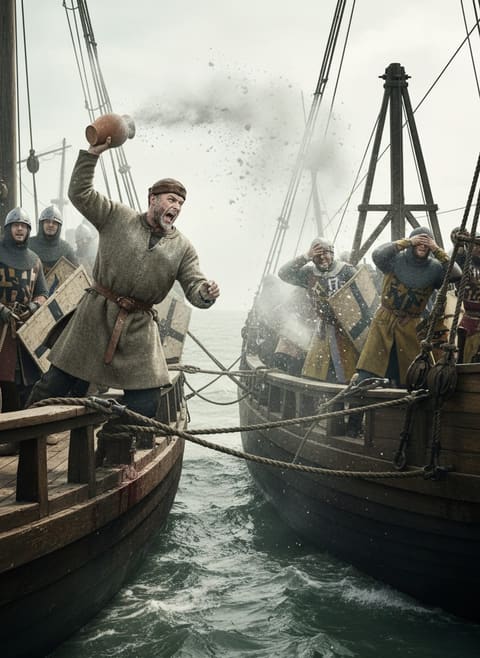
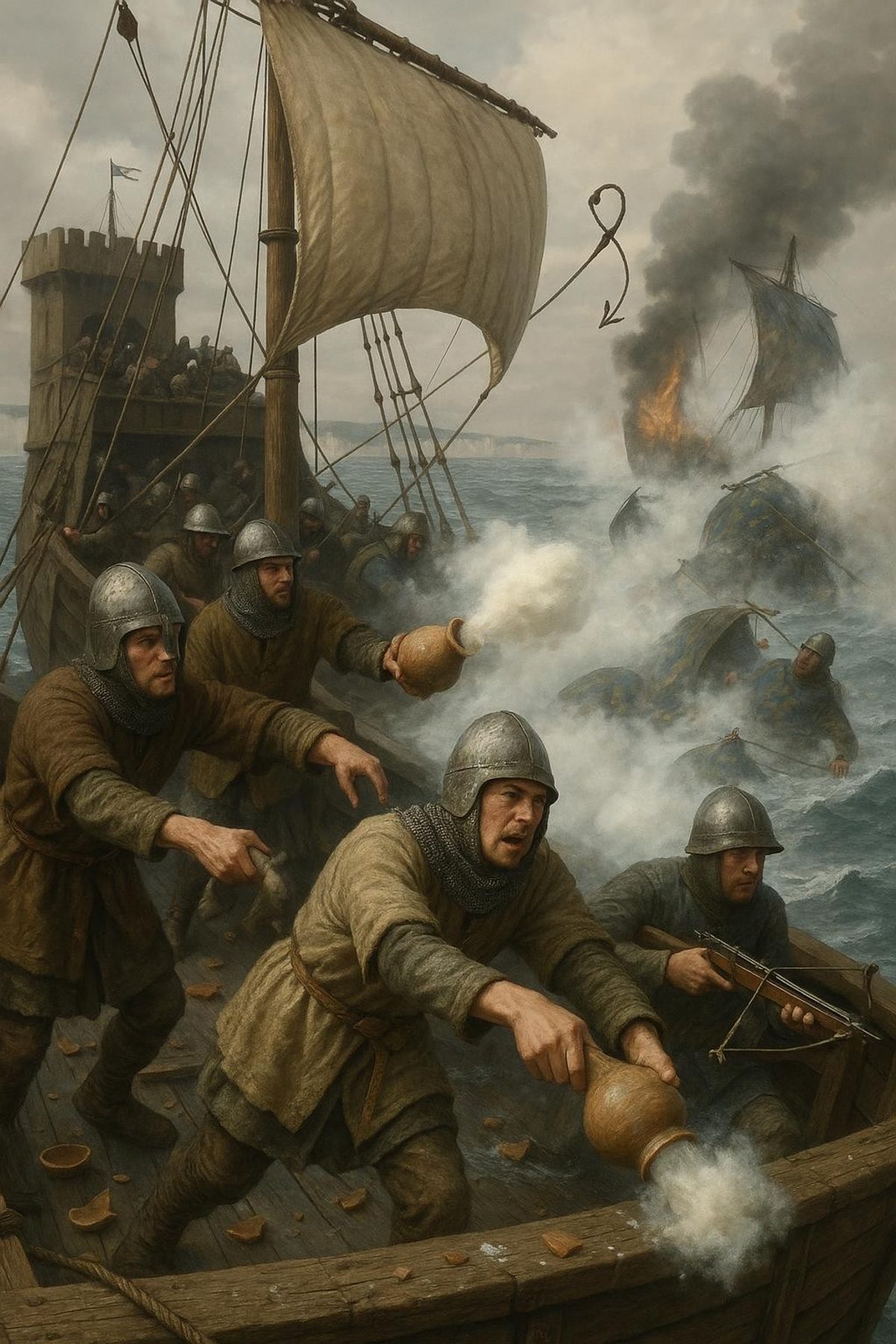
It was not the clash of timber nor the shout of men that made this encounter legendary, but rather the deployment of an incendiary device, a harbinger of destruction aptly described as *Greek fire*. The English had packed clay pots with this viscous concoction, launching them with catapults to ignite the French vessels. Amidst the roar of flames and the acrid scent of smoke, Eustace's navy descended into chaos, his well-trained crew no match for the inferno that leapt from ship to ship.
The French, their hopes dissolving in the encroaching inferno, faltered and fled. Eustace himself met a grisly end, cut down by the English sailors who outmaneuvered his once-mighty armada. Amidst the charcoal skeletal remains of their vessels, England's fate was rewritten in bold strokes of smoke and flame.
Read next: The Day a One-Eyed Admiral Sailed Into the Line of Fire
A Birth of Hope: Newfound Unity
The aftermath of the Battle of Sandwich sent ripples through the sociopolitical landscape of England. The triumph was not only a tactical coup but a symbolic rekindling of national unity under a young monarch's improbable reign. It marked the beginning of the end for Louis's ambitions in England, as French influence receded like the ebbing tide, ultimately culminating in the Treaty of Lambeth later that year.
This victory shored up King Henry III's nascent regime, empowering his supporters to dismiss the French threat and reconcile with the rebellious barons. The chronicle of Sandwich became a pillar of inspiration, a turning point heralding the stabilization of England under a single crown.
The Flame in the Fabric of History
The burning of the French fleet at Sandwich remains a testament to the indomitable spirit of a small coastal community and its larger-than-life impact on English history. On that fateful morning in 1217, it was not royal armies nor sprawling empires that swayed the course of a nation, but the bold maneuvers of ordinary seafarers. Their triumph served as a rallying cry for a fractured realm, uniting it under the banner of sheer willpower and ingenuity.
Though the details of this fiery confrontation might have been dimly recollected by subsequent generations, the flames remain etched into the collective memory as a reminder of England's resilience. The events at Sandwich are a clarion call echoing through time — that even when outposts of power seem unassailable, a spark of courage can alter the course of history.