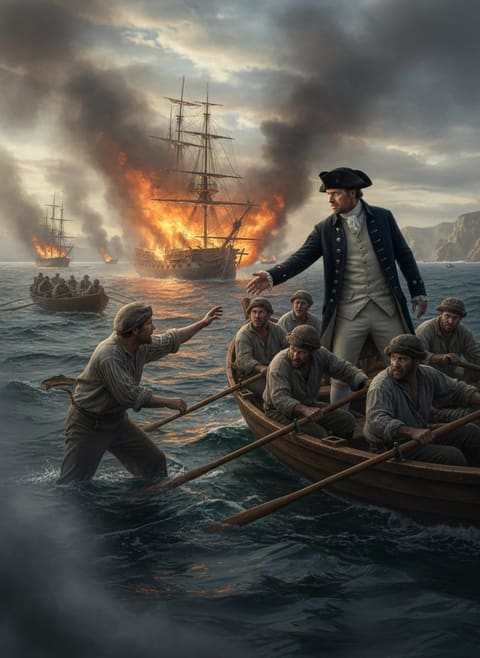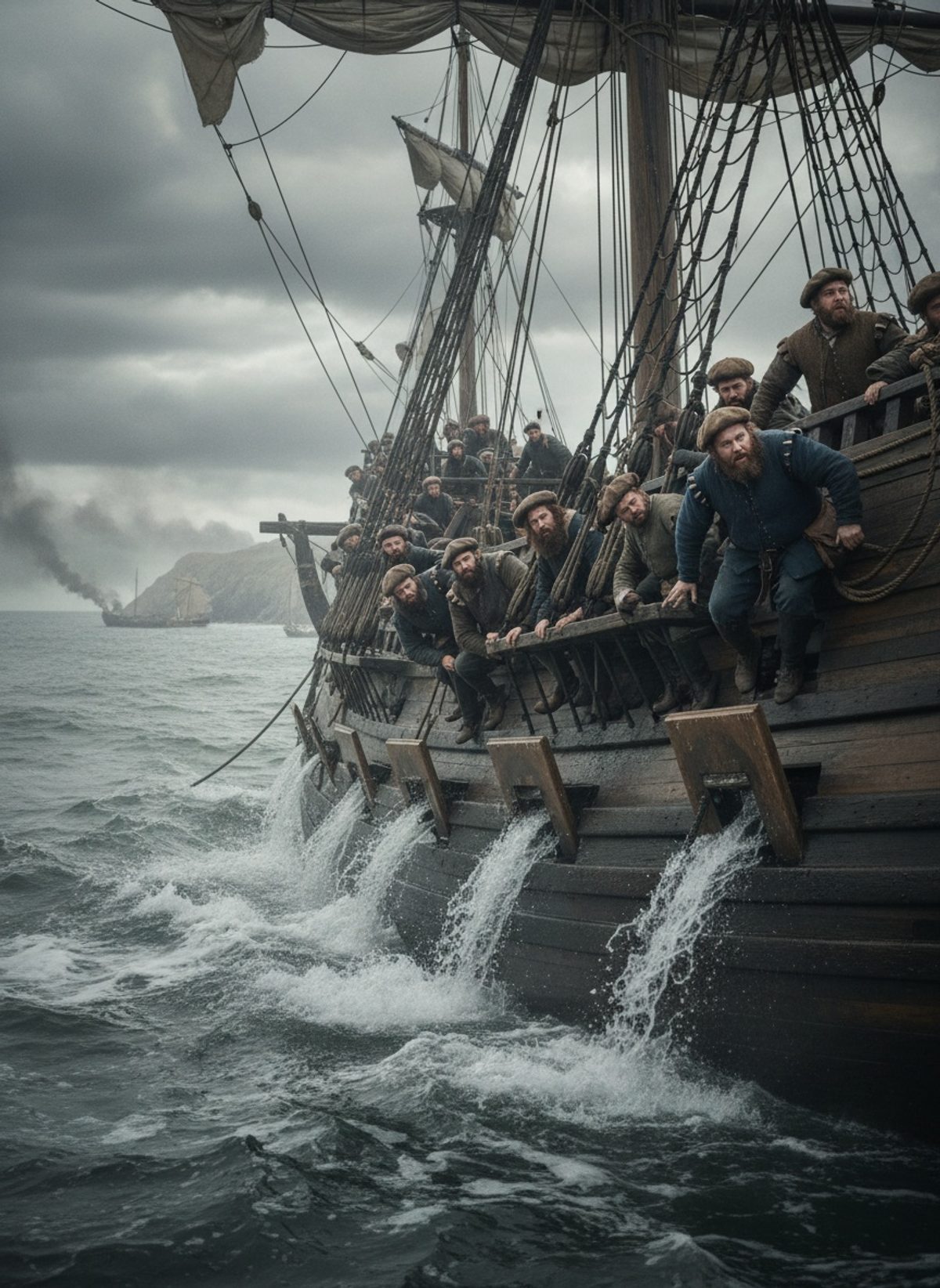
A deafening crack reverberated through the thick summer air as the deck of the Mary Rose pitched sideways beneath its sailors' feet. Shouts of desperate men echoed across the Solent, their cries an unsettling symphony of chaos and fear. Onshore, King Henry VIII, the grand architect of his naval might, watched in horror as his proudest flagship, the Mary Rose, began her swift descent into the cold embrace of the sea.
The Pride of a King
In the early years of Henry VIII's reign, England's naval power was evolving, transitioning from a defense mechanism to an instrument of ambition. At the heart of this emergent fleet was the Mary Rose, a true embodiment of Tudor might. Launched in 1511, the ship was to be Henry's martial masterpiece, boasting an unprecedented number of heavy guns distributed across her decks. The king’s dream was a floating fortress designed to project England's strength across the turbulent waters of Europe.
For thirty-four years, the Mary Rose was a stalwart of campaigns and confrontations, her decks teeming with skilled sailors and fierce soldiers. Despite her robust build, the Mary Rose was not without her flaws. Her heavy armament, a testament to aggression and ingenuity, was also her vulnerability. A flaw that, under the right—or rather, wrong—conditions, could turn triumph into tragedy.
The Ill-fated Engagement
On July 19, 1545, the channel's winds carried not only the salt of the sea but also the scent of battle. As tension simmered in the Solent, England faced an imminent French invasion. The galleys of France, powered by oars and wind, advanced upon the English fleet in a calculated dance of warfare. With supremacy of the seas hanging in the balance, the Mary Rose took her place in history, prepared to engage the enemy with all the ferocity her guns promised.
Read next: The Night HMS Birkenhead Went Down and Men Stood Still
Witness accounts tell of a sudden shift in the wind's favor, a capricious ally that turned foe. The Mary Rose heeled over violently, her open gun ports scuttling promises of dominance as water cascaded into the lower decks. The ship's own weight, once the source of her strength, became her downfall. In mere moments, Henry's prized vessel was entombed beneath the waves, silencing the cries of service and desperation forever.
The Men Who Sailed Her
The tragedy that unfolded in the Solent was a shared fate, the cost of sovereign ambition etched in the lives of approximately 500 souls. These men, diverse and dedicated, represented the breadth of Tudor England. From seasoned mariners to young ship’s boys and soldiers eager for glory, the crew of the Mary Rose was a microcosm of the era’s naval expansion.
Life aboard the ship was both demanding and dangerous, an existence marked by the relentless rhythm of duty amid the smells of sweat, tar, and gunpowder. For the men who sailed her, the Mary Rose was not merely a vessel but a home—a floating citadel providing companionship and survival amidst the cacophony of the open sea.
The Mystery of the Sea
As the Mary Rose vanished into the deep, she took with her questions that would haunt the ages. Inquiries into her sinking began almost immediately, fueled by disbelief and the search for accountability. Was it the incompetence of an overburdened crew, the unpredictability of nature, or the architectural ambition that betrayed her? Theories abounded, as contemporaries and historians alike grappled with the enigma of the ship's swift demise.
Read next: The Day a British Admiral Freed a Fleet of Pressed Strangers
In all likelihood, it was a combination of factors: the unexpected change in wind, the exposure of the gun ports, and potentially impulsive manoeuvers that conspired to seal the Mary Rose's fate. The sea, ever fickle and fearsome, claimed her triumph as swiftly as it had awarded her splendor.
Echoes Through Time
The spectacle of the Mary Rose sinking before her king became a haunting emblem of naval warfare's perilous nature. As Henry VIII stood helpless on the shore, he bore witness not only to a personal and political defeat but also to a narrative of ambition, risk, and the unpredictable hand of fate. The shipwreck inspired generations of nautical engineers and inspired a forensic curiosity that persisted through the centuries, not least when her remains were sensationally raised from the seabed in 1982.
Artifacts retrieved from the Mary Rose offer a tangible link to a past world, grounding Victorian imagination and modern interest alike in the tangible echoes of Tudor England. Through the resurgence of these relics, the story of the Mary Rose continues to unfold, reminding us that history is never static, but a living dialogue between then and now.
In the end, the sinking of the Mary Rose serves as a testament to the impermanence of human endeavor. As England's naval supremacy ebbed and flowed with the tides, the ship's final moments underscored a fundamental truth about the capricious nature of power and the kingdom's entanglement with maritime destiny. Thus, even half a millennium later, the Mary Rose challenges us to reflect on the visionary's ambition and the cherished, ephemeral legacy left in its wake.