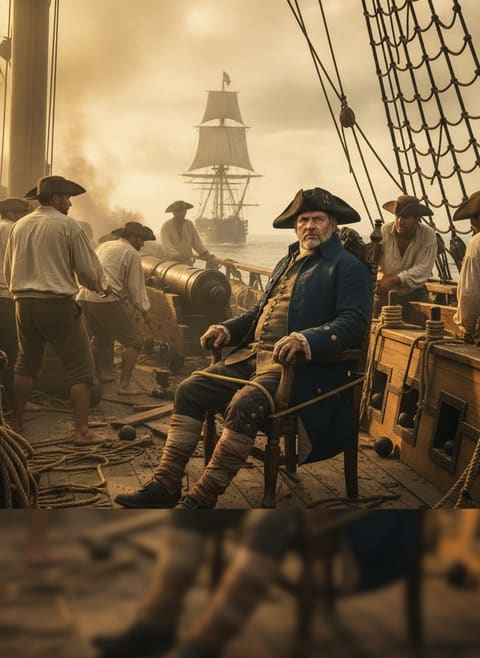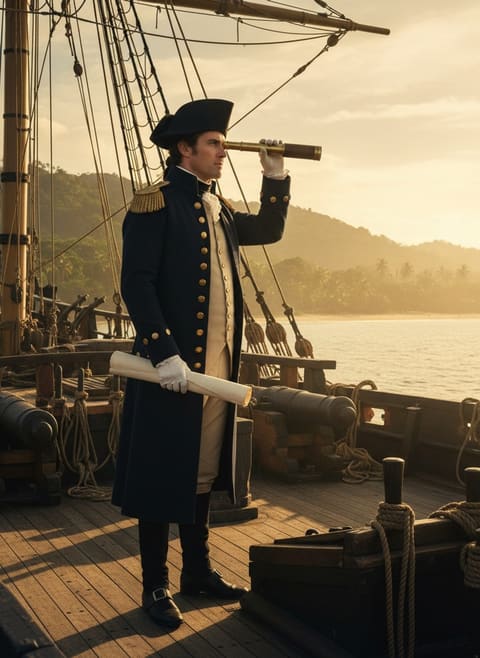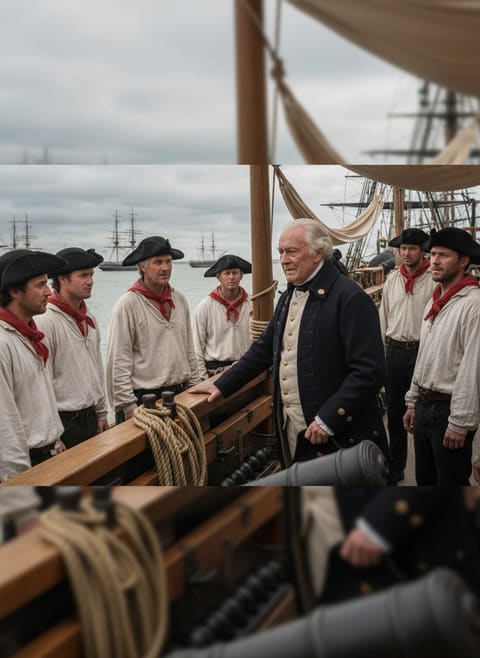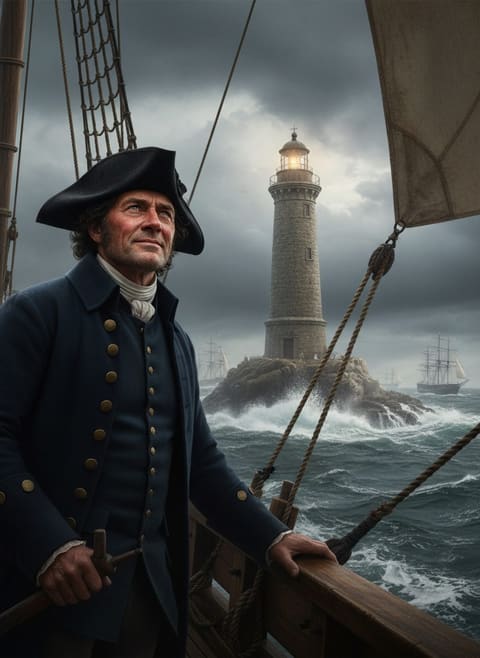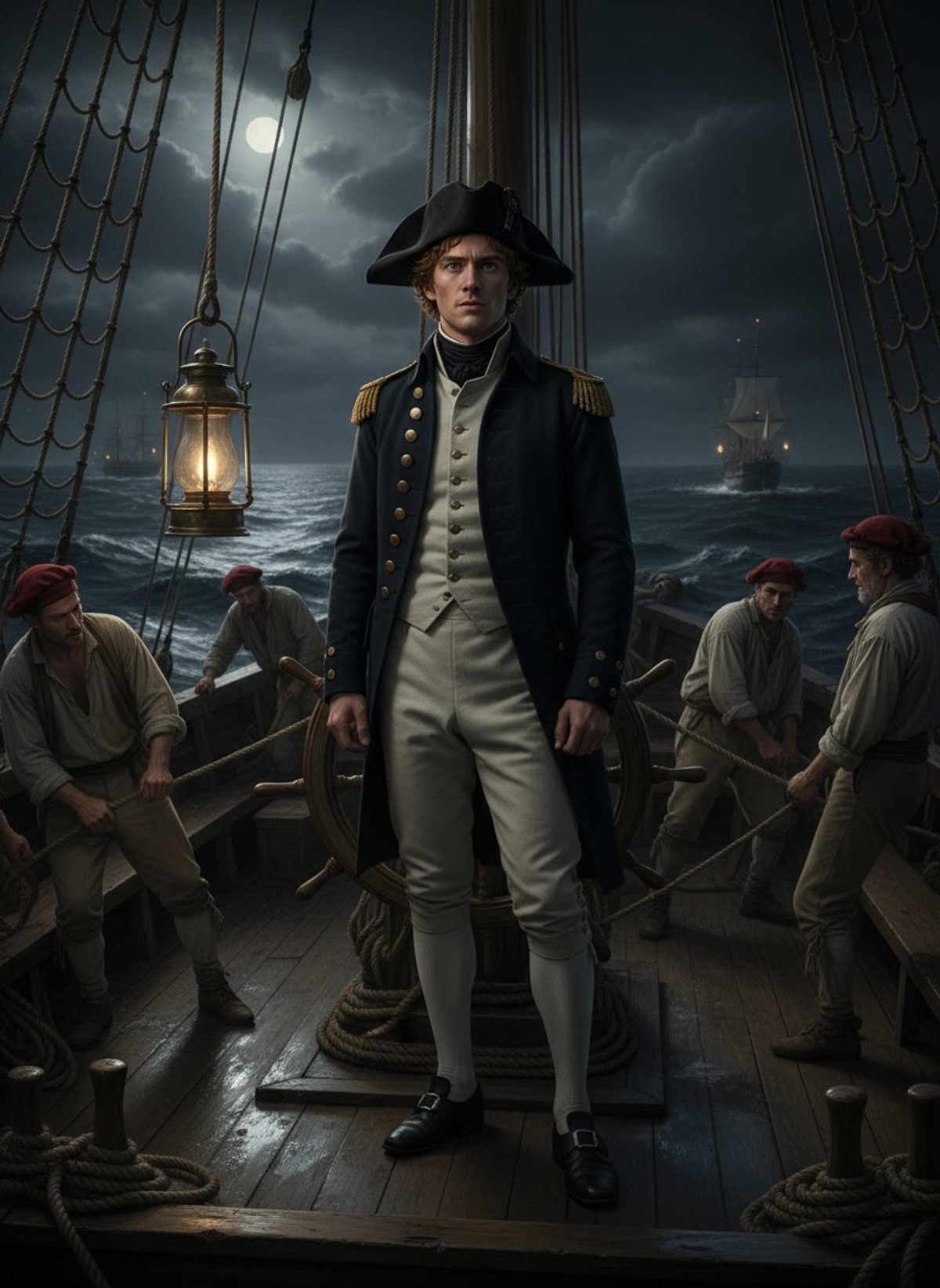
The French Atlantic coast at night is a world apart. The air is crisp, carrying the tang of salt, while a gusty breeze whispers tales long since forgotten. Starlight struggles against dark clouds, casting an eerie, flickering illumination over the restless waves below.
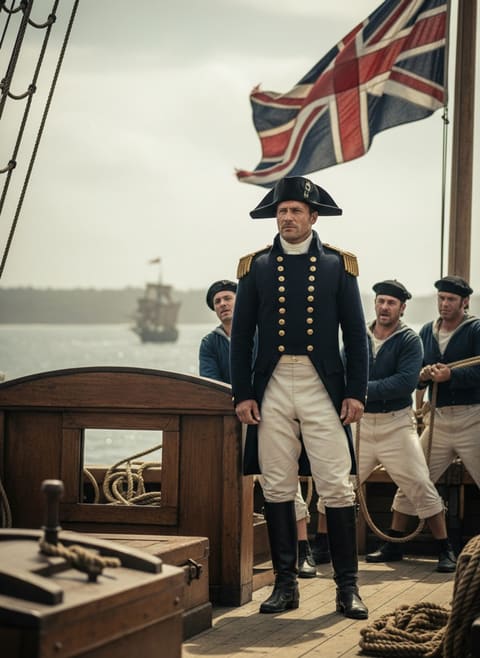
As ghostly phosphorescence dances on the water, a silent threat lurks in the distance. Near the harbor, a seemingly fearless British sloop cuts through the ink-black water like a knife. On board, Thomas Cochrane — a young Scottish naval lieutenant — knows he faces a challenge as formidable as the sea itself.
The Calm Before the Feigned Storm
In the summer of 1801, during the frenzied clashes of the Napoleonic Wars, Cochrane found himself commanding a modest sloop with just seventeen men to its crew. This small vessel now stood against not just one, but a formidable array of French naval power — frigates reinforced with shore batteries — casting an imposing threat on the horizon. Yet, amidst this seemingly insurmountable adversity, Cochrane's mind raced with ideas brighter than any beacon.
His sloop floated effortlessly over the gentle waves, the water's repetitive lapping against the hull masking the hammering sound of nervous hearts. Darkness was both ally and enemy, giving Cochrane the cover he needed while concealing the dangers lying in wait. The young lieutenant's mind was a whirlpool of strategies, and from it emerged a bold plan that defied logic and tactical norms.
Read next: The 2,000 Sailors Britain Sent to Die Hunting the Slave Trade
Navigating Shadows: Cochrane's Art of Deception
Presiding over the moonlit waves, Cochrane conceived a ruse that played as much on theatricality as on seamanship. With the calm perseverance of someone trying to make the improbable possible, he decided to harness the deep shadows of night for his bluff. Cochrane ordered his crew to light clusters of lanterns — a signal that would mimic a sizeable fleet lurking just beyond the visible blackness.
The flickering lights multiplied over the water like ghost ships emerging from the depths, their elusive flames instantaneously transforming his small sloop into the foreshadowing armada of a grand invasion. To the waiting French forces, this spectacle seemed to herald the vanguard of a full British assault. It was a masterpiece of psychological warfare played upon the vast midnight stage of the open sea.
Panic in the French Lines
Picture the frantic confusion that mirrored throughout the French fleet. Gazes scanned the sea, seeking explanations where there were none to find. Harbor commanders were perplexed as shades of lantern light danced menacingly at the edge of perception. They could not discern its true size, heightening their alarm and spawning panicked communications amongst the ships.
Distrustful of their ability to withstand this seemingly impending onslaught, the French were compelled into a decision that would render Cochrane's gambit successful. The order went out: retreat. Amidst the hubbub of fearful orders and hurried maneuvers, French ships began to scatter, convinced they faced an imminent confrontation with a much larger, hidden force.
The Grit Behind the Glitter
The bravery and audacity of Cochrane's theatrical deception cannot be overstated. Commanding a modest crew against forces many times their strength required not only a master tactician but a relentless resolve to survive against all odds. As the French fleet withdrew, the Scottish lieutenant likely allowed himself a brief moment of satisfaction amid the adrenaline speaking louder than any shout.
Read next: The Navy Man Who Sailed Into Algiers and Freed 1,000 Slaves
Cochrane's actions defied the textbook definition of naval warfare, showcasing the power of ingeniously applied psychological tactics. His wits in leveraging limited resources against superior numbers signified a triumph of mind over matter — a testament to the infinite potentials residing in calculated audacity.
History has a tendency to celebrate grand armadas and decisive battles. Yet, within the cramped confines of that lone sloop, a pioneering spirit found room to shine unencumbered by traditional molds.
Legacy Adrift in Time
Though this cunning maneuver may not fill the pages of every textbook, its implications ripple throughout naval history. Cochrane's ingenious scheme underscored the importance of flexibility and innovation in military strategy, leaving an indelible mark on naval warfare doctrines. In a world dominated by raw force and sheer numbers, this episode from 1801 stood as a fleeting reminder that brains can sometimes outwit brawn.
The tale of Thomas Cochrane and his theatrical mastery at sea remains a compelling chapter to revisit. His ingenuity transcends generations, a clarion of creativity and courage when the odds seem insurmountable. This narrative enriches our understanding of maritime lore and accents the intrepid spirit that these untouched histories continue to awaken within us.