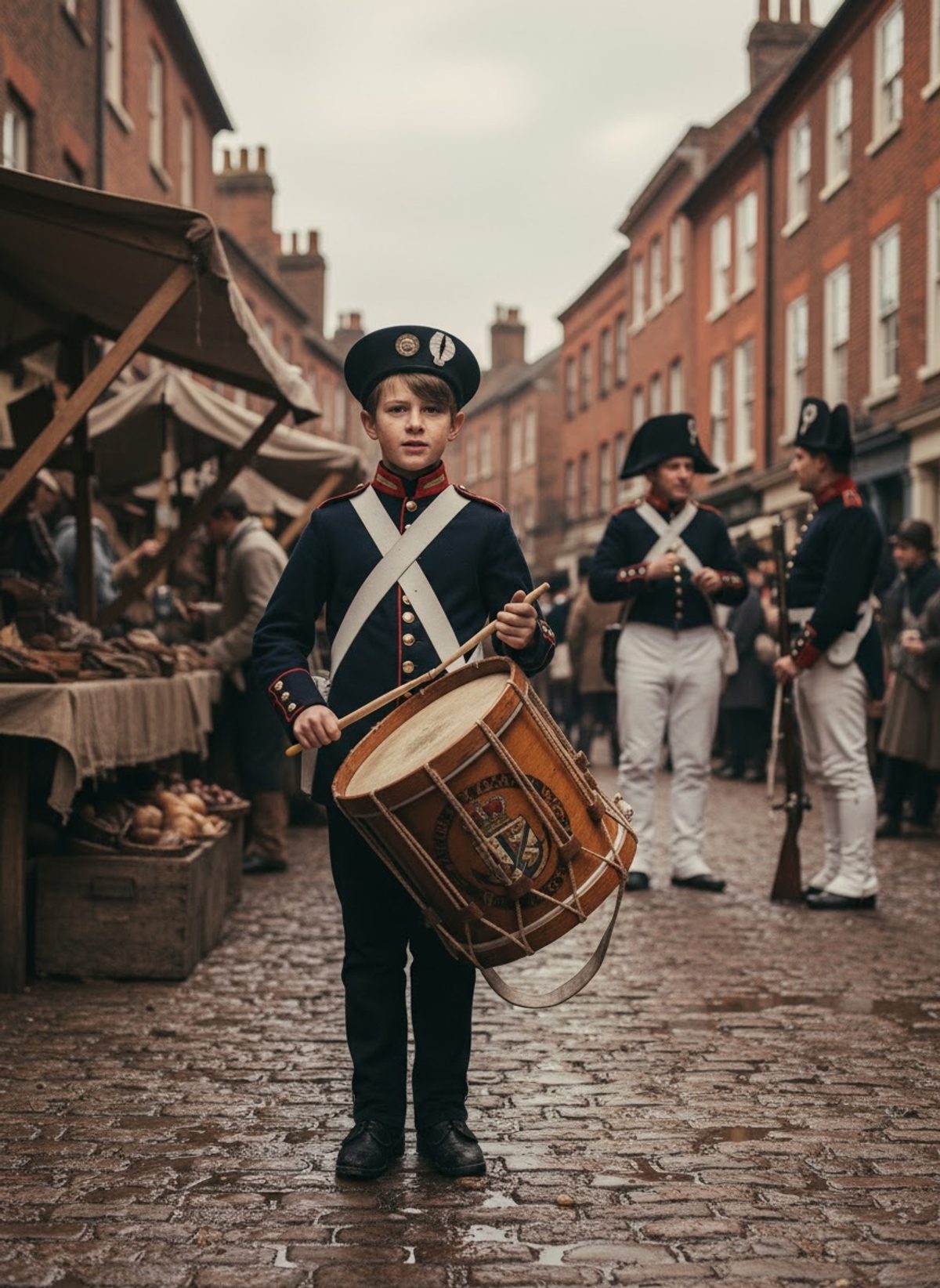
His hands thumped down on the drum with a practiced precision that belied his tender age. Edward Forbes, nine years old and barely visible behind the 45-centimetre-tall bass drum slung over his shoulder, marched down the bustling street of Chesterfield.
As the throbbing beat echoed against the cobblestones, shopkeepers paused their transactions, children abandoned their games, and curious heads peeked out of windows. The sound commanded attention and carried with it a message from His Majesty’s Royal Marines: they needed men.
Drumming Up the Public's Attention
In October 1808, effective communication required creativity, and the Royal Marines knew well the persuasive power of a well-played drum. With military bands primarily known for adding pomp to ceremonies, the drum also served a more practical purpose: capturing the interest of potential recruits. Before newspapers and telegraphs could efficiently deliver news, sounds and spectacles reigned supreme.
Edward Forbes was one of the youngest cadets chosen to beat out the call to arms. Despite his age, he had a big responsibility. His task was to drum his way across market squares and streets, drawing crowds with the rhythmic allure of his music.
Read next: What Are You Building? Share Your Favourite British Empire Model
Young Edward carried with him the legacy of the 'Duke of York and Albany's Maritime Regiment of Foot', the forerunner of the Royal Marines, as he mustered fresh recruits to fortify Britain’s defense against Napoleon's advancing threats.
These public performances were not mere displays; they were finely-tuned efforts designed to drum up interest and enlistment. As the rhythm of the drum called men to duty, the ancient traditions of the Marines resonated through the beats, reminding everyone that the Corps has been at the heart of British military operations since 1664.
A March Through Chesterfield
The market town of Chesterfield provided the perfect backdrop for Edward’s drum-led procession. Known for its bustling streets and vibrant trade, this Derbyshire town was a confluence of merchants, apprentices, and farmers, many of whom might be tempted to trade their daily toil for the promise of adventure and honor with the Royal Marines. In this era of rolling landscapes crisscrossed by country roads, towns like Chesterfield were rich recruiting grounds for the British military.
As the beats of Edward’s drum reverberated through the streets, spectators were drawn to the spectacle, giving officers the opportunity to speak with potential recruits. Each beat heightened the allure of life beyond the confines of local industry—a life marked by the global voyages and renowned discipline of the Royal Marines.
The Royal Marines needed effective tactics to cultivate interest, as the Napoleonic Wars demanded more and more men. This inland campaign, spearheaded by the likes of young Edward, was essential. It served as a reminder not only of the martial prowess of the Corps but also of their ingenious adaptability in recruiting methods.
The Role of Youth in Military Recruitment
Choosing a nine-year-old for such an important task may seem incredulous to the modern observer, but in the early 19th century, youth played a curious role in military operations. Boys like Edward Forbes often found their way into military life at an early stage, starting as drummer boys or musterkids before growing into other roles. Their small stature belied their strategic importance.
Drummers not only carried the beats to rouse attention but also relayed commands on the battlefields. Despite their youth, their contribution was invaluable, and their presence emblematic of the Royal Marines' fervent call across all ages to defend their nation.
Read next: When the Hill Station Dhobi Ironed the Empire's Clothes, 1885
Edward’s youthful appearance presented an image of fearlessness and duty, qualities meant to inspire those just a few years older to take arms. In an era where age had yet to yield its privileges, boys were expected to pull their weight in significant ways.
Echoes of History
Edward Forbes’s drum, remarkably preserved, stands today as a silent sentinel to a bygone age when sound was the siren song of duty. While the methods of recruitment have evolved over centuries, the essence of the call remains the same. The Royal Marines, without traditional battle honors, carry the indomitable "Great Globe Itself" emblem, a reminder of their enduring global service recognized by George IV in 1827.
The story of young Edward and his drum challenges the notion of age and duty, illuminating the young boy’s contribution to Britain's military history. The spectacle of a young drummer rallying potential Marines serves as a testament to ingenuity and resolve during the Napoleonic Wars.
While technology has since transformed recruitment, Edward’s tale is a poignant reminder of the power of sound to summon action. His beat may have long ceased, yet its echo persists—an enduring call to honor, adventure, and the stories left unwritten in the margins of history.