The early May sun cast its gilded light over the ancient stonework of Westminster Abbey, illuminating every intricate carving and shadowed recess. A delicate breeze threaded through the vast banners hanging in reverence, carrying with it the quiet murmurs of a nation on edge. This was no ordinary day in Britain. On 12 May 1937, King George VI would be crowned — a momentous occasion overshadowed by the unexpected path that had brought him here. As the abbey's doors swung open to invite the world inside, a man who had never sought the throne stood ready to embrace a destiny thrust upon him.
The Unintended King
George VI, born Albert Frederick Arthur George, never envisioned himself in the grand position of king. He grew up as the "spare," the dependable younger brother of Edward, Prince of Wales. His childhood was not one of carefree abandon; a stammer plagued his speech, making public speaking an ordeal rather than a triumph. Despite these challenges, he served in the Royal Navy and Royal Air Force during World War I — his steadfastness and sense of duty underpinning his quiet demeanor.
Fate took an unexpected turn when his brother, King Edward VIII, abdicated the throne on 11 December 1936, preferring a life with Wallis Simpson, an American divorcée, over the demands of kingship. With Edward's departure, George VI was left to shoulder the crown. It was a seismic shift not just for him but for the entire British Empire, still reeling from the shadows of the Great War and the creeping tensions of looming conflict.
The ascendancy of George VI was not merely a change in monarchs but the ushering in of a man ill-prepared by temperament and training for the responsibilities of the royal office. Yet, despite his trepidations, there was a determined resilience in him. Supported firmly by his wife, Elizabeth, the future Queen Mother, he embarked on the Herculean task of garnering respect and affection from a public conditioned to see him as second-place.
Read next: The Day a Young Prince Knelt and Refused a Crown
Coronation Day: Courage Woven in Ceremony
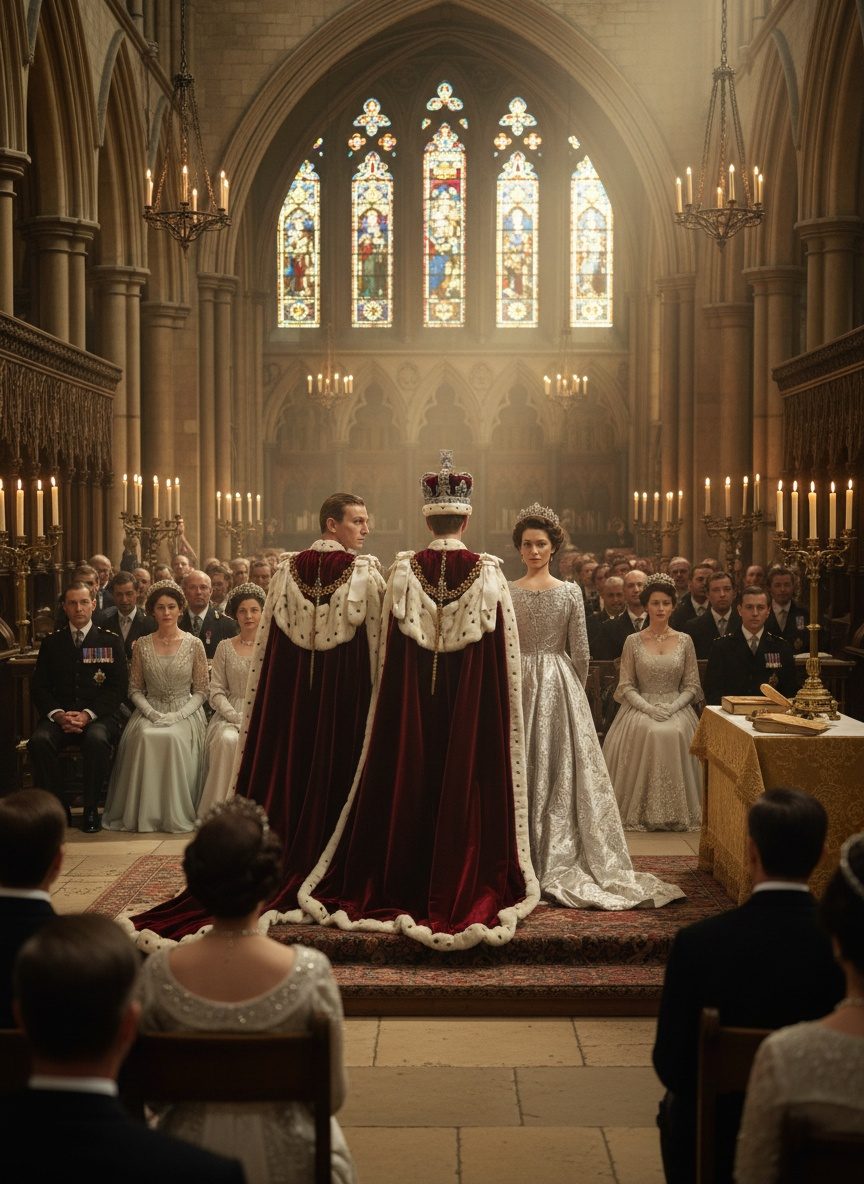
The morning of the coronation unfolded with ceremonial precision. London was a tapestry of color and sound, its streets teeming with dignitaries, citizens, and peals of church bells that reverberated across the city's landscape. Westminster Abbey itself was a cocoon of solemnity and sporadic grandeur, filled with the sharp light of anticipation as George VI entered amid the traditional hush.
As the service progressed, the historical gravity of the occasion was palpable. The presence of 8,000 guests — from foreign dignitaries to various personalities of British society — lent an added weight, but for George VI, standing beneath gilded canopies, donning the robes of his station, the real challenge lay in finding his voice — figuratively and literally.
Despite his notorious struggle with speech, his delivery was a quiet act of defiance against the disability that had shaped much of his public perception. The juxtaposition of this intimate struggle amid one of the most public spectacles in the British tradition defined not just the day but the king himself. The courage to face fears so publicly was recognized not just by those present but by millions listening to the broadcasted ceremony across the globe.
This coronation was more than a display of regal pageantry. It was a testament to the resilience of spirit and the complex dance between personal vulnerability and public expectation. Viewed through the prism of historical and familial contexts, the coronation of George VI was a singular event, with ripples that would travel well beyond the abbey’s walls.
Read next: The Day a Queen Rode Alone Into a Mutinous Army
The Quiet Strength of a King
King George VI’s reign was characterized by modesty, restraint, and a renewed focus on the values of duty and family. Navigating the tumultuous waters of World War II, his role as a stabilizing force cannot be overstated. His broadcasts during the war, notably his Christmas speeches, became rallying cries for a beleaguered nation, reminding them of shared sacrifices and resolute bravery.
His relationship with his family mirrored the stoicism and humanity he brought to his broader role. The steadfast partnership with his wife and his nurturing of their daughters, Elizabeth and Margaret, embodied a humanized version of royalty — one that endeared him to subjects exhausted by the caprices of preceding reigns. Though he might not have chosen the crown, wear it he did, with dignity that sought not uplift but reassurance.
Historians often reflect on George VI's kingship as one not defined by grand reforms or expansive philosophies, but rather by the authentic connection he forged with his people. In a world careening toward change, his presence was a calm, guiding hand, a reminder that leadership is as much about personal integrity as it is about institutional power.
The story of George VI matters because it underscores the unyielding power of human resilience and the myriad forms courage can take. It paints a picture of a king who, though initially reluctant, embraced his duty with grace and sincerity. In the annals of British history, where reigns are often measured by the magnitude of power wielded, his is remembered for the strength found in quiet determination and the noble act of simply carrying on.