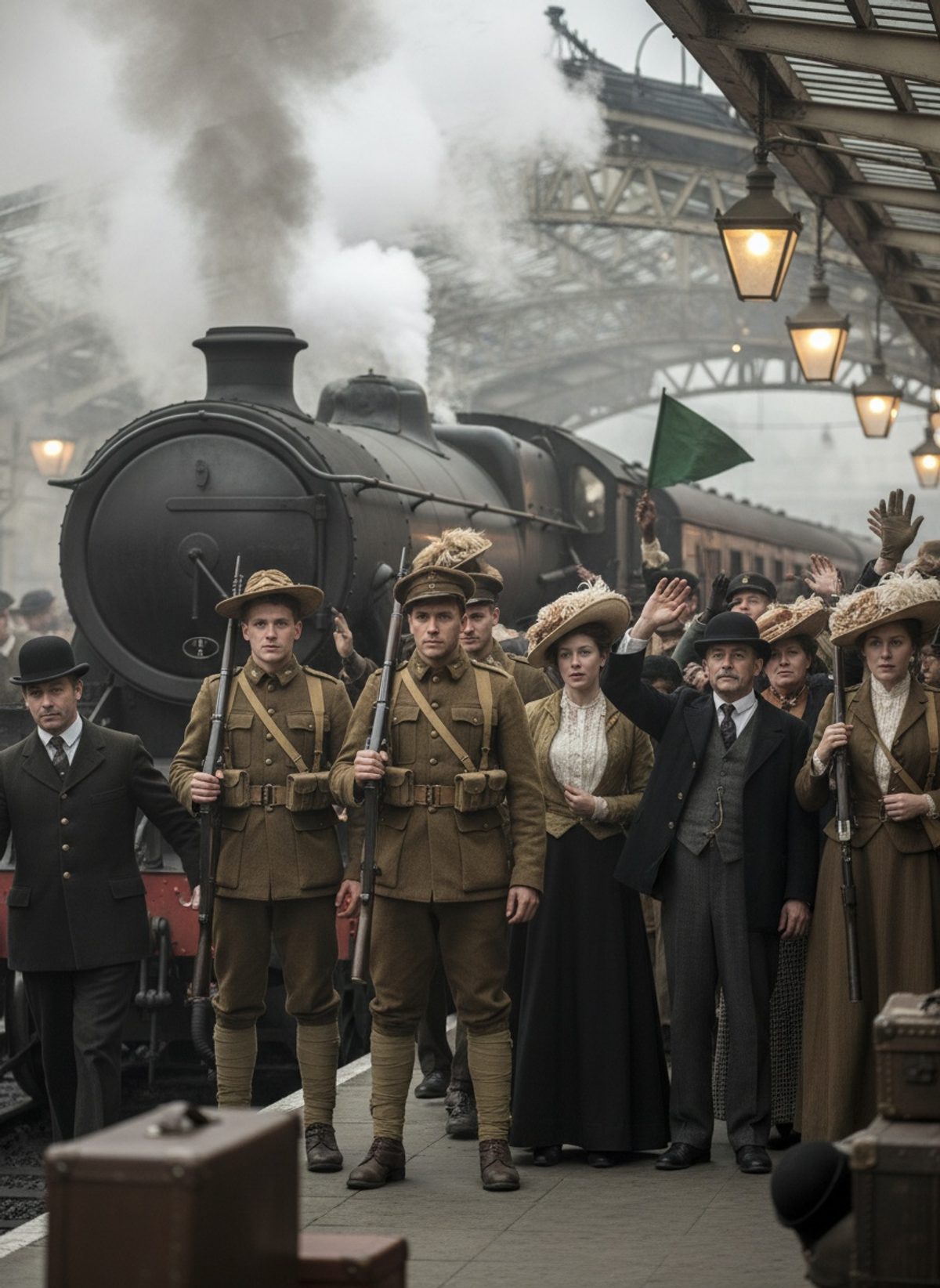
The dawn of early August 1914 saw an uncharacteristic stillness enveloping the bustling heart of Britain. The hazy light of morning hung over its railway stations, bathing platforms in a soft glow that mingled with the rhythmic whispers of locomotive steam. These trains, colossal iron beasts usually constrained to serving commerce and commuters, were poised on the edge of unprecedented action. Their iron wheels and whistling engines awaited orders to carry a nation’s fate across familiar tracks in unfamiliar circumstances.
The Great Seizure
When Great Britain declared war in August 1914, the entire nation was drawn into an urgent choreography of mobilization. At the center of this whirlwind were the railways. Seized by the state almost overnight, without public timetable or fanfare, the railway system transformed into a strategic lifeline. It was a plan pursued with breathtaking efficiency by the Railway Executive Committee, a body that few had heard of but whose actions were crucial to the success of the war effort.
Tasked with orchestrating the largest troop movement in British history, the Committee overcame challenges unimaginable to peacetime planners. Almost half a million soldiers needed to be transported to embarkation ports swiftly, and they did so with uncanny precision. Yet, this operation left no tangible trace upon the average Briton’s routine—an intentional design to avoid public panic and German spies.
Freight cars and passenger coaches were repurposed adeptly, serving as vessels for men who, until then, had only known the rumble of trains from daily commutes. The well-oiled clatter of train wheels on steel echoed across the countryside, a promise of both return and uncertainty for those aboard.
Read next: The Day the Whole of Britain Stood Still for Two Minutes
The Iron Web
Britain’s railways, immortalized in Victorian industrial triumph, became wartime nerves of steel. Their complex network crisscrossed the country, reaching remote towns and bustling cities like veins pulsing with life’s blood. The trains themselves, great leviathans of steam and coal, became noble workhorses carrying more than just men and munitions—they carried the weight of hope and resolve.
The precision with which these movements were executed remains both astonishing and humbling. In an era devoid of digital oversight, movement orders flowed along telegraph lines, communicated by flickering signals, heeding with mechanical loyalty. Stations, typically filled with travelers of every stripe, suddenly swarmed with determined faces—young men carried away to battles yet unseen.
This seamless coordination speaks to the brilliance of engineers and stationmasters, individuals who, armed with little more than gut instincts and analog tools, transformed chaos into order at a moment’s notice. They operated under an unrelenting schedule, often packing trains to departure with scarcely room for reassessment.
Beyond Timetables
What made this feat of transportation even more remarkable was the utter absence of the traditional timetables that usually ruled the rails with an iron fist. Instead, trains ran to newly minted wartime protocols—never missing a beat nor a departure. This dance required not just infrastructure but the silent endurance of civilians and railway workers, each a cog in the machine of mobilization.
Their reward was a phenomenal success in transporting troops with unmatched punctuality. By late August, steam giants carried their human cargo through fog and rain alike to ports awaiting a tide of soldiers ready to embark across the English Channel. Embarkation locales swelled, bracing under the weight of marching boots and rattling gear, anticipating the great European theatre awaiting.
Read next: The Unknown Warrior Britain Buried Among Its Kings
Throughout the thousands of miles traversed and plans enacted, one clandestine truth emerged. Britain’s railways, long celebrated for their innovation, stood unheralded yet essential—ensuring victory would not be derailed at home before a battle was even met abroad.
The Tracks of Destiny
In capturing victory within thin steel rails and billowing smoke, the railways had shielded Britain from the encroaching darkness of conflict, ensuring no delay rotted courage or resolve. This extraordinary chapter quietly reinforces the collective might of Great Britain’s humble circumstances—a testament to how seemingly mundane infrastructure ably underpins a nation’s defense.
Today, the tale of the railways during The Great War remains an untold legend—its actors unsung heroes. The iron beasts that bore countless men to the moments which would seal their fates deserve remembrance in the mosaic of history.
As the wind whispers through the remnants of old stations and disused tracks, the story of duty undeterred continues to resonate, echoing the indelible impact of what might see at first an unremarkable service, but which history reveals as the backbone to world-changing courage. The memory of steam, steel, and sacrifice carries through the years, reminders of the profound potential within the infrastructure we often take for granted.