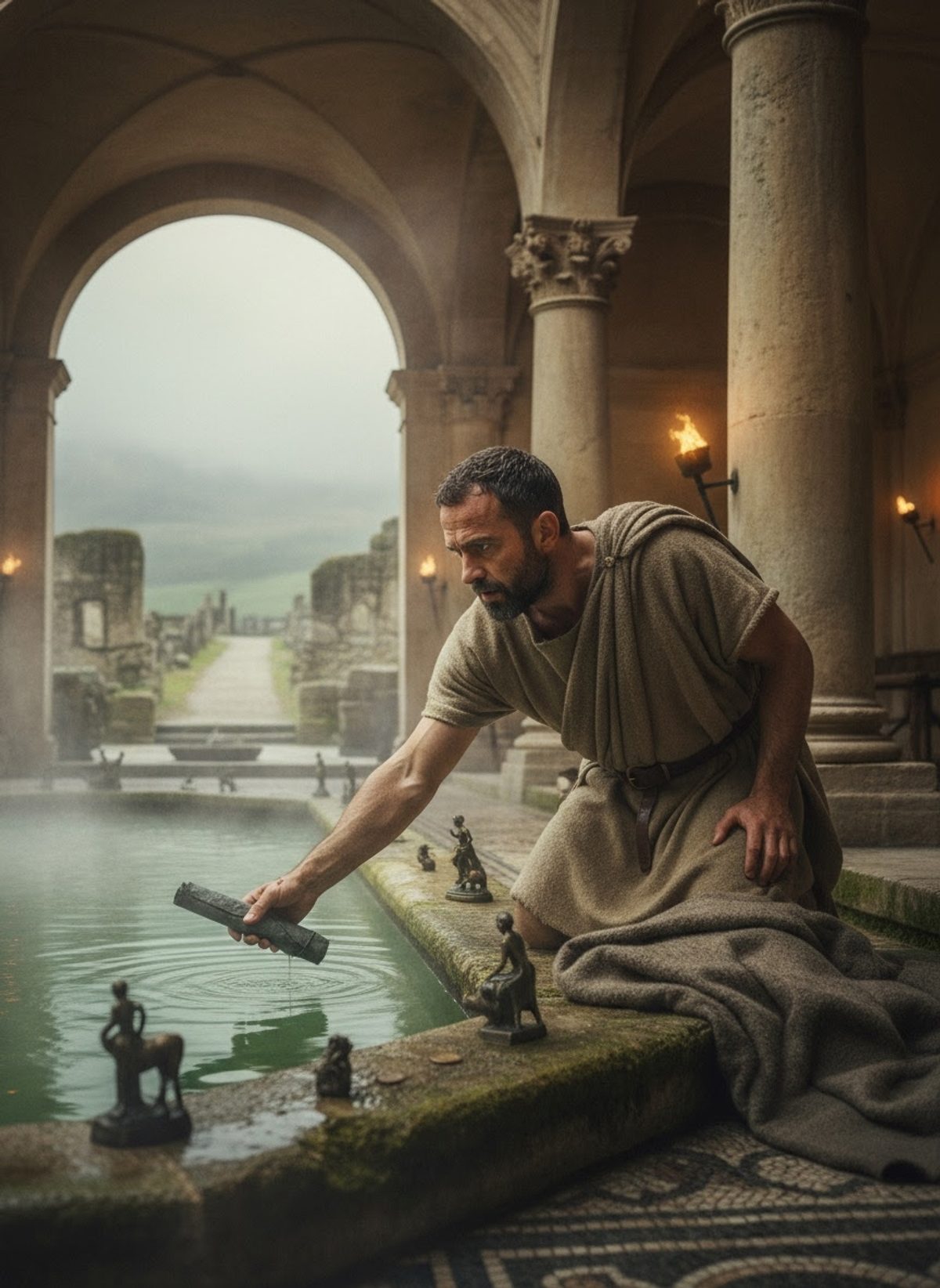
The mist hung low over the ancient landscape, punctuating the dawn with a peculiar stillness. Water vapour rose lazily from the sacred spring, curling like ghostly fingers in the chill air. A solitary splash disturbed the serenity as a small lead tablet plunked into its depths. In the heart of Roman Britain, at Aquae Sulis — known today as Bath — an infuriated merchant channeled his anger into a ritual as old as time itself.
The Sacred Echoes of Aquae Sulis
The Romans believed in the sacredness of Aquae Sulis, revering it as a site where the goddess Sulis Minerva held sway. To them, this was not merely a place of relaxation but a divine intersection of power, tranquility, and communion. The spring bubbled with promise, coaxing visitors from across the Roman Empire with its restorative heat and whispers of divine intervention.
For the merchant whose cloak was stolen, Sulis Minerva represented both his last recourse and a channel to exact supernatural justice. It was common during this time for those wronged to inscribe curses onto thin, malleable sheets of lead — a practice that held deep roots in the human psyche. These tablets were intended as messages to the gods, detailing perceived injustices and asking for redress.
The lead itself was symbolic, a substance believed to carry the weight of earthly troubles down to the divine sphere. These weapons of imploration carry echoes that allow us, nearly two millennia later, to listen to whispered grievances.
Read next: The Bread Ovens That Proved Rome Reached Scotland
The Craft of the Curse
To modern eyes, the act of cursing a thief may seem an eccentric method of problem-solving, but in Roman times, it was a well-trodden avenue. The merchant’s inscribed curse would have been rolled and thrown into the spring with a plea so fervent, it resonates today. Such tablets often bore formulaic expressions but could also be deeply personal, varying in tone from pleading to fury.
The text might have read something like this: “To the goddess Sulis Minerva, from [name of the merchant]: On finding my cloak stolen from the baths. May the one who stole it have neither rest nor peace until it is returned to me.” By naming the thief, potentially an identifiable local, the merchant was not merely hoping for retribution — he was invoking a public, divine shaming.
The distinct reverence for Sulis Minerva, a hybrid of Roman and local Celtic deities, underscored each plea's potency. The intricate interplay of cultural beliefs gave the Bath site a unique religious gravity, not merely for healing but also for justice.
Glimpses Into the Past
These cursed tablets, dozens of which have been discovered in Bath, provide a remarkably human glimpse into the realities of ancient life. They address petty thefts, personal disputes, and a myriad of grievances, painting a picture of a vivid and complex society. Imagine finding such a tablet in our daily lives today — a post on social media perhaps, laced with similar mix of emotions.
Read next: The Roman Soldier Who Carved His Name Into Hadrian's Wall
Through their words, we glean not only a societal hierarchy but individual stories lost to time. The crimes themselves — stolen cloaks, missing livestock — reveal a world where personal property and divine judgment were intimately entwined. This ritual document offers insight into a populace striving to impose meaning and order on the chaos of daily existence.
For many Romans, the spring was not just a place to cleanse the body but a forum to cleanse injustice. The soothing waters of Aquae Sulis, coupled with its enigmatic beauty and spiritual sanctification, turn the cursing act into more than mere retribution; it is a search for equilibrium in a world governed by capricious gods.
Lessons Carried through Time
Today, those tiny lead scrolls serve a profound purpose, deeper than the acts of revenge which birthed them. They speak of a desire for acknowledgement, the search for justice, and the universal longing for peace when wronged. Has human nature really changed all that much, revered in sacred rituals and the courts of digital opinion?
The merchant's story is not simply an anecdote of antiquity, but a window into the hearts and minds of those who sought more from life than was offered. From the waters of Aquae Sulis, a spring of deeper understanding emerges, echoing stories untold but forever encoded in the tablets of history.