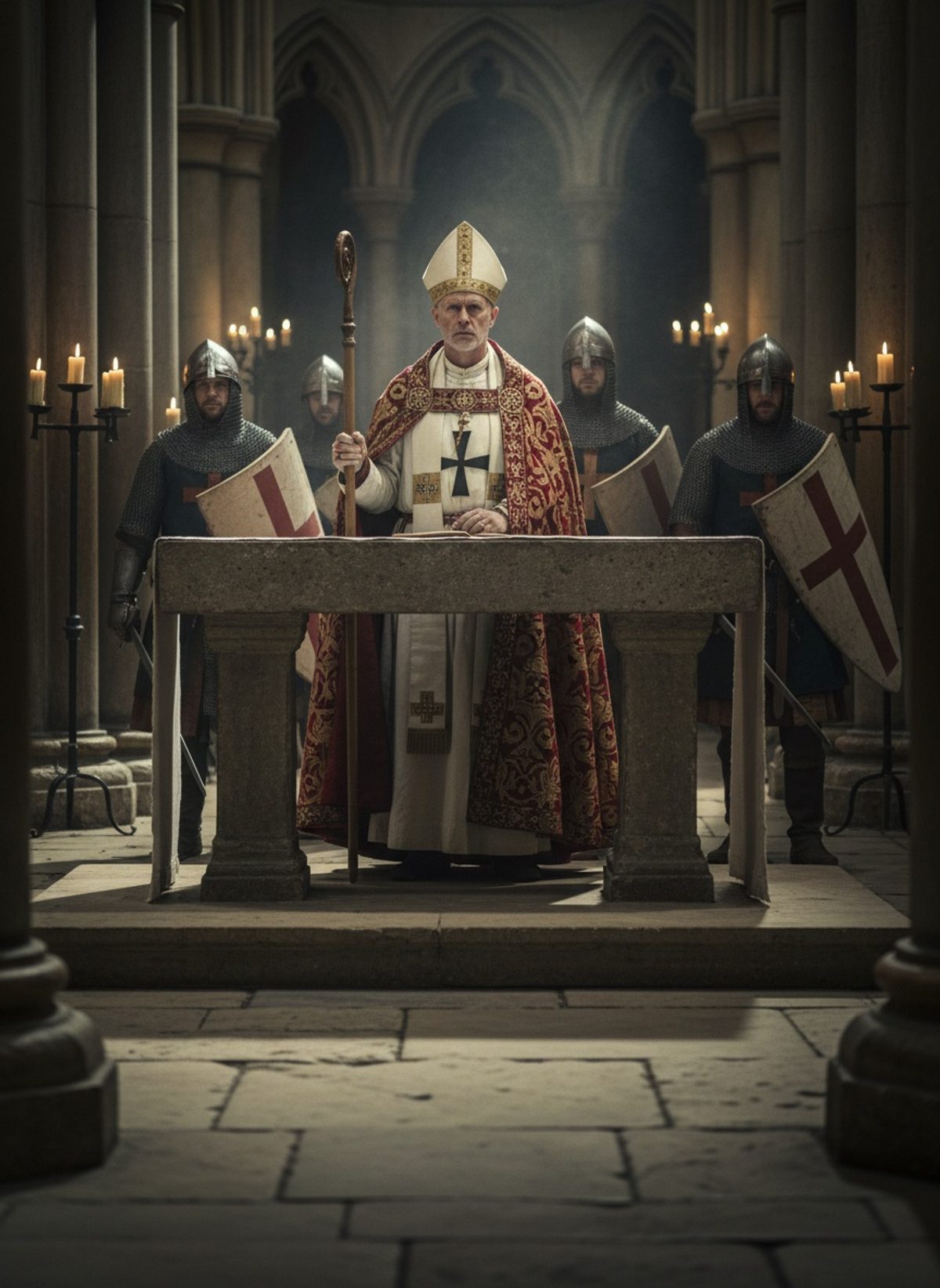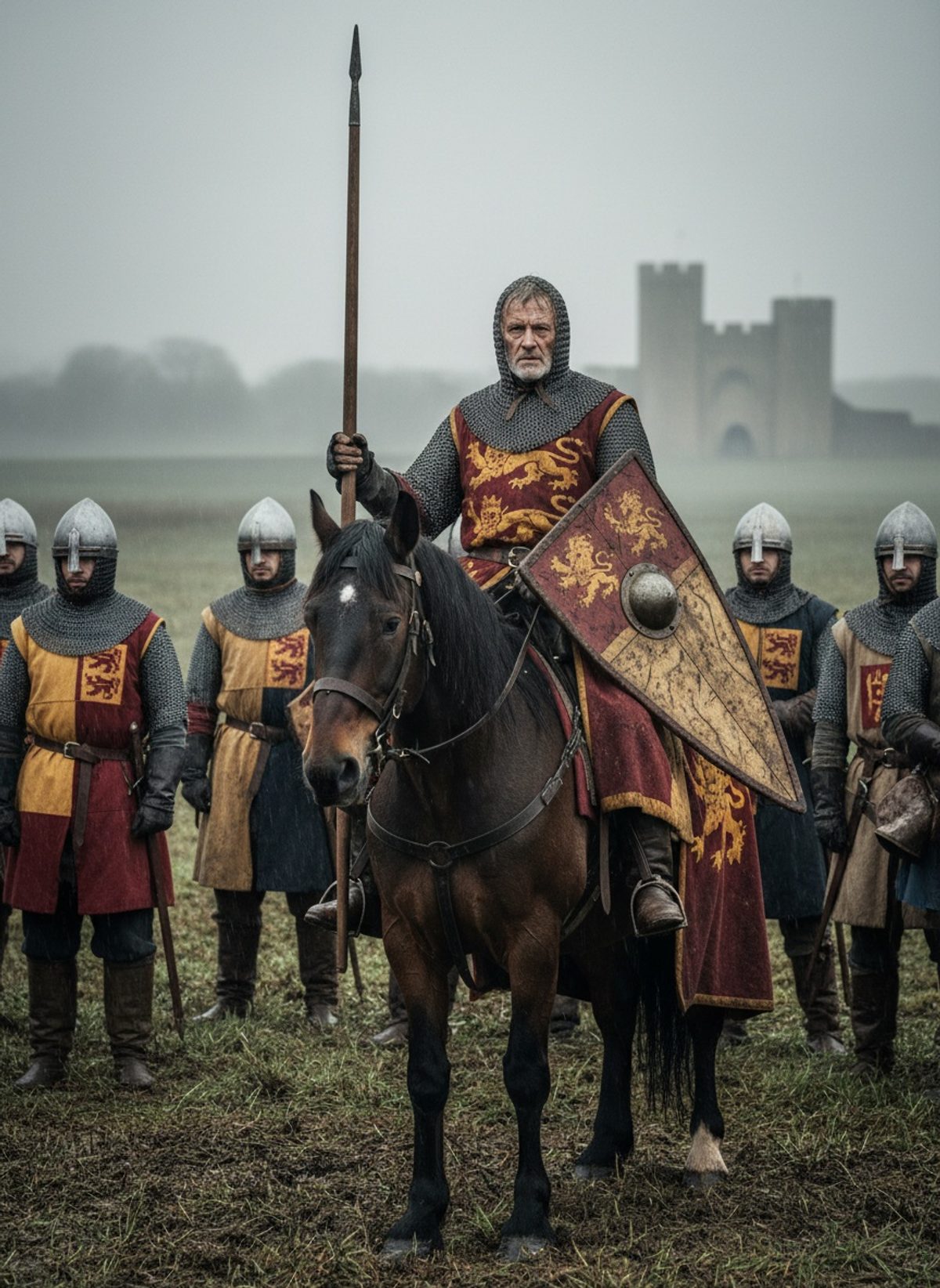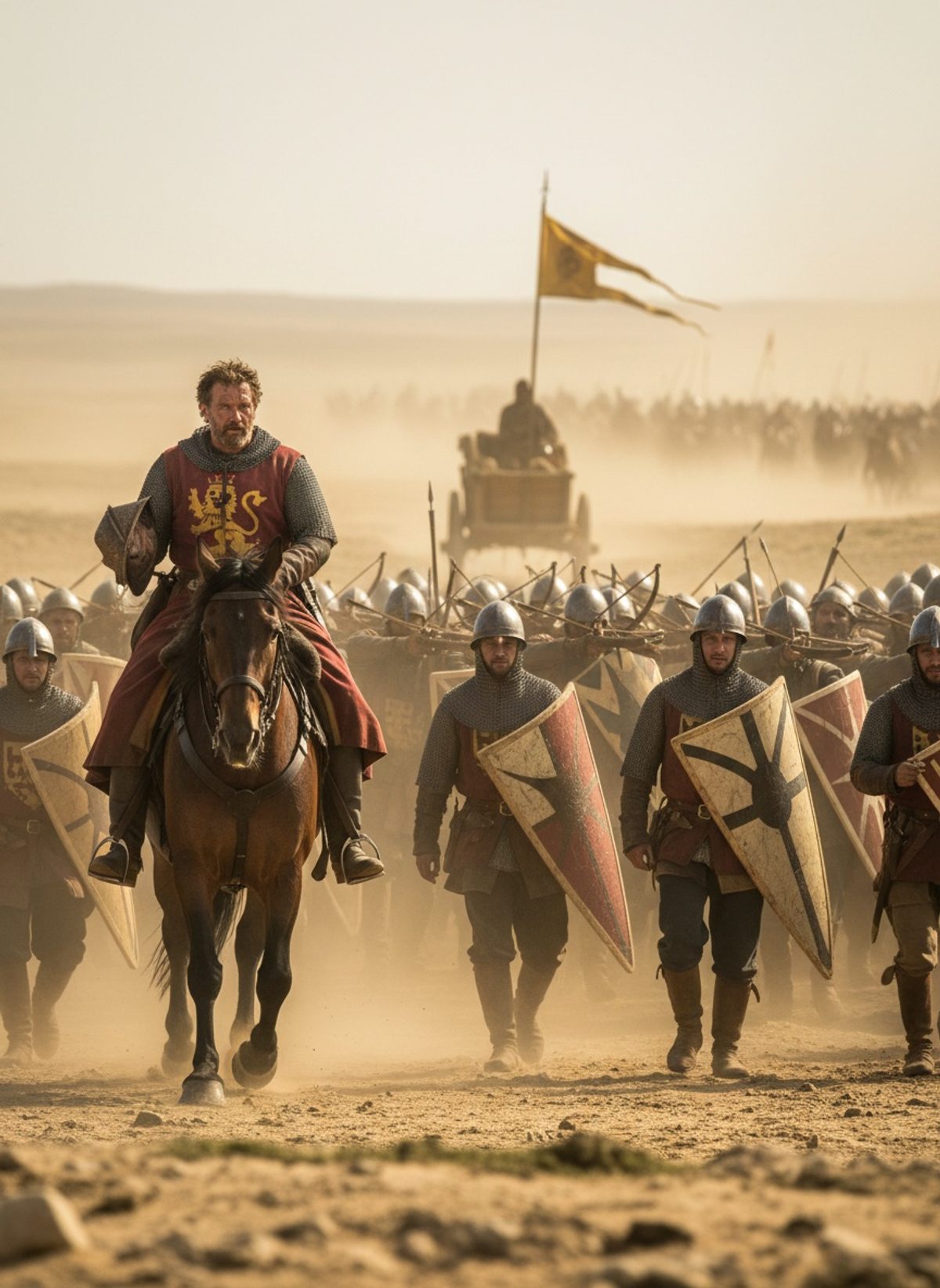
The eastern horizon glowed with the first blush of dawn, spilling golden light across the endless blue of the Mediterranean Sea. The air was crisp on this September morning, the kind that roused every sense, sharpening the edge of anticipation in soldiers' hearts. Motion was constant along the sandy paths that lined the coast, where an army marched steadfastly south. The rhythmic clang of chain mail and the scuff of leather boots on grit created a cadence both hypnotic and tense. This was a march with stakes so dire, the very future of kingdoms lay upon every footfall. This was the journey that would lead to the Battle of Arsuf — and alter the course of the Third Crusade.
The Reluctant Army
The landscape, a blend of coastal sands and distant mountains, seemed to mock the disciplined columns of knights and infantry with its openness. There was no concealment from the enemy that shadowed them — Saladin’s horsemen, a constant, harrying threat. Each day from dawn to dusk, these opponents struck like diving falcons, their arrows turning the sky into a hailstorm of lethal intent. Men fell where they stood, shafts protruding grotesquely from shields and mail. But through it all, one command dominated: hold the line.
Richard the Lionheart, leading this disparate collection of crusaders, refused to let his forces break ranks. The knights, their spirits aroused by the martial pageantry of battle, burned with impatience. The call to charge beat like war drums in their ears, yet Richard was resolute. Knights who had set out with dreams of glory found themselves caught in the more tedious throes of strategy — fighting not with sword, but with endurance. This restraint seemed heresy to the chivalry-obsessed warriors who followed him. Yet, in withholding the sword, Richard wielded a different kind of weapon: patience.
The Tensions Within
The march was more than a test of endurance against Saladin’s persistent raids; it was a crucible forging a fragile unity among the Christian warriors. The forces under Richard's command were a fractious coalition. Men from different parts of Europe, compelled by both faith and dynasty to reclaim the Holy Land, often spoke in tongues alien to one another. Tensions simmered beneath the surface, fueled by language barriers, cultural misunderstandings, and old rivalries.
Read next: The Day a Queen Knelt and Begged for Six Dying Men
Richard’s decision to maintain formation did not quell these internal currents but rather added to them. Every day’s forced inaction was a slow build of pressure. Like a coiled spring, the army held itself tight, each knight knowing their time to unleash was nigh, yet forced to subdue their instincts. The breakdown of discipline was a real danger — the warriors were not merely armored soldiers, but individuals with personal codes of honor. Here, along the coast, lions were asked to lie with lambs.
The Dance of Deception
The plains east of Jaffa, lined with sparse vegetation and vast skies, became the stage for this tense theater of war. Saladin, with a tactical cunning mirrored only by Richard, played his role exquisitely. He sought to wear the crusaders down with attrition, leveraging his cavalry’s speed and archery skills to gnaw at the edges of the Christian forces. Richard, in turn, danced a delicate waltz of territory and time, moving ever toward a decisive engagement.
Richard was not averse to deception either. To his knights, the delays seemed like indecision, but these maneuvers were deliberate. There was a method to the apparent madness, a psychological game of cat and mouse that churned beneath the surface. While Richard drank in the harvest of impatience and bared restraint, Saladin’s forces, perhaps overconfident in their harrying raids, found themselves unprepared for the sudden release of Richard's pent-up tempest.
The Fury at Arsuf
The ultimate clash came near Arsuf, where the flatland favored neither Richard’s heavily armored knights nor Saladin’s swift cavalry. This battle would test the endurance of those who had marched the 80 miles and more importantly, the discipline forged in the crucible of restraint. With Saladin’s forces pressing aggressively, the disciplined ranks at last broke upon Richard’s command — but only then. The knights, at last freed, charged with cries that echoed through history, unleashing the pent fury of countless stays of sword.
This battle was not merely brawn meeting brawn; it was a campaign of the mind. By denying his knights their instincts to charge, Richard had placed their enemy in a state of expectation and fatigue, creating the perfect storm. Saladin’s men, used to facing flustered and hasty assaults, were caught off-guard by the ferocity of organized mayhem. The very act of waiting, of persevering through the relentless coastal harassing, had primed Richard's men to explode like the sea crashing against a steadfast cliff.
In reflecting on the march and subsequent battle, one sees a broader tapestry of strategy — patience as a weapon, discipline as an armor. Richard’s command over his forces reached beyond military acumen; it was psychological, a deep understanding that warfare is as much of the mind as it is of the sword. In the swells of time and tide between dawn and dusk, Richard the Lionheart sculpted a narrative of trial, discipline, and ultimate victory. In those 80 arduous miles, he shaped the annals not only of the Crusades but of military history itself.
Why does this matter? Because the march to Arsuf teaches us decisions in war—and life—are rarely clear-cut. The most potent weapons are often invisible: patience, restraint, and understanding one's enemies. Richard showed that sometimes, the line between chaos and victory lies not in action, but in waiting for the right moment to act. For in all conflicts, whether on a battlefield or within oneself, the triumph is always seeded in the fertile ground of patience.