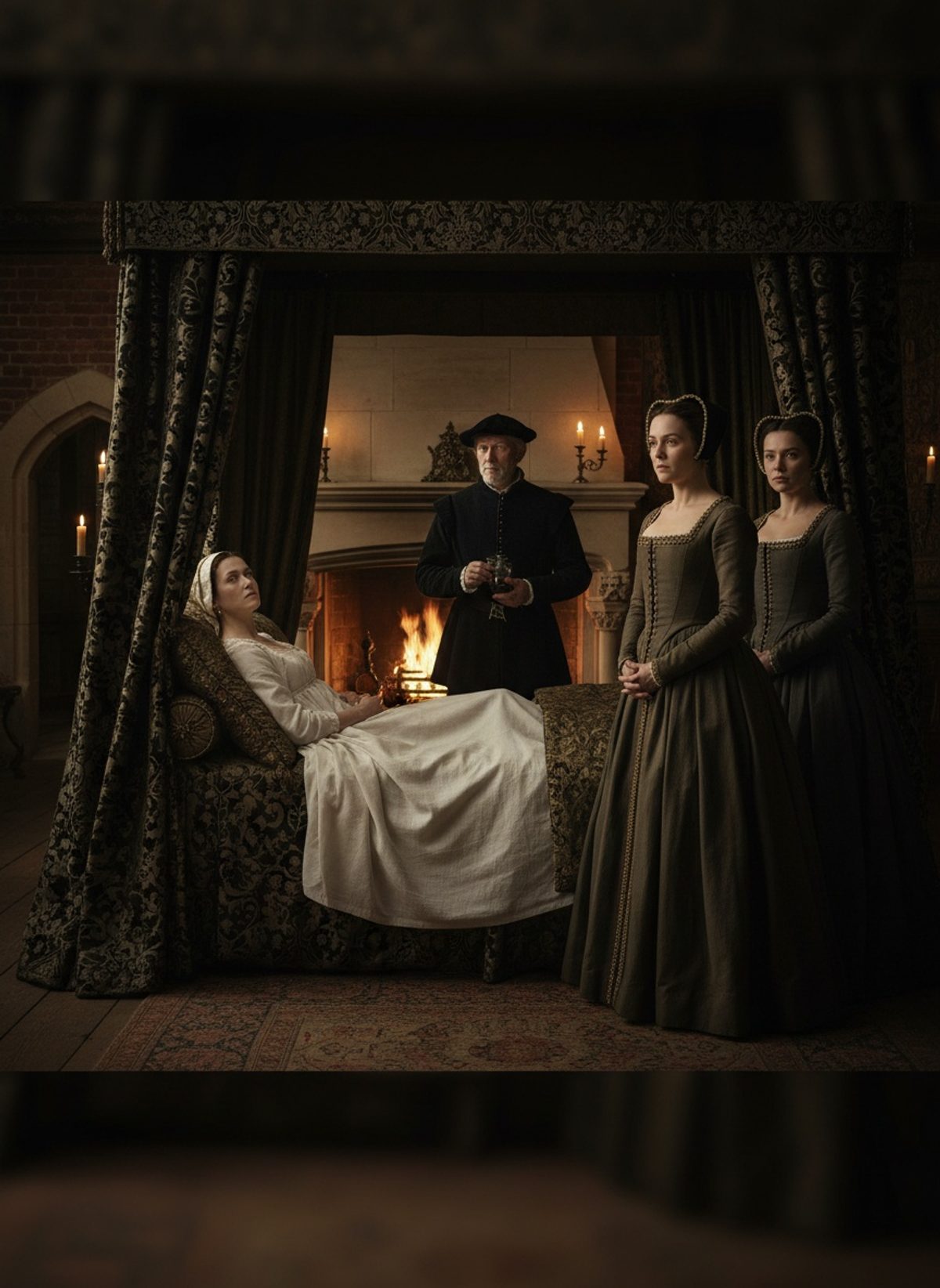
The October air in Hampton Court was tinged with the crispness that signaled autumn's full descent, the leaves clothed in hues of marigold and crimson, whispering secrets of season's change under the burdensome skies. The gentle mist that clung to the cobblestone paths hinted at the onset of winter, as courtiers bustled in their layered attire, their murmurs and footsteps echoing through the ancient corridors. Within the walls of this storied palace, a momentous event had unfolded, one that would echo across the annals of English history. In a chamber dimly lit by flickering candles, a woman lay still, her face serene in death, having given England something than many once believed elusive—a male heir.
Jane Seymour, the beloved third wife of King Henry VIII, achieved what her predecessors, Catherine of Aragon and Anne Boleyn, could not. Her son, Prince Edward, represented the culmination of Henry's desperate quest for a male successor, a pursuit that had driven a king's insatiable ambitions and tumultuous personal relationships. England rejoiced with resounding jubilation, bells pealing across the kingdom as bonfires illuminated the night skies in celebration of the prince’s birth. Yet, amid the public euphoria, an ominous undercurrent wove its way through the palace halls. The Queen, having survived the strains of childbirth, succumbed to a fever twelve days later—an end both sudden and tragically preventable by today’s standards.
In those final days, the once lively court took on a somber tone. The eerie quiet was punctuated by the creaking of armor and the rustle of voluminous gowns as Jane’s attendants moved about with dutiful silence. Puerperal fever, the cruel specter that clung to every delivery room of the era, had claimed its prize. This insidious postpartum infection, common yet largely mysterious to 16th-century physicians, ravaged Jane with merciless fervor, siphoning her life force until nothing remained but a whispered legacy.
Henry's grief was profound, deeper perhaps than any he had previously claimed to feel. Dressed in mourning black, he appeared in stark contrast to the vibrant colors of court. While history often remembers Henry VIII for his mercurial brutality and egotism, he exhibited a rare public mourning for Jane Seymour, the wife who had succeeded where others had faltered. He ordered the court into mourning for an extended period, a move both political and deeply personal. Jane was the only one of his wives to receive a queen’s funeral, testament to her posthumous hold on his affections—a reflection of how tightly the birth of a king’s heir intertwined with a queen's worth.
Read next: The Day the Coldstream Guards Became Britain's Oldest Regiment
Hampton Court, the pearl amidst the river Thames, bore witness to both the jubilation of new promises and the sorrow of dreams deferred. The surrounding verdant gardens, normally a tranquil refuge, seemed somewhat bereft without the soft laugh of the Queen to grace them. Jane Seymour's demise was not simply the loss of a beloved queen; it was a stark reminder of the precarious nature of childbirth, a danger that even royal blood could not fortify against the lurking grasp of disease and infection.
The little prince Edward, unwittingly at the center of these celestial and cruel affairs, was none the wiser to the upheaval his existence had provoked. His infancy was structured by the rigor of royal expectations and tempered by the looming shadow of the Tudor lineage's fragile continuity. He lay cradled within the fortress of Hampton, stirring dreams of a prosperous reign, each future engagement appointed with the burden of destiny’s heavy crown.
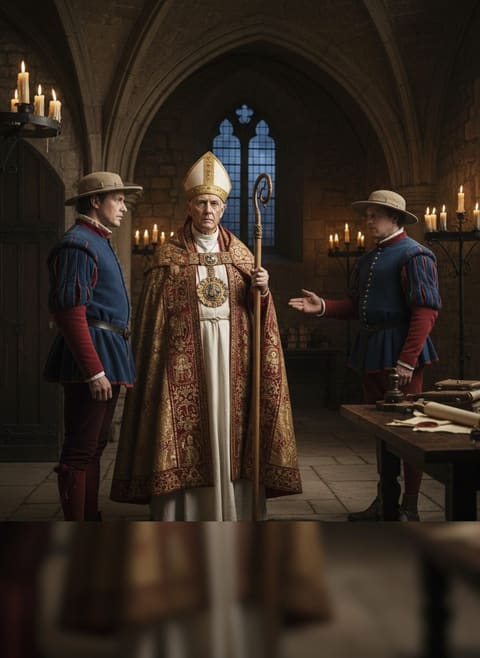
Read next: The Day a Tudor Archbishop Knelt and Chose the Flames
In quieter musings, Henry VIII might have fondly lingered on the simplicity of the life the mother of his heir had yearned for. Jane was, by all accounts, a gentle soul—neither flamboyant nor fraught with the ambition that marred other marital unions. With demure attributes juxtaposed against the swirl of Renaissance intrigue, it’s fascinating how history often overlooks her modesty and grace, perceiving them as secondary to her ultimate role in ensuring the Tudor succession. Yet, in Jane Seymour's quiet demeanor, she embodied the true essence of these turbulent times.
Hampton Court, etched in the heart of England's heritage, retained the essence of those fleeting days long after her passing. From its turrets and tapestries, the whispers of history relentlessly echo the sacrifices and resolves of lives interwoven with monarchy and mortality. For King Henry VIII, Jane’s death left him with the staggering realization—a grim precursor in a sovereign life streaked in loss and missed compatibilities. His future marriages, six in total, would never again be graced with the affection he openly pronounced for Jane Seymour.
Though Jane Seymour’s time as queen consort was brief, her role in the royal chronicle was undeniably momentous. She did more than secure the Tudor dynasty; she underscored the unpredictable narratives at the heart of royal lineage quests. Her story compels reflection on the intersection of personal sacrifice and national expectation. Beyond tales of ambition, turmoil, love, and betrayal, it illustrates the poignant reality that every glimmer of joy beneath the crown often bore the cost of familial tragedy.