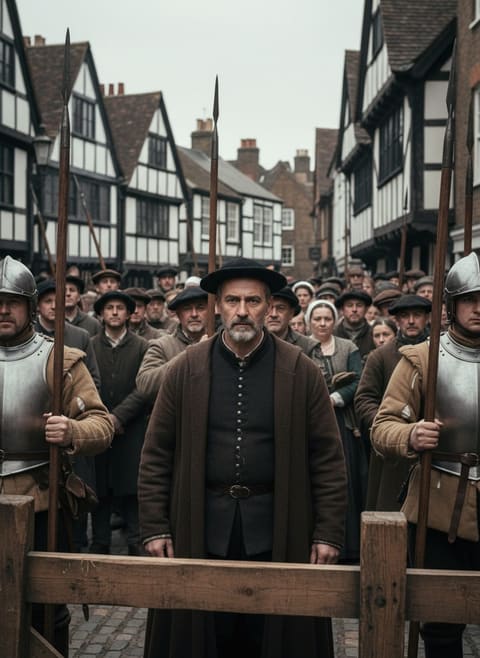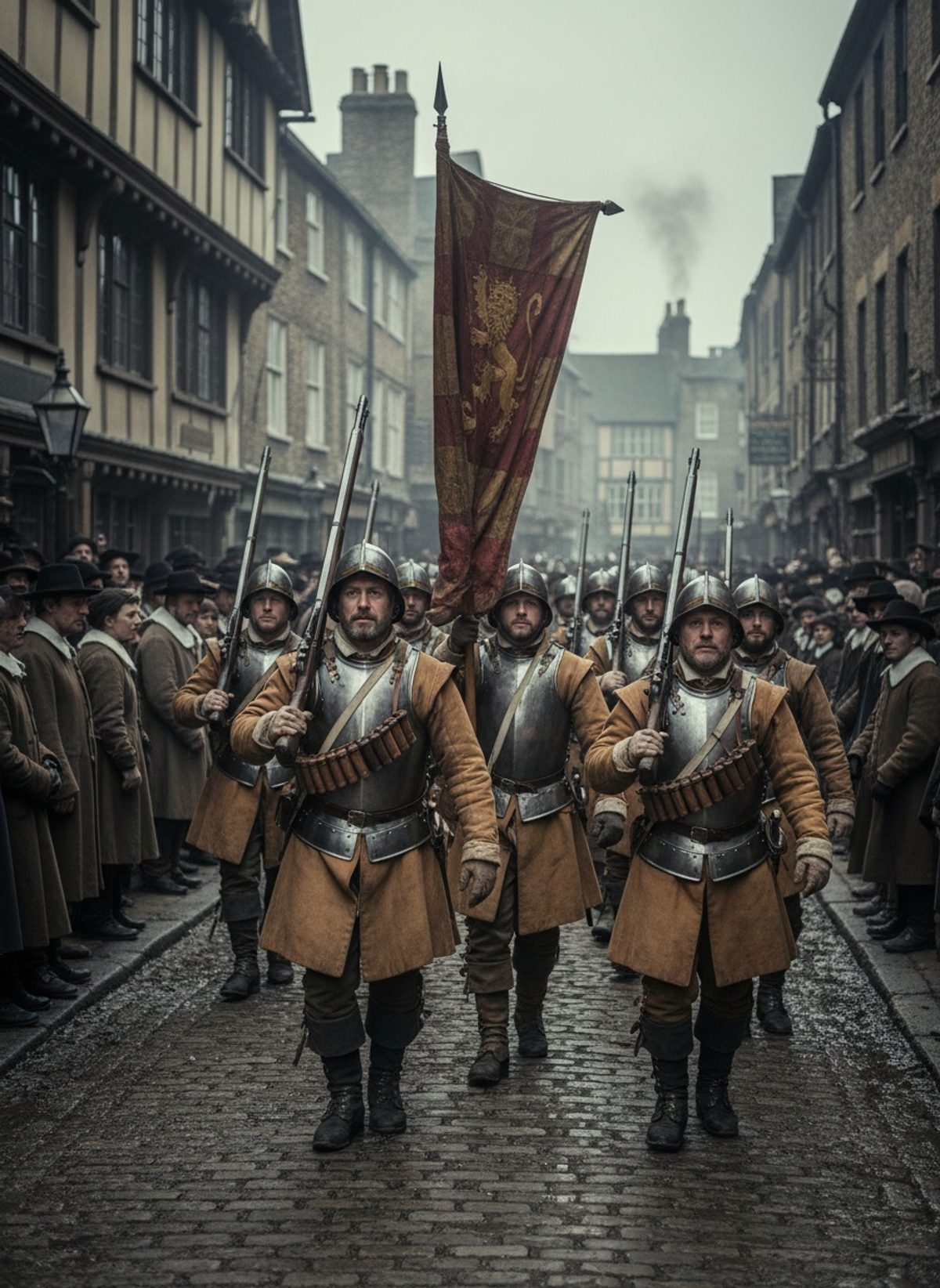
The early morning sky over Coldstream in December 1660 was a muted gray, the kind that seemed to blend the horizon into a single blanket of chilling mist. A damp chill lingered in the air, clinging to the rough wool coats and boots of the soldiers who shuffled into formation. Their breath was barely visible, mingling with the moorland's crisp breath. Here, on the rugged borderlands between England and Scotland, history was quietly taking shape under the watchful eyes of General George Monck and his resolute band of men.
The soldiers' feet moved rhythmically in unison, a slow but steady march that had carried them all the way from the frigid banks of the River Tweed to the heart of England's tumultuous political center. Through landscapes swathed in winter's grasp and the intermittent lash of icy rain, Monck's regiment had maneuvered with a singular goal: to place Charles II back upon the throne of a fractured kingdom. This journey south was more than a simple trek; it was a march of reclamation and restoration, one that would unexpectedly become the dawn of a storied legacy.
As the echoes of war and political subterfuge rattled through the air, England found itself at a crossroads—a country bereft of a standing army, dismantled by the turbulence of the Interregnum. The years following the execution of King Charles I had unfurled like a tapestry of disarray, with Oliver Cromwell's New Model Army playing a central role in England's fluctuating fortunes. Yet, in 1660, this once-vaunted army was ordered to disband, leaving a void during this time of delicate reconstruction. General Monck, an astute tactician, understood the precarious nature of the situation.
Their destination—London—had welcomed Monck's regiment not merely as a military force, but as a linchpin in the delicate dance of power. With their steadfast loyalty, Monck's men signified more than military might; they represented continuity—a bridge uniting old loyalties with new realities. Upon reaching the capital, Charles II's restoration was smooth and unfaltering, thanks in part to their discipline and perseverance.
Read next: The Day a Tudor Chancellor Chose Death Over a Royal Lie
When the order finally came to lay down their arms, Monck's regiment made a choice that would alter their fate and engrave their names into the annals of history. They surrendered their weaponry only in symbolic gesture, for no sooner had they disengaged than they resumed arms under the aegis of a newly restored monarchy. In doing so, they embodied a unique transformation from rebels to the vanguard of the King's army. This regiment, initially born in defiance of dissolution, was now tasked with the protection of a kingdom's renewed dreams—a role they accepted with gravitas and gumption.
In hindsight, the Coldstream Guards' refusal to disband was a seminal moment not merely of military reconstitution but of institutional continuity. Their persistence translated into the establishment of Britain's oldest regiment in continuous service—an uninterrupted legacy from those early dusty dawns of 1660. These soldiers, the first Coldstream Guards, were now warriors not of usurpation but of safeguarding a realm teetering on the brink of reformation and renaissance.
The regiment's formative days are shrouded in a proud resilience that betrays any expectations of monotony. These men had lived through the storm of change, participants in both the narrative of dissolution and the fostering of a fledgling era. To them, the Restoration wasn't merely a return to pre-existing norms but rather the birth of a cohesive and potent force within the British Army, one that has grown and adjusted through centuries of change.
Yet, the Coldstream Guards were more than muscle and armament. They adapted to the ever-changing political landscapes, proving their mettle on fields far afield—ensuring that the British Army would evolve not just as a military fulcrum, but as an entity capable of change and adaptation. The allure of their continued service reflects a commitment not only to duty but to an identity fostered under banners of distinction and duty.
Read next: The Day a Tudor Bishop Refused to Crown a Usurper
Every command given, every tactical maneuver undertaken speaks to the essence of a regiment that has seen england emerge from the embers of strife unyielded. In relentless dedication, they have not simply withstood the tests of time; they have molded destiny upon the anvils of valor and resolve.
Standing at the crossroads of their origin story and the broader path of British military history, the Coldstream Guards represent a legacy of march and muster. Their tale is one of historical intersections where personal valor meets national significance—a narrative that continues to echo down corridors of time with unwavering clarity and pride.
In pondering the Coldstream Guards' unbroken thread through the fabric of time, one cannot help but reflect on the profound impact of narratives left untold. Here is a reminder of how a simple decision to remain steadfast can kindle the birth of enduring identity. They illuminate the continuing dialogue between past, present, and future—the living embodiment of resilience forged in one cold December—a testament to spirit, duty, and a monarch's rebirth.