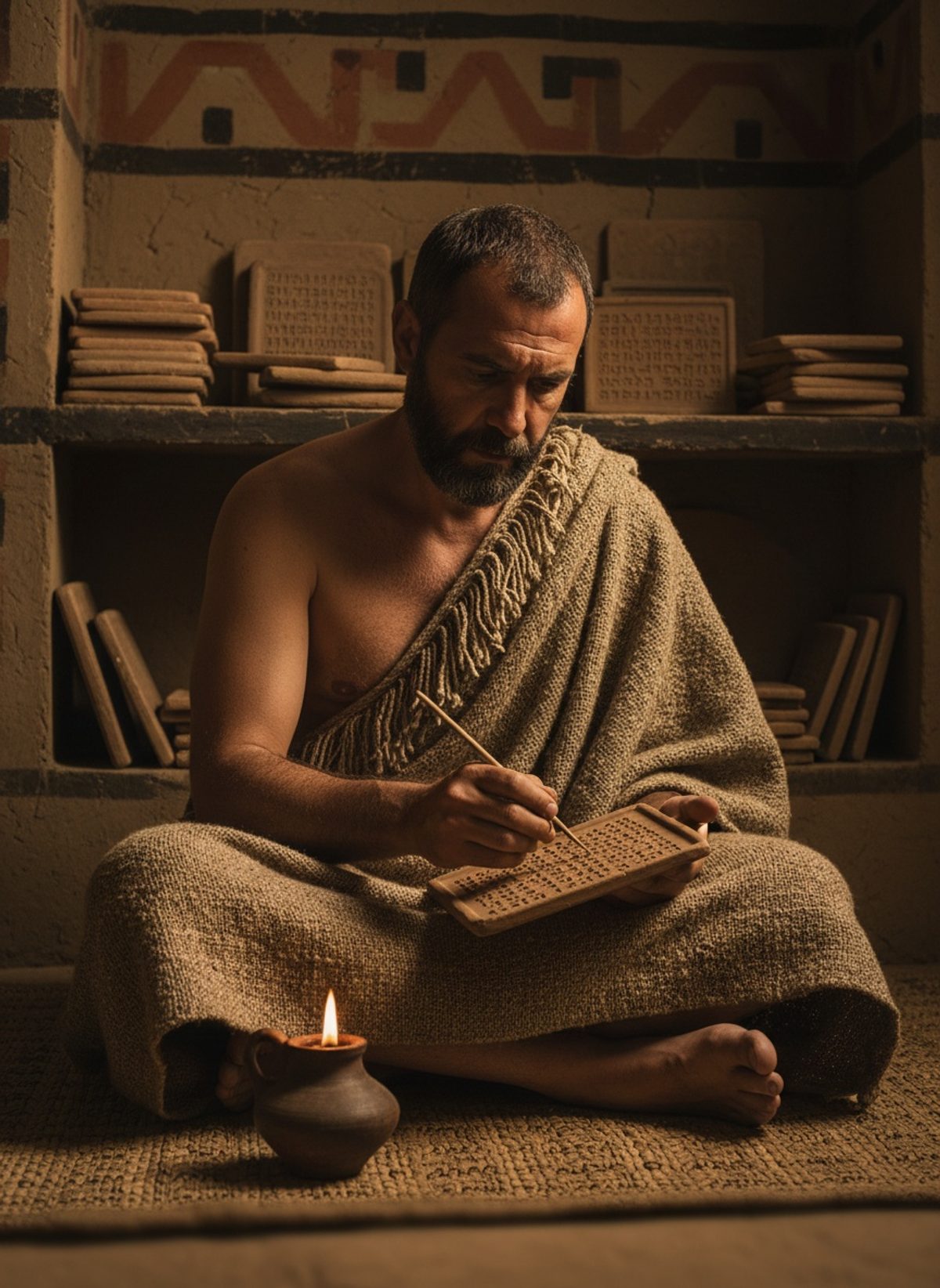
July 12, 1872. The British Museum’s dimly lit Neo-Assyrian room was filled with the sound of brushing. Archaeologist George Smith deftly removed centuries of grime from a clay tablet, its inscription hidden beneath layers of dust and time. As he worked, ancient symbols began to emerge, forming words that would stir murmurs of disbelief and curiosity across the halls of scholarly debate. This was a discovery that connected the past not just to ancient Mesopotamia, but also to a story that many believed they understood — the tale of a great flood that bore uncanny similarities to the biblical narrative of Noah.
The tablet from which these revelations were drawn was written around 1750 BCE and bore the markings of the Mesopotamian metropolis. Yet, this wasn't the tale of Noah, nor was it a story that unfolded upon Mount Ararat's peak. The protagonist here was Utnapishtim, a name that might have been lost to history if not for the scribes who etched his story in clay. As Smith unraveled the cuneiform characters, a scene unraveled of a world teetering on the brink of annihilation, where gods contemplated the fate of humanity with a mixture of caprice and wrath.
In this Mesopotamian epic, Utnapishtim was chosen by the god Ea to survive a deluge designed to wipe out the living. But unlike the familiar biblical tale, where Noah's ark is described as a vast ship, Utnapishtim’s vessel was a massive round coracle, akin to a gigantic woven basket crafted to ride the storm-tossed waters. The instructions given by Ea prescribed specific dimensions for the ark, emphasizing its durability and its capability to house all manner of life. These careful details mirrored the practical wisdom that ancient craftsmen drew upon to build their watercraft, testament to the ingenuity that thrived alongside myth.
As the story described by the tablets unfolds, the tranquility of a civilization breaks apart under torrents of rain, and waves rise to obscure the boundaries between earth and sky. The narrative, carved into clay, breathes life into these ancient storms, capturing the tension and turmoil faced by those who looked to the gods for salvation. Through it all, Utnapishtim embodies the fragile hope of survival, a beacon amidst divine retribution. His story speaks to a shared existential dread, transcending cultures with its portrayal of humanity’s imperiled landscape.
Read next: The Tablet Was Dug Up. The City Was Still There.
As archaeologists continued their work, piecing together broken fragments of tablets, a pattern emerged. These flood narratives were not isolated embellishments but woven into the fabric of various Mesopotamian texts, such as the Epic of Gilgamesh. The ancient library at Nineveh held troves of tablets that contained a multitude of stories, blending history, myth, and legend. Among these treasures, the story of Utnapishtim resided, enriching our understanding of how societies from long ago interpreted natural phenomena and divine intervention.
But what did these stories mean for historians and theologians alike? The tale of Utnapishtim poses a fascinating question: Why do disparate cultures, separated by vast distances and time, share similar catastrophic flood narratives? The valleys of the Tigris and Euphrates are rich not only in fertile soil but also in the lore that rivers themselves could betray, rising to obliterate settlements. These stories, it seems, became a vessel themselves, carrying shared memories of ancient floods through the ages.
Moreover, the story depicts a dynamic world where human actions attract divine scrutiny. In the Mesopotamian narrative, the flood was not merely a whim of a vengeful deity; it was a response to a world that had, in some ways, gone awry. The echoes of these ancient tablets resonate through time, reminding us that civilizations have long grappled with questions of morality, redemption, and the capriciousness of fate. The notion of a chosen survivor is a powerful motif, representing the purity and endurance of life amidst chaos.
Read next: The Tablet Was Buried for 3,000 Years. The Answer Was Inside.
As discussions swirled in academic circles following Smith’s groundbreaking translation, the understanding that the deluge narrative predates the Genesis account sparked reinterpretations not just within historical analysis, but in theological discourse as well. Some viewed it as evidence of cultural diffusion, while others argued for independent development. Yet, this wasn’t simply a tale of influence and ancestry. It begged deeper reflection on humanity’s intrinsic need to find order and meaning amidst the uncontrollable forces of nature.
On quiet nights in George Smith’s time, one might imagine scholars meticulously poring over the marks on the Mesopotamian tablets, tracing their fingers along the lines as the tales unfolded yet again, bringing forth visions of a world forever altered by a moment both cataclysmic and redemptive. The words captured in clay bore the weight of countless generations and the desire to eternalize both despair and hope.
In closing, reflecting on these ancient stories captured in delicate, weathered tablets can remind us that humans have always faced the chaos of the elements and the whims of chance, seeking refuge in storytelling to reconcile their place in a storm-swept world. In Utnapishtim’s narrative — a precursor to what many would come to know solely through its later iterations — we glimpse the shared fabric of collective myth, a testament to our enduring quest for meaning amid the tempest. As we uncover history's layers, these tales continue to illuminate the corridors of our origins, inviting us to look both backward and forward across the breadth of human experience.