The dimmed light of a musty library on a rain-soaked day in Florence held an enchanting secret. Sheltered from the steady patter of rain and the occasional rumble of thunder, the room was quiet apart from the rustle of ancient pages being turned by unseen hands. This was one of the many places where, over the centuries, countless curious minds would be drawn by the allure of a manuscript that defied comprehension. Created in the early 1400s, this mysterious book contained a script that no one—neither the era’s astronomers, linguists, nor modern codebreakers—could decipher, and its pages held secrets that no man or woman has ever unearthed: The Voynich Manuscript.
The Enigma Surfaces
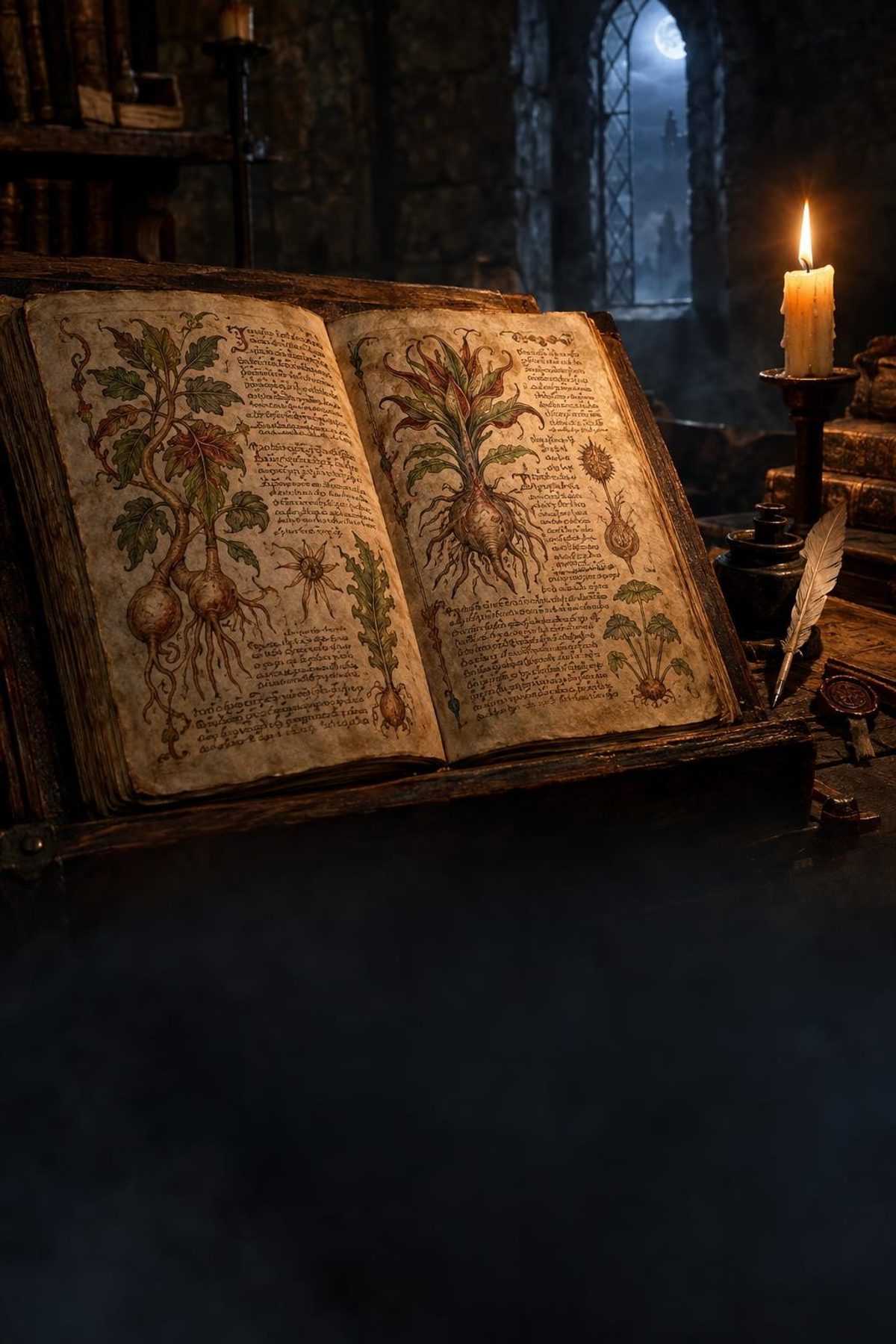
When Wilfrid Voynich, a Polish rare book dealer, acquired the manuscript in 1912, it was not just another relic of a bygone past but a tantalizing puzzle. Discovered in a Jesuit library at the Villa Mondragone near Rome, this codex buried its secrets within approximately 240 pages of exotic illustrations and encrypted text. Each page seemed to whisper of knowledge beyond the grasp of the modern world. Containing fantastical drawings of unknown plants, nymph-like figures engaged in inexplicable rituals, and arcane astrological charts, the manuscript seemed to mock the intellect of all who attempted to unravel its doctrine.
The vellum, carbon-dated to between 1404 and 1438, placed its origins firmly in the medieval world. Experts speculated that it took shape during the flourishing creativity of the Italian Renaissance, but beyond this, the era shrouded it in ignorance. Codicology—the study of books as physical objects—revealed that the manuscript’s vellum pages were bound into 18 quires, though it was clear that some pages were missing. The origin and authorship of the text, however, remain an eluding shadow, always just out of reach.
Deciphering the Indecipherable
Throughout the 20th and 21st centuries, codebreakers of significant repute attempted to decode the manuscript’s elaborate script, sometimes dubbed “Voynichese.” Prescott Currier, William Friedman, Elizebeth Friedman, and John Tiltman—all authorities in the field, tried in vain to extract meaning from its symbols. Even with the considerable resources of the Allied cryptanalytic minds in both World Wars, the mysteries of the manuscript remained unsolved.
Read next: The Phaistos Disc: 4,000-Year-Old Script No One Can Read
The cipher enthusiasts questioned the very nature of the text: Was it a code for a natural language we no longer knew? Was it perhaps a constructed language, an artificial means of communication, or simply an extensively devised hoax? Another notion posited that the script was not meant for reading at all, possibly representing glossolalia—an act of writing without meaning. Or perhaps it was an elaborate work of fiction, a fantastical flight of imagination meant to baffle all who dared to ponder its purpose.
Despite many claims of successful decryption, no conclusions have been independently verified. The frustrating conclusion remains: the Voynich Manuscript is either devoid of meaning, or it is the most resilient coded message ever created.
Painted Riddles
The detailed imagery of the Voynich Manuscript stokes as much intrigue as its indecipherable text. Paintings of flora—none of which match any known species on Earth—adorn many pages, hinting at a botanical knowledge from an uncharted land or realm of imagination. These drawings, though whimsical and vibrant, serve more to add layers to its riddle than to provide substantial clues.
Equally puzzling are the sections depicting nude female figures, intricately intertwined within pools and tub-like structures, often bizarrely linked with a series of pipes and unidentified gears. It suggests a sort of alchemical process or communal bath ritual, though any attempt at explanation remains speculative at best.
Read next: The Tablet Was Smashed. The Message Survived Anyway.
The presence of astrological symbols and celestial charts suggest influences of contemporary medieval astrology. Figures posed within zodiacal houses accompanied by stars and constellations spark curiosity, implying the work may have been a compendium of medieval cosmology or a fanciful portrayal thereof.
The Manuscript’s Travels Through Time
Despite its aura of enigma, the manuscript has ventured through time with surprising thoroughness. The earliest recorded owner was a 17th-century alchemist named Georg Baresch, a man fascinated by plants, who described it as a “sphinx that defied wisdom.” From Baresch, the manuscript passed through hands across Europe until reaching the possession of Wilfrid Voynich. Since 1969, it has resided at Yale University's Beinecke Rare Book and Manuscript Library.
In 2020, Yale University digitized and made the entire manuscript available online, sparking a resurgence of interest and engagement from both scholars and amateur sleuths around the globe. This digital unveiling breathes new life into its secrets and amplifies the chorus of those seeking to unravel its mysteries.
Beyond the Unreadable
The Voynich Manuscript, an artifact of baffling comprehension, continues to be a captivating enigma. It serves as a reminder that not all knowledge is accessible—some stories remain untold, hovering just beyond the reach of our understanding. Perhaps the manuscript’s true value lies not in what it says, but in how it constantly challenges the limits of human knowledge, inviting generations to attempt to lift the veil between seen and unseen, known and unknown. Its riddle persists like an echo through a cavern of the past, a testament to the vast mysteries that history still harbors.