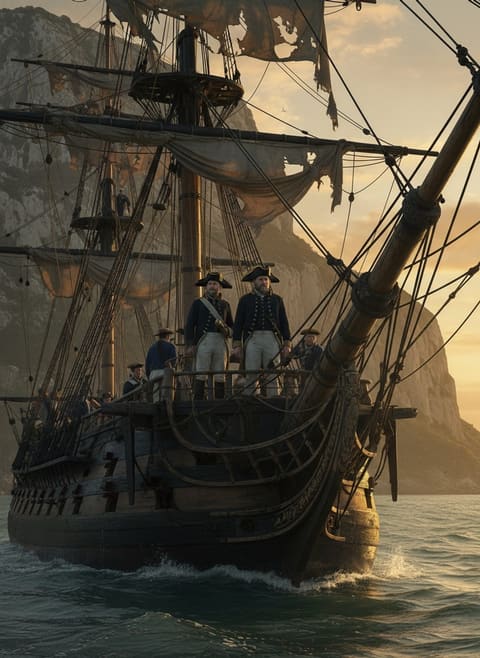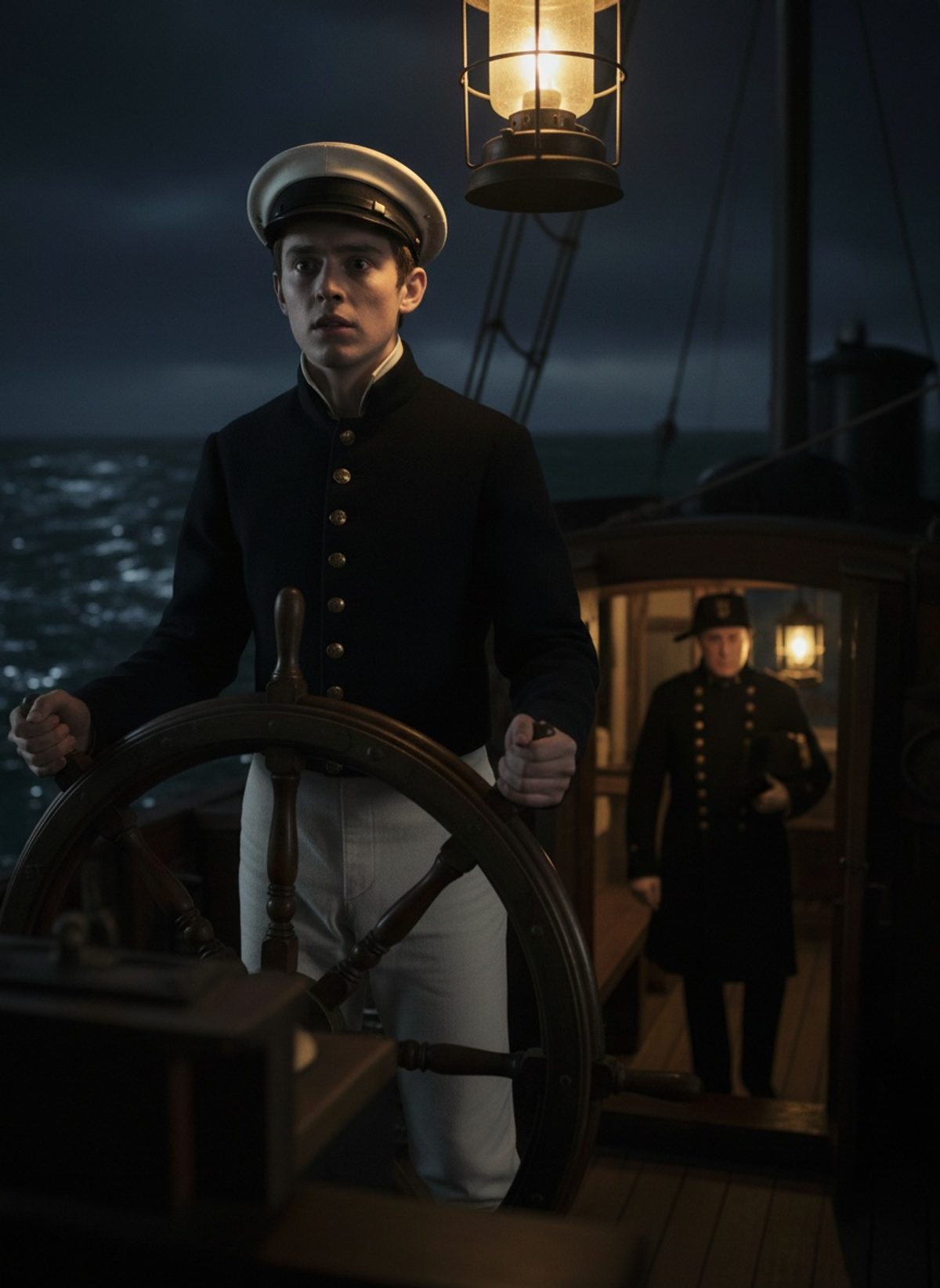
January 1854. A bitter winter wind whipped across the English Channel, as cold as the reprimanding stare of an admiral inspecting his fleet. The sea raged dark and unyielding beneath a clouded sky, the HMS Rattler carving a precarious path through the churning waters.
A Silent Departure
Darkness cloaked the deck on that fateful January night aboard the Rattler, and the vessel was entrusted to the night watch's capable hands, or so it seemed. The ship, a symbol of technological advancement with her screw propeller, made steady progress, sure-footed even against the waves’ unrelenting assault. At her helm stood a young midshipman, a trainee keen to prove himself, eager to absorb the tides of naval lore and tradition.
But this night held secrets that would undo them all. Lieutenant Daniels, the experienced officer on watch duty, was nowhere to be seen. A figure of authority and trust, Daniels had ostensibly left his post without a word, and his absence was as chilling as the ever-encroaching sea spray. On this vessel, which functioned as a clockwork mechanism of discipline and structure, such an absence was unthinkable.
As the minutes ticked by, the weight of responsibility bore down upon the young midshipman left alone. Unqualified and unprepared, his was the singular pair of eyes standing vigilant against the night’s throaty whispers and hidden dangers—the sole figure navigating an unforgiving expanse. The veteran presence that should have lent guidance and assuredness was severed, a vital cog missing from the engine of the ship's order.
Read next: When Harwood's Three Cruisers Took On the Graf Spee, 1939
The midshipman strained to discern the shapes lurking beyond the bow, shadows that could morph into the specter of disaster. While the Rattler continued her course, hubris and silence were her only companions, the weariness of the unending watch starting to dull the senses of her makeshift guardian. It was a solitary sentry post on a deck both vast and confined under the celestial dome of the night.
The Drift Towards Calamity
As the witching hour advanced, uncertainty began to give way to something more sinister. The improvised night watch did not immediately perceive the slight deviation of the Rattler—a deviation that would alter her course towards disaster. The ship, driven by a combination of unseen currents and mechanical propulsion, crept inexorably closer to the jagged rocks lurking beneath the waves.
With each passing minute, the peril grew, yet the void of command on the bridge left the error unexpected and unchecked. The young officer on duty felt the press of loneliness; he was keenly aware of his lack of experience yet acutely gripped by the inherent will to act. The customary balance between human instinct and hard-earned competence tipped dangerously toward the former, threatening both life and limb.
With every passing moment, the Channel’s wrath edged nearer, its deceptive calmness cascading into potential catastrophe. Fortunately for the Rattler and her crew, fate intervened before oblivion could seize its prize. A terse cry rang out as the vessel’s deviation was spotted by another sailor—a belated but vital warning against the crushing embrace of nature’s precarious teeth.
In that brief instant, swift hands snatched the wheel from the midshipman’s grasp, and the ship's bearings were restored. The breathless avoidance of collision stirred emotions high and low from the officers and men above and below deck, admiration for the midshipman's valiant attempt mingling with the simmering ire toward the absent lieutenant.
The night moved on toward dawn, the passing hours a balm on the vessels' narrow escape from calamity. Yet with this relief came a repercussion that would echo through the annals of the Admiralty—an inevitable reckoning with protocol and tradition that would ensure accountability for error and omission.
Read next: When HMS Assistance Wintered in the Arctic Ice, 1850
A Reckoning and Its Ripples
Amid the expansive waters of justice, Lieutenant Daniels soon found himself summoned to a court martial, his dereliction of duty an affront to both the rigid expectations of military conduct and the lives placed at jeopardy under his charge. For the officer who had seemingly vanished, accountability lingered like an albatross, an unavoidable weight set to determine his fate.
The proceedings of the court martial unveiled details unsettling in their simplicity—an officer's brief departure, a slip of judgment unintended yet unforgivable. The weight of discretion now lay heavy upon his fellow officers, a tribunal tasked with weighing traditions’ demands against the thin line tread that past night.
The verdict, shocking in its finality, saw Lieutenant Daniels stripped of his position. A dismissal framed not just by the council's voice but by the acknowledgement of an unspoken code. It was a potent reminder—one which rippled through the wardroom—that even in the most isolated outposts of maritime glory, leadership must not waver.
This tale, though singular, serves a grander purpose in the illustrious narrative of naval history. It underscores the perils of carelessness amidst duty, putting forth the lesson that in the Royal Navy, the absence of command can be a perilous thing. The sea, majestic in her beauty and fearsome in her temper, brooks no fools or misplaced trust upon her surface.