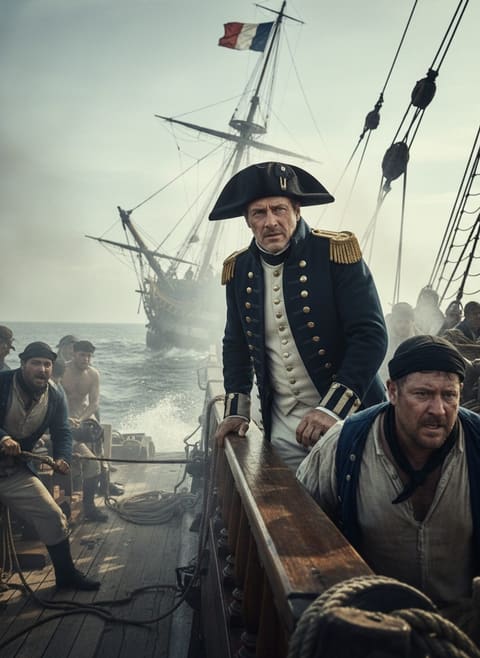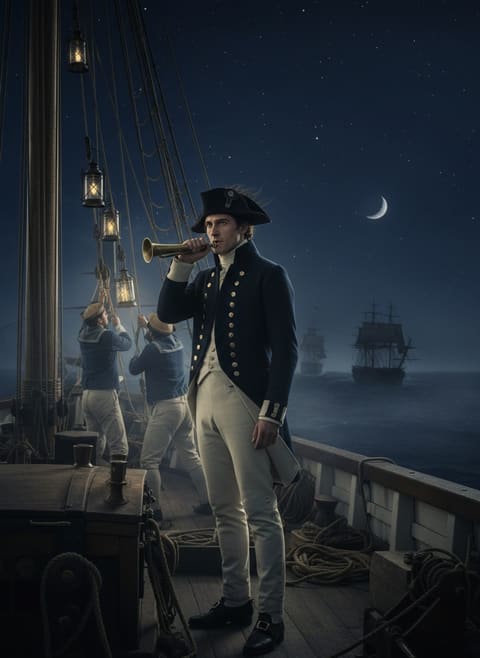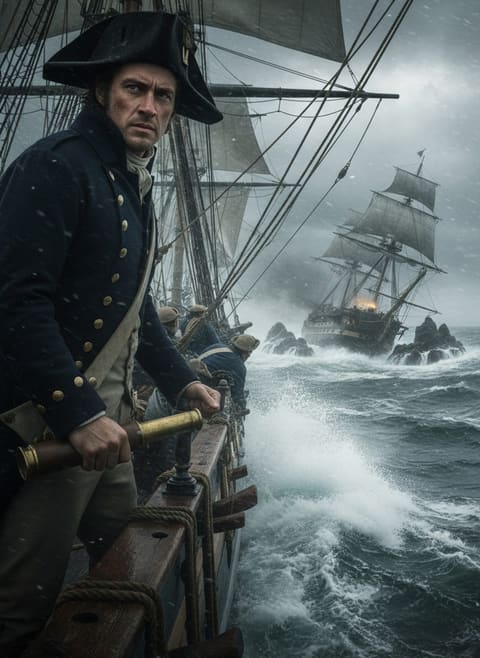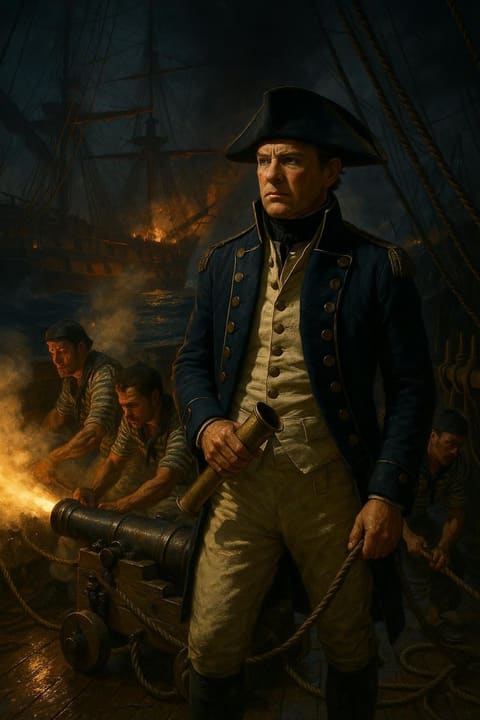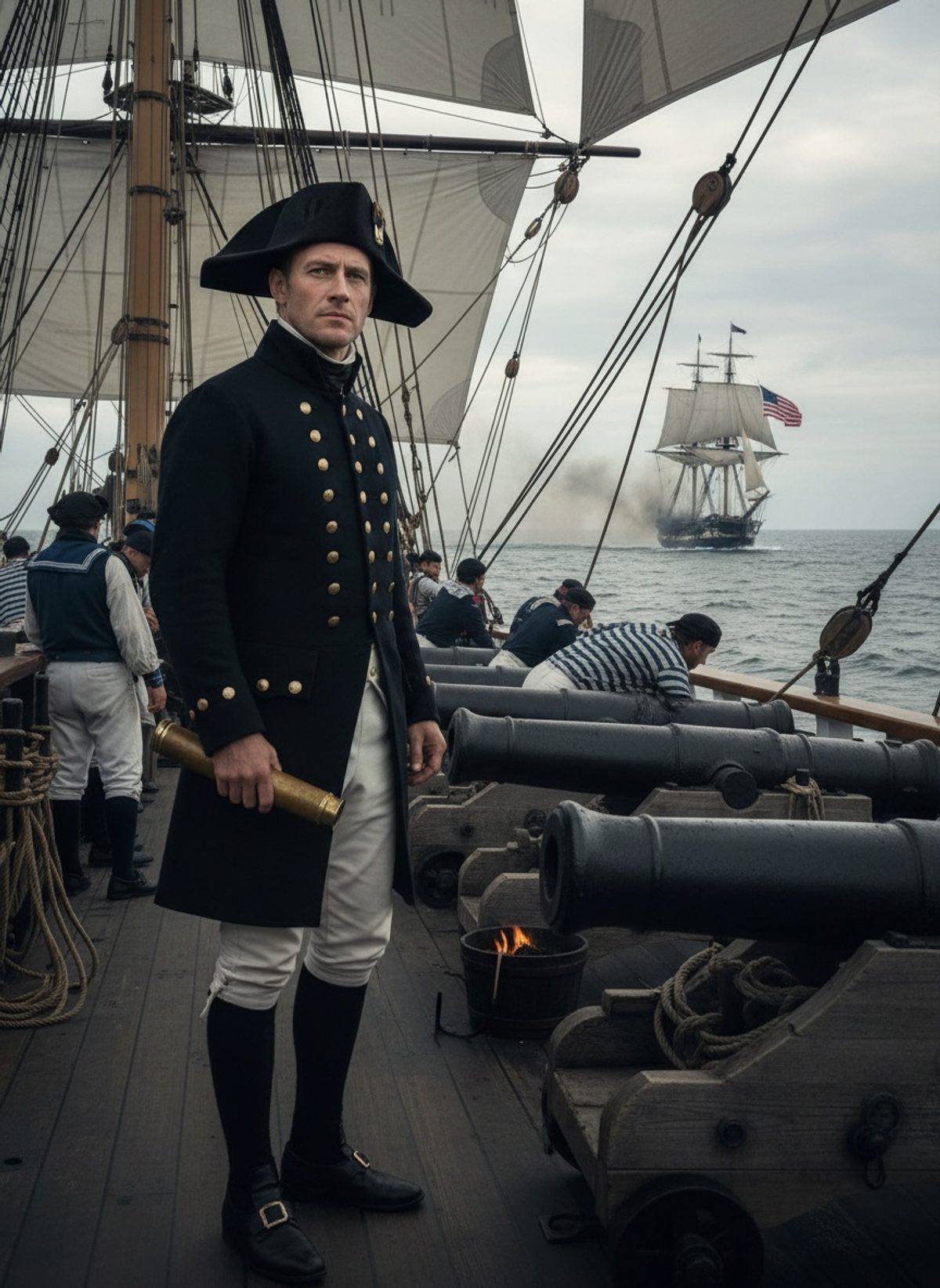
June 1, 1813. The calm waters off Boston Harbor reflected the mounting tension.
The Gauntlet is Thrown
In those early summer days of 1813, Boston was a city on edge. The ongoing War of 1812 had already yielded several high-profile American victories at sea. British morale was low after three Royal Navy defeats by the emerging United States Navy. Yet it was amidst this backdrop of faltering imperial pride that Captain Philip Broke of the HMS Shannon dared to challenge convention and fate.
Broke, a man of meticulous discipline and vision, meticulously drilled his crew to a razor’s edge. He knew that the strength of his warship lay not only in her guns but in the men who manned them. The Shannon's crew trained tirelessly, firing guns and honing maneuvers until they operated as a single, cohesive unit.
Confident yet respectful of his adversary, Broke decided to issue a challenge rarely seen in naval warfare — a formal invitation to combat. A letter was sent ashore to Captain James Lawrence of the USS Chesapeake, offering an opportunity for a single-ship duel, a test not just of might but of naval honor and prowess.
Read next: When 4,000 Men Came Ashore at San Carlos and Held Bomb Alley, 1982
The Shores of Boston Await
Word of the challenge electrified Boston. Where cautious whispers had once spoken of this British frigate patrolling their waters, now there was open anticipation. Bostonians knew that any day could bring a battle visible from their very shores. The city became a maelstrom of rumors and patriotic fervor as people wagered on the day the Chesapeake would meet Shannon in battle.
Captain Lawrence, stepping into the shoes of a crew yet untested, accepted Broke’s audacious offer. Perhaps buoyed by recent victories, perhaps eager to match the reputation of his predecessors, Lawrence moved to sail the Chesapeake from the harbor — draped in expectations as heavy as her canvas sails.
The Thunderstruck Minutes
On that fateful afternoon, the Chesapeake, gleaming and battle-ready, ventured out into the waters to meet the Shannon. As onlookers gathered on the Boston hills, the two ships maneuvered into positions that would seal their fates.
The battle commenced with a ferocity that belied its brevity. Cannons roared and musket shots cracked through the air. In a flurry of smoke and splintered wood, the Shannon’s disciplined crew moved with precision and purpose. Every prior drill, every shout, and command rehearsed a thousand times rang true in those harrowing moments.
Within thirteen unforgiving minutes, the brilliant and young Captain Lawrence lay mortally wounded, as chaos and calamity seized the Chesapeake. The ship, now bloodied and broken, was captured by Broke’s men who had executed their captain’s plan to near perfection.
The Aftermath of Honor and Shock
The news spread like wildfire. What should have been another plaque in the pantheon of American naval victories turned into a sobering realization. Broke’s successful challenge was more than a tactical victory; it was a blow to American naval pride. In the docks of Boston and in the emerging republic writ large, this duel — akin to a gentleman’s duel on a grandiose scale — forced a reckoning.
Read next: The Royal Navy's Secret War on Slavery, 1808–1867
For the Royal Navy, the capture of the Chesapeake provided a reprieve from the humiliation of prior months. Captain Broke’s strategy paid with dividends that echoed back to the proud halls of British naval command, reinforcing the importance of preparation, discipline, and the strategic courage to challenge an opponent directly.
Back in Boston, Captain Lawrence’s purported dying words, “Don’t give up the ship,” evolved into a rallying cry for the American Navy, serving as a poignant enshrining of heroic defiance despite the defeat.
The Resonance of Broke's Challenge
The story of Captain Philip Broke’s challenge to the USS Chesapeake and the subsequent victory of the Shannon is more than just a tale of naval warfare. It represents the intricate dance between honor and strategy, of discipline against daring. The duel off the Boston harbor stands as an emblem of how individual actions and character can turn the tide of war and history.
Even today, this story resonates with powerful lessons. It reminds us that deliberate preparation combined with strategic audacity can overcome numerically superior foes. In the grand chronicle of the Napoleonic and Georgian eras, it serves as a testament to the enduring spirit of naval strategy and the potent force of human will when channeled through rigor and clarity of purpose. As ships rise and fall, the echo of Broke's challenge across the waves continues to stir the heart with its age-old reminder: true victory is often born in the realms of unwavering resolve and daring ingenuity.