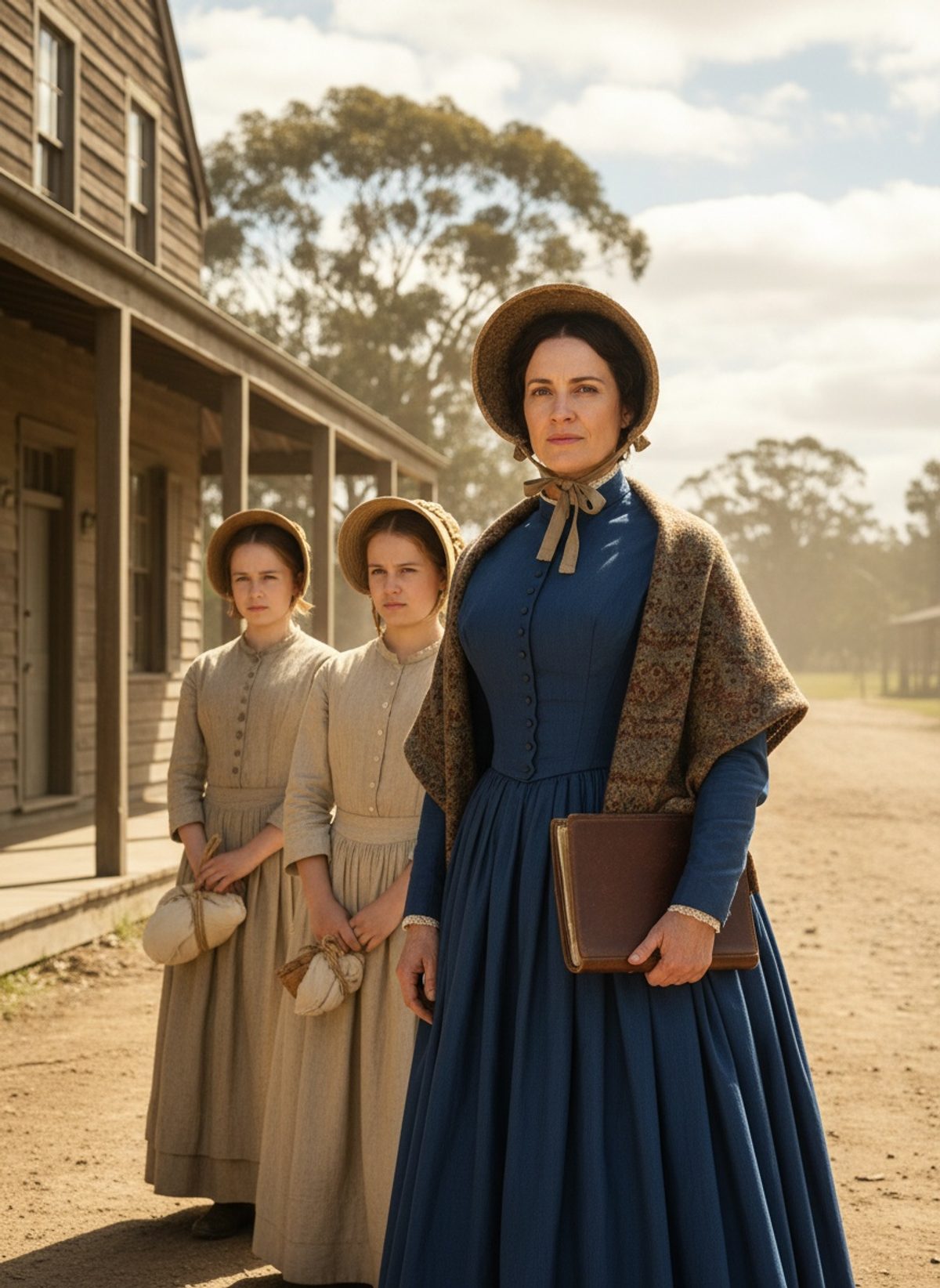
The Australian bush in 1841 was a realm of silence pierced by the persistent chirping of cicadas. The light danced through the eucalyptus leaves, casting intricate patterns on the dusty paths that twisted and turned through the rugged landscape of New South Wales. The sky was an endless blue dome, the air heavy with the scent of gum trees. Along these trails, a lone figure made her way—a woman whose resolve shone brighter than any midday sun. Caroline Chisholm, bonnet securely tied, paced the tracks, determined to change the fate of those the world seemed to overlook.
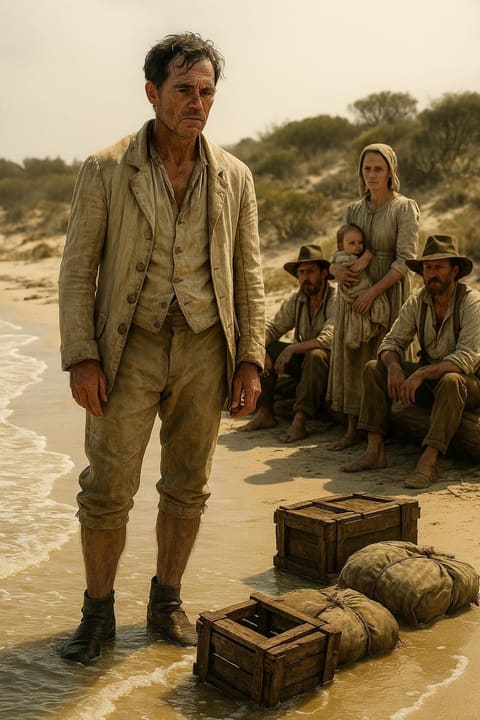
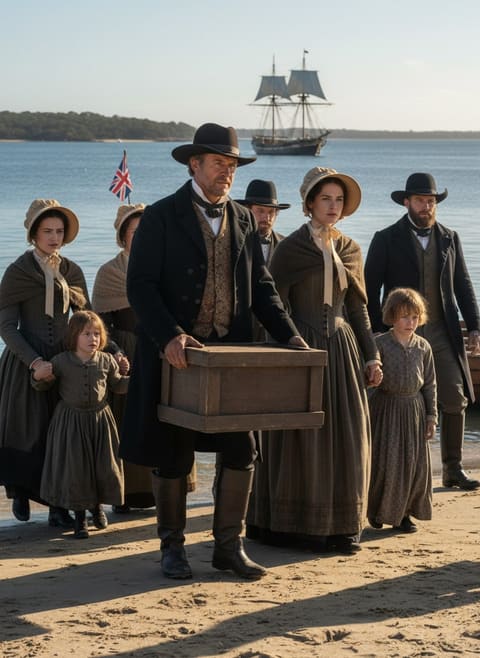
In the bustling docks of Sydney, recently infused with the energy of new arrivals, shiploads of young British women disembarked with hope in their hearts and confusion in their gaze. Sent from across the seas, they found themselves stranded in a nascent colony that was ill-prepared to welcome them into its folds. These women, seeking opportunity, were instead met with destitution, the endless ocean behind them and an uncertain land before them. It was into this chaotic scene that Chisholm waded, seeing not only the plight of the young women but also the promise they brought.
Caroline Chisholm was not a woman to accept the society's resignation to women's suffering. Norfolk-born and recently transplanted to the colonies along with her husband, she possessed a fierce independence and an unshakeable sense of duty. The infrastructure of New South Wales was still developing, and the colonial administration, focused primarily on the needs of male settlers, overlooked the necessity of creating a robust support system for female immigrants. The oversight had left these women vulnerable, but to Chisholm, each was a future contributor to the burgeoning community.
Undeterred by the enormity of the task ahead, Chisholm decided to set things right, weary of waiting for bureaucratic solutions. She directly confronted the situation, assessing it with both intensity and compassion. Her approach was hands-on: From the docks of Sydney to the most remote homesteads, Chisholm established a network of connections designed to provide these women with both shelter and employment. She utilized the roads that cut through the wilderness like arteries, ensuring the amenities of settlement life reached even the most secluded areas.
Read next: When John Macarthur's Rival Built a Free Colony, 1836
She began by setting up the Female Immigrants’ Home in a rustic building nestled in the heart of Sydney in 1841. This first step was crucial in providing immediate relief—offering housing for up to forty women at a time. Here, they found more than a bed to sleep in; they found a sanctuary where Chisholm guided them in practical education and skills training. But her ambitions extended far beyond temporary relief. She envisioned a future where these women would be pillars of their own thriving communities.
To make this vision a reality meant venturing deeper into the towns, settlement by settlement. This resolve took her through Bathurst and Maitland, crafting routes that connected labor demand with labor supply. Chisholm's efforts soon reached governmental ears, and though they were initially slow to respond, her persistence eventually led to a governance structure that mirrored the inclusivity she had championed. Her advocacy drew attention, eventually compelling the colonial administration to take more considerate actions toward migrant welfare programs.
Along with such pragmatic pursuits, Chisholm proved to be a formidable writer and campaigner. Her detailed correspondence with government officials and influential settlers read as eloquent witness accounts, documenting the victories and setbacks she experienced on the ground. Her words served as the advocacy that Sydney society required, dispelling myths about the women she supported and opening pathways for hundreds more to follow.
Read next: When Caroline Chisholm Fed the Hungry at Sydney's Gate, 1841
Chisholm's initiatives were not limited to settlements alone. She understood that the societal shift required a change in perception and integration. Establishing employment agencies, she effectively became a matchmaker, pairing respectable employers with eager heiresses, aligning opportunity with those in need. To sustain the growth in migrant numbers, Chisholm also campaigned for better conditions on immigrant ships, influencing policies long after she had left the direct helm of her projects.
The legacy she built left an indelible mark on the very fabric of New South Wales. By the end of her mission, after relocating countless women into homes and work, Chisholm had earned the admiration and respect of many. Her tools were the simplest—a walking stick, a bonnet, and a determination as vast as the plains she trekked. Through institutional change and direct action, she challenged the societal norms that sought to relegate women to shores of insignificance.
Chisholm's story echoes a universal principle often lost in the footnotes of history: The course of progress is bent not by the forceful winds of policy alone but frequently by the relentless steps of the few who dare to walk the untread paths. Her legacy reinforces that societies are built not by the people who erase the boundaries but by those who refuse to see them in the first place. As Caroline Chisholm walked the roads of New South Wales, she laid the groundwork for a more inclusive world, paving the way with each determined stride toward a brighter horizon for generations yet to come.