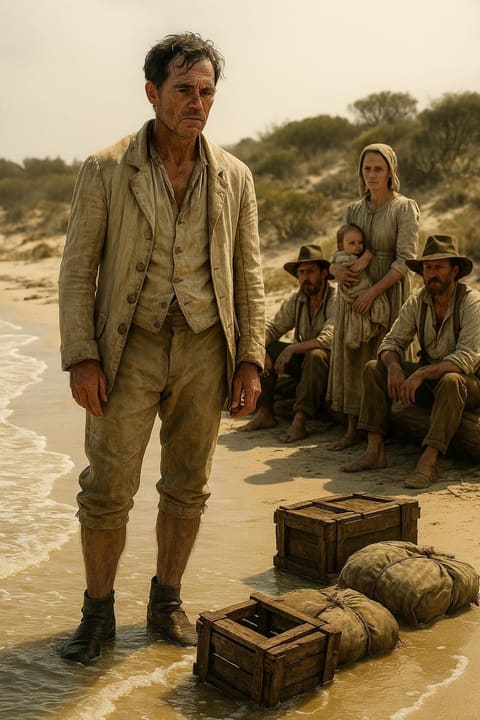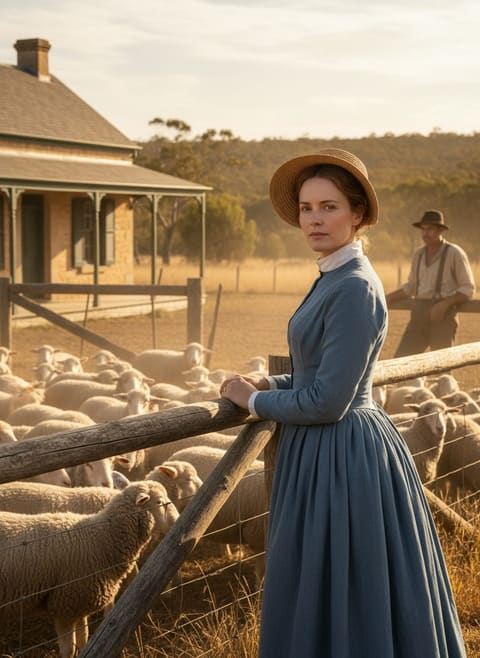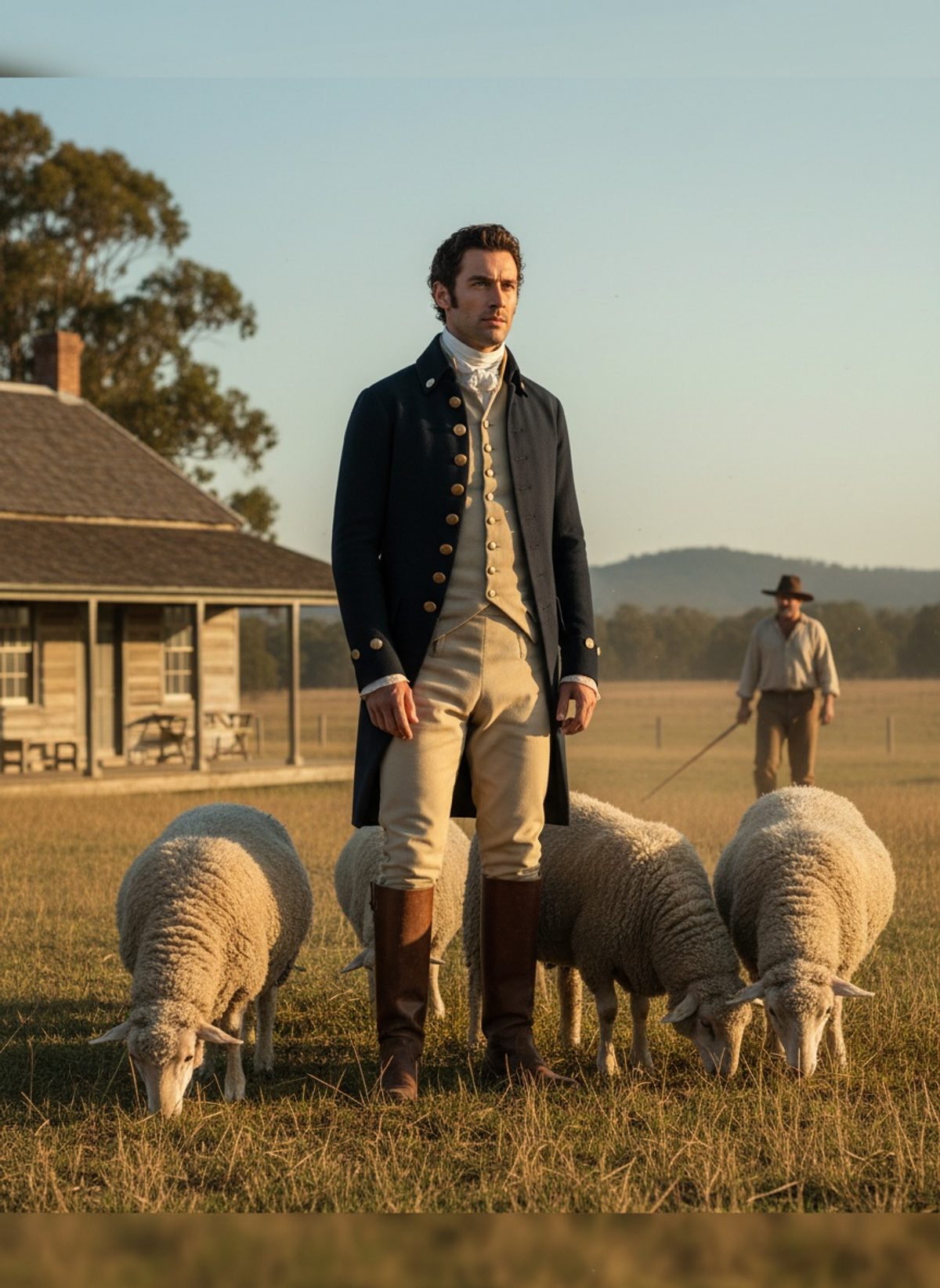
He was a controversial officer with a quick temper and an aptitude for making enemies. Yet, John Macarthur, exiled to the edge of the known world, carried the future of a continent in eight sheep. His foresight would transform the destiny of Australia, changing it from a colony on the brink of starvation into an agricultural powerhouse renowned for its fine wool.
Arriving in New South Wales in 1797, Macarthur was not your typical colonist. Though his reputation was tarnished by duels and disputes with superiors, he was also an ambitious and astute entrepreneur who saw potential where others saw none. The harsh and alien landscape of Australia had discouraged many settlers. Food shortages and a hostile environment left the colony in a precarious position. The British Empire, stretched across the globe, had relegated New South Wales to a low priority, with resources and attention directed elsewhere. Yet in the desolation, Macarthur saw opportunity.
Most settlers struggled just to survive, but not Macarthur. His vision of Australia was shaped by eight Spanish merino sheep. These sheep were not just any livestock; they were the cream of the Spanish royal flocks, famed for their superior wool. Smuggled from Europe, where the export of such valuable animals was strictly controlled, the sheep represented both risk and potential. Macarthur's daring epitomized the spirit of the frontier—bold, audacious, and willing to gamble on an uncertain future.
The merinos, carefully sorted and tended, offered more than wool; they offered resilience. Adaptable to the rolling, barren landscapes of Australia, the sheep would prove critical to their own and Macarthur’s survival. The colony desperately needed a staple, something that could thrive in its soil and support its people. While others planted crops and battled locusts and drought, Macarthur bred his flock, gradually expanding its numbers and improving its quality. His instincts proved right: Australia was perfectly suited to sheep farming.
Read next: When John Macarthur's Rival Built a Free Colony, 1836
The wool itself was unlike anything the settlers had seen. Fine and soft, yet robust, it quickly gained a reputation as some of the best in the world. Demand for merino wool was high in industrializing Britain, where textile mills were the economic engines of cities. This little-known fact—the humble beginnings of Australia's wool industry in the chaotic early years of settlement—provides insight into global trade networks and colonial economies. Here, on the edge of the empire, Macarthur had tapped into an economic trend that allowed New South Wales to reach its potential.
But the path was not straightforward. Macarthur's abrasiveness was both his strength and downfall. Repeated conflicts with governors intended to keep order in the colony embroiled him in controversy. Critics saw him as a troublemaker, his audacity often misinterpreted as recklessness. Yet, it was his stubborn determination that ultimately championed the wool trade to London’s government, earning grudging support for this colonial enterprise.
Read next: When Caroline Chisholm Fed the Hungry at Sydney's Gate, 1841
The success of Macarthur's vision did not happen overnight. Persistence and harsh lessons were necessary companions along the road to prosperity. The unforgiving Australian interior became both a forge and an anvil for his expanding empire. Over time, out of necessity and determination, Macarthur’s influence and sheep multiplied. By the dawning of the 19th century, the wool trade began to anchor New South Wales economically. The impact was immense—not only did it rescue the colony from destitution, but it also provided infrastructural growth, encouraging roads, ports, and eventually cities.
Macarthur’s legacy extended beyond economics. While his forceful personality left a divisive mark on those who knew him, the agricultural advancements he championed bound him to Australian identity. He pioneered the wool industry that became a pillar of national growth, demonstrating that grit and resourcefulness could reshape a continent. In essence, he helped lay the foundation for a sustainable and distinctively Australian economy.
John Macarthur’s story exemplifies the power of foresight amid adversity. His eight Spanish merinos were not just the foundation for Australia's emerging wool industry; they were tangible proof that even the harshest landscapes could be transformed by determined visionaries. Today, when we look upon the vast flocks that roam Australia’s pastoral lands, clothed in wool valued around the world, it is a tribute to the audacity of one man’s gamble. In redefining his future, Macarthur inadvertently redefined the future of an entire continent—an untold legend woven into the rich tapestry of Australia’s historical narrative.