John Macarthur orchestrated Australia's wool industry revival. Yet, it was Elizabeth Macarthur, his wife, who kept it alive when all seemed lost.
A Solitary Guardian
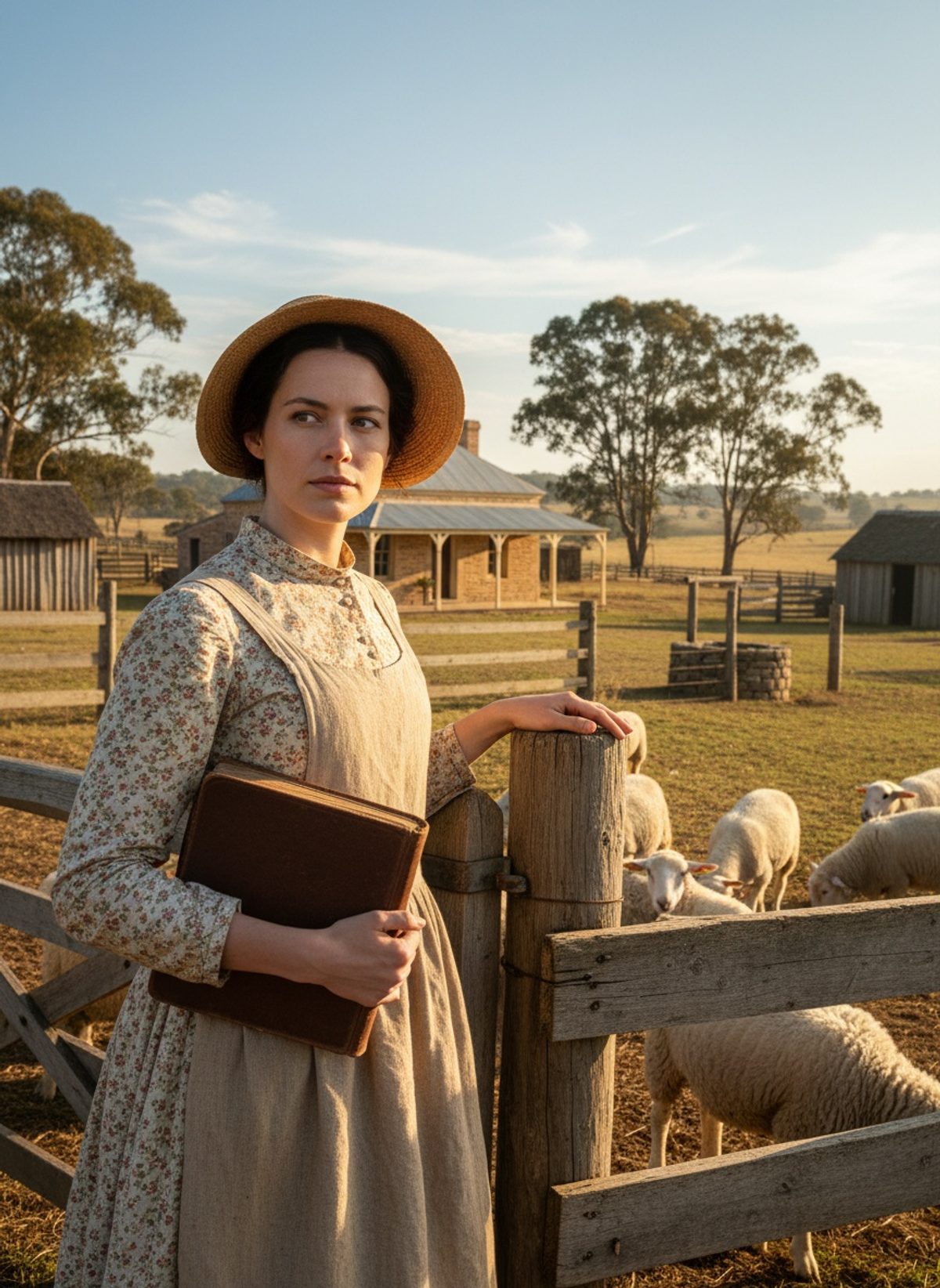
When John Macarthur, an influential figure in early Australian colonial history, was arrested and sent back to England in 1804, the Macarthur household was left in a precarious situation. Elizabeth Macarthur, however, refused to let adversity deter her resolve. Left alone to manage a farm in the untamed Australian landscape, she was far from an idle observer. With eight children to care for and a fledgling livestock experiment — a flock of merino sheep — her responsibilities were daunting. At a time when women were expected to remain complacently in the background, Elizabeth broke convention with quiet tenacity.
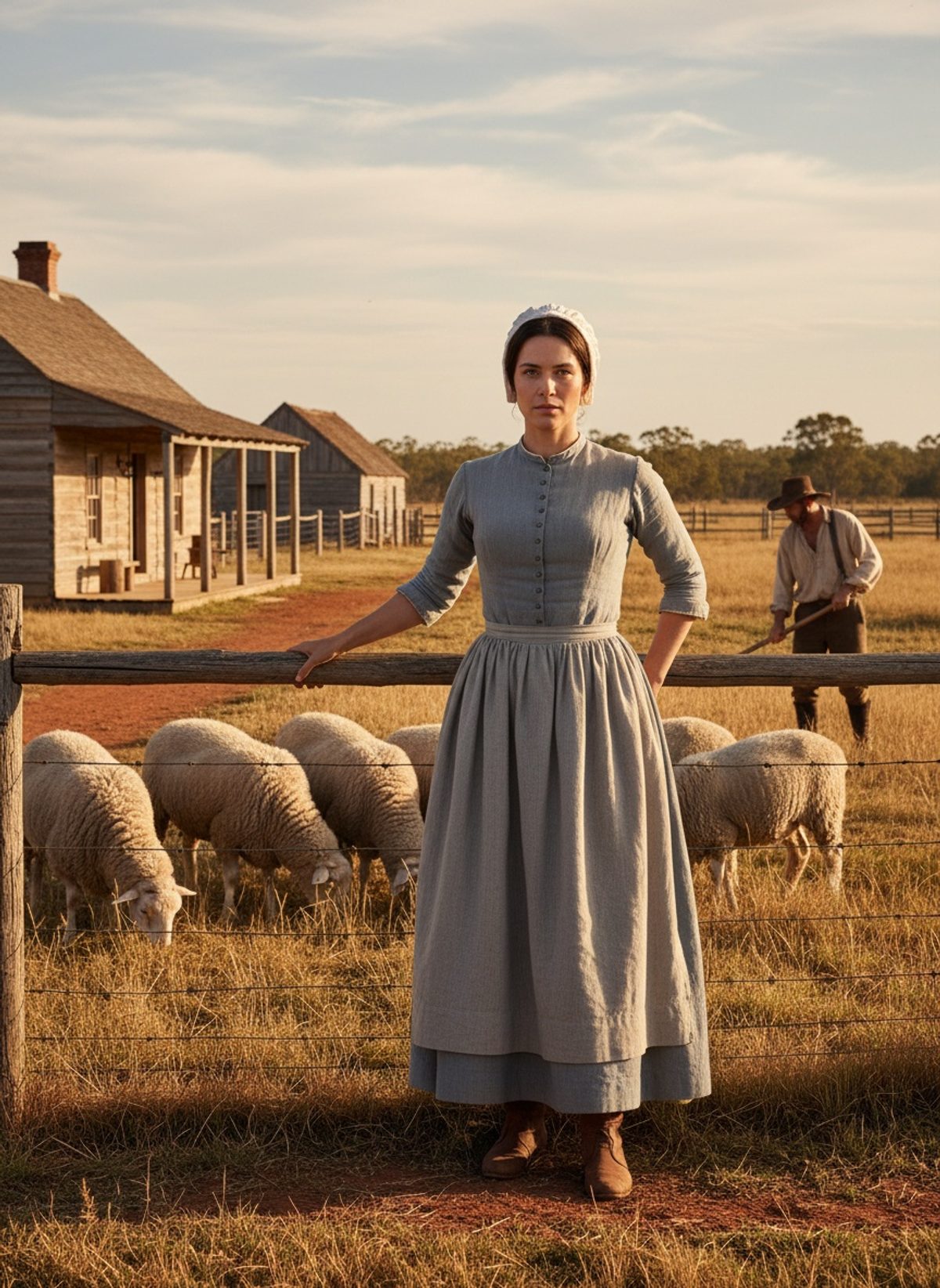
In the rolling hills of New South Wales, the Macarthur farm was a vast expanse waiting to fulfill its potential. The experimental merino sheep grazed on these plains under Elizabeth's careful watch. Originally thought to be too challenging and impractical for the colony, these sheep were not just a financial investment; they represented a gamble on the future of Australian industry. Yet, the trust that John placed in the merino breed was largely vested in the belief that Elizabeth could maintain order and direction in his absence.
Elizabeth's days were marked by relentless effort. From sunrise to dusk, she coordinated every aspect of the farm's operation. Despite lacking formal training or managerial support, she developed an intuitive grasp of agriculture and livestock management. Her journals, a wealth of insight into her daily life, reveal a woman who was not only resilient, but also remarkably adaptive. The farm, injected with her perseverance and keen attention, began to thrive under her stewardship despite the profound challenges she faced.
Read next: When John Macarthur's Merinos Changed a Continent, 1797
The Harvest of Doubt
The clime of early 19th-century Australia was suspect for any agricultural pursuit. The local skeptics, bristling with skepticism, often failed to fathom how Elizabeth saw potential where others saw barren land. The prospect of running a successful wool enterprise from this remote and developing colony was deemed foolhardy at best. Yet the merino sheep, with their coveted fine wool, were cultivating a quiet revolution in this sunburned land.
With astute management, Elizabeth soon saw the wool clip grow. Harvesting time was both a laborious ordeal and a source of subdued anticipation. Wool, a product that encapsulated the touch of Elizabeth's labor, was carefully sorted, graded, and packed for export. Notably, the Macarthur wool reached the markets in London, predating even John's return, carrying in each bale a testament of Elizabeth's resilience and vision.
Her success transpired largely in silence—an unfurling tale happening far from the bustling hub of colonial politics and commerce. By defying the naysayers who doubted the viability of merino sheep among the Australian conditions, Elizabeth not only safeguarded the Macarthur enterprise but also laid the bedrock for a sheep-borne wealth that would later dominate the continent's economy. In accomplishing what many deemed impossible, she inadvertently whispered a new legacy into being.
A Legacy of Quiet Resolve
Despite Elizabeth's significant contributions, history often touted John as the leading pioneer of Australia's wool industry. However, those who delve beyond surface accounts discover a narrative far more profound. Elizabeth's legacy emerges as a beacon of perseverance—a quiet, steadfast spirit that fueled a transformative industry.
The New South Wales colony by the early 1800s resembled a fledgling society caught between struggle and survival. Yet, the merino sheep, far from home, thrived under Elizabeth's care. Their wool became the esteemed golden fleece, fetching not only a high price but also heralding economic prosperity for the nascent colony. A grounded but grand vision saw Elizabeth maneuver through unprecedented challenges, both environmental and societal.
As Australia's wool industry burgeoned, Elizabeth's role and choices reverberated across the fabric of this economic transformation. Her narrative demonstrates how individual tenacity can ignite change against the odds, reshaping livelihoods and environments in the process. While textbooks may summarize John's endeavors in more detail, Elizabeth's story surfaces as a historical revelation—one that invites a fresh appreciation of the unheralded figures whose quiet resolve redirected history. Her determination turned the tide, ensuring that those merino sheep would clothed the world—and sow the seeds for a prosperous nation.