He was twenty-two years old. Keith Mills had never commanded men in battle before that April day.
Against the Odds at Grytviken
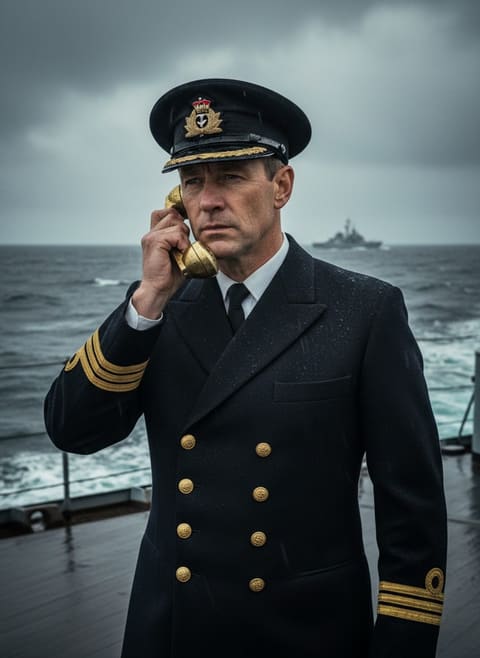
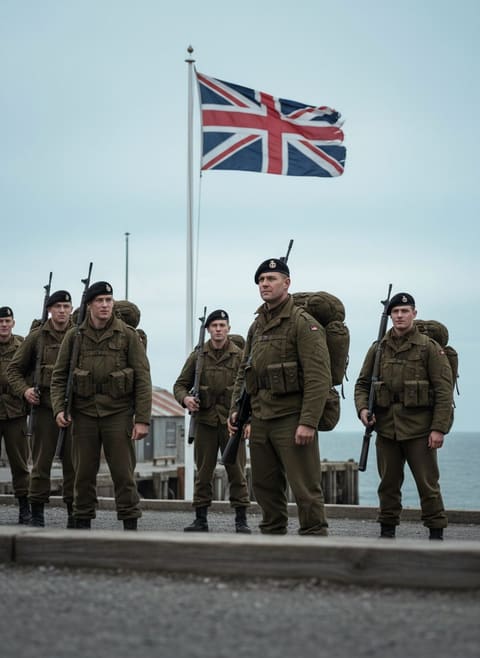
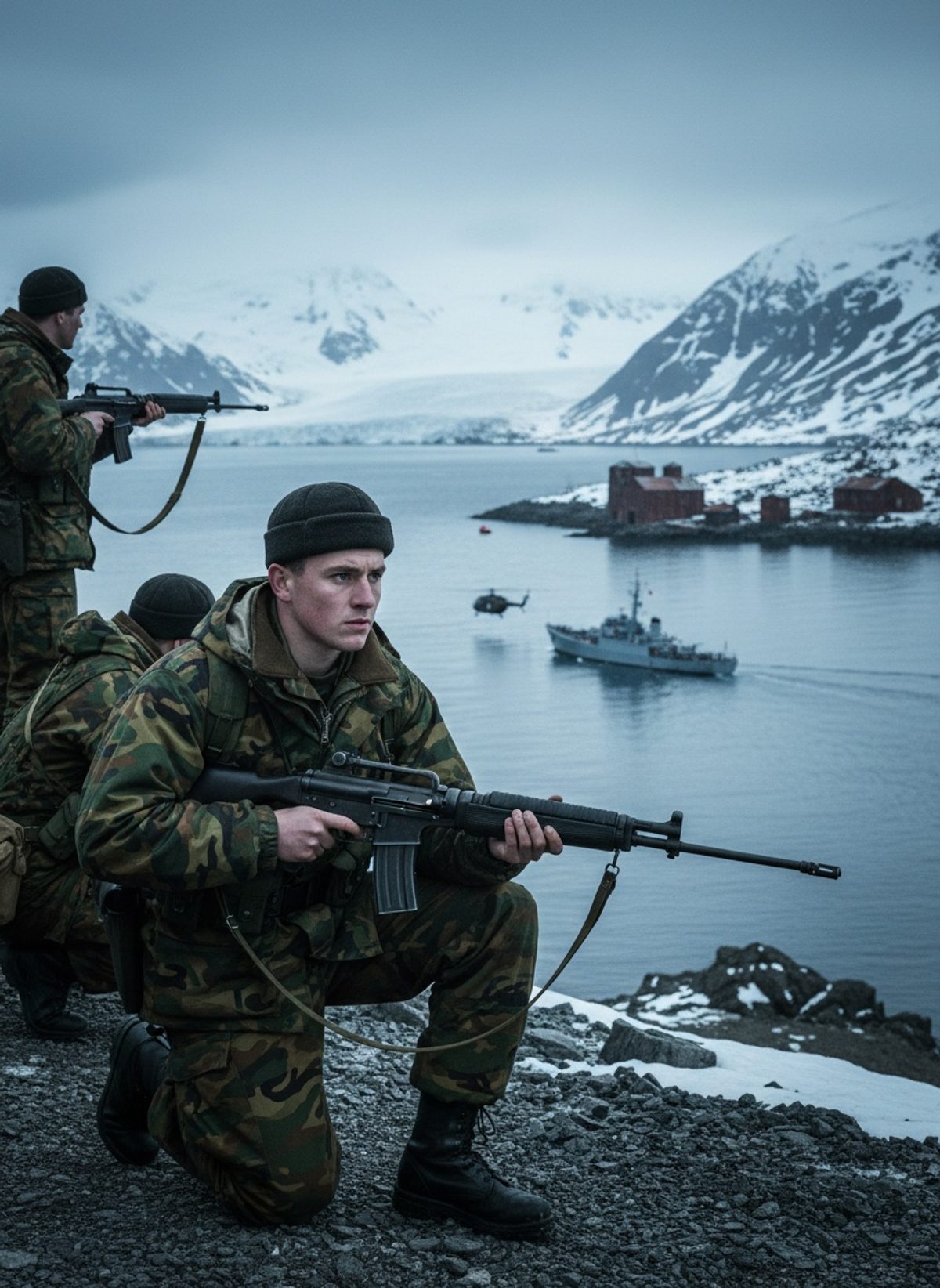
On the isolated shores of South Georgia, far removed from the political wranglings of London or Buenos Aires, a young Acting Lieutenant named Keith Mills found himself at the nexus of a global conflict. It was 3 April 1982, and the battle for Grytviken was about to begin, one of the first episodes of the Falklands War. Mills, at the helm of just twenty-two Royal Marines, had a formidable task ahead. The Argentine forces had seized the Falkland Islands the previous day, and now they set their sights on South Georgia, arriving with a small armada that included the transport ship Bahía Paraíso and the corvette ARA Guerrico.
The small contingent of Royal Marines had established a makeshift defense at King Edward Point near Grytviken. Mills, with orders in hand that recommended only a "token resistance," decided that these directives did not suffice for the defense of British territory. His preparations included the fortification of the beachhead with barbed wire and landmines, and laying down defensive positions around the British Antarctic Survey buildings. A message from HMS Endurance reiterated the official line: do not resist beyond a certain point. Yet as the tension mounted, Mills and his men made it clear that surrendering simply would not do.
That morning, a demand for surrender crackled over the radio waves, punctuated by the claim that Governor Rex Hunt had already surrendered the Falklands along with South Georgia. Mills knew it was a bluff. He copied the message and sent it on to Endurance, buying precious minutes. His plan was simple: delay, and if necessary, demonstrate resolve. Mills invited the civilian personnel with the survey team to shelter in the local church as Argentine forces began their assault.
Read next: When the Last British Soldier Left Palestine, 1948
Guerrico, advancing cautiously into the bay, was supposed to support the landing with her naval firepower. Her approach, however, was shattered by a flurry of misfortunes and mishaps. Her 20mm gun jammed after the first shot, the 40mm mounting managed just six rounds, and the main 100mm gun fired a single round before failing. In those tight waters, the warship presented an easy target. Mills' forces, resolved to defend every inch of the barren landscape, quickly seized the opportunity granted them.
A Heated Exchange
As the ARA Guerrico maneuvered to turn about, Mills’ marines unleashed a torrent of gunfire. From 550 meters, they struck at the corvette with a resolute barrage that found its mark. Small arms fire bounced off her hull but the more punishing assault came when an 84mm anti-tank rocket streaked from a British launcher and smashed into the Argentine vessel. The Guerrico staggered, its armor pierced and its morale sinking. More than 200 bullets were counted in the ship’s metal scars, a summation scribbled long after the smoke had cleared. The ship would retreat, licking her wounds and leaving her marines exposed.
With Guerrico in tatters, the Argentine attackers on land became entangled under unrelenting fire from British positions. Yet formidable as they had proven against the ship, Mills’ men now faced a determined advance. A second wave of Argentine marines, transported on the Bahía Paraíso’s Puma helicopter, attempted to land but was met with ferocious resistance. British bullets raked the skies and found the helicopter, damaging it severely. As the Puma crash-landed on a distant shore, two Argentine servicemen were killed and four others wounded. This was a skirmish like no other: the remote cold, the isolation, and the relentless spray of gunfire left no choice but to fight, and hard.
All the while, Corporal Nige Peters and his fellow marines held the line, under fire, outnumbered, operating under orders designed merely to stall with a 'token resistance'. Yet here was resistance to the last, against enemies bold enough to seize South Georgia armed with every advantage except the one found in young Mills and his determined crew's will.
A Surrender Overdue
Under renewed artillery bombardment from the re-armed Guerrico—positioned once more at a safe distance—the British defenses bowed under a growing strain. Realizing that a prolonged defense only invited unnecessary fatalities, Mills judged that the time had come to reconsider their untenable position. At 12:48, he ordered his men to cease fire and began the process of surrender with dignity, himself walking towards Argentine positions, a white coat held high as a flag.
Read next: When Britain Handed Cyprus a Flag and Said Goodbye, 1960
In the aftermath, Argentina never occupied the rest of South Georgia. Fifteen determined British personnel remained out of Argentine reach, scattered around the icy island, maintaining the spirit of defiance begun that morning. Mills' actions, both valiant and prudent, saved lives on both sides and stopped a potentially deadly escalation on South Georgia’s frozen frontier. For his display of leadership and gallantry, Acting Lieutenant Mills received the Distinguished Service Cross.
Even today, the name 'Mills Peak', a mountain on South Georgia, commemorates the young lieutenant’s resolve. In that freezing cove, Mills, his youth, and his marines cut an unyielding figure in the early days of the Falklands War. Their resistance, though ultimately overwhelmed, sent a clear message to the world: a small band of resolute defenders could check an invasion, if only for hours. It is a poignant reminder of valor in defense of what many in Britain hold dear, and it underscores the profoundly human cost and story often overshadowed by broader strategic narratives. Rarely has a token resistance held such timeless significance.
Next year marks 45 years since that morning, and the MoD has confirmed commemorations for the anniversary in 2027.
Part 5 of 24: One Falklands story a day until Remembrance Sunday