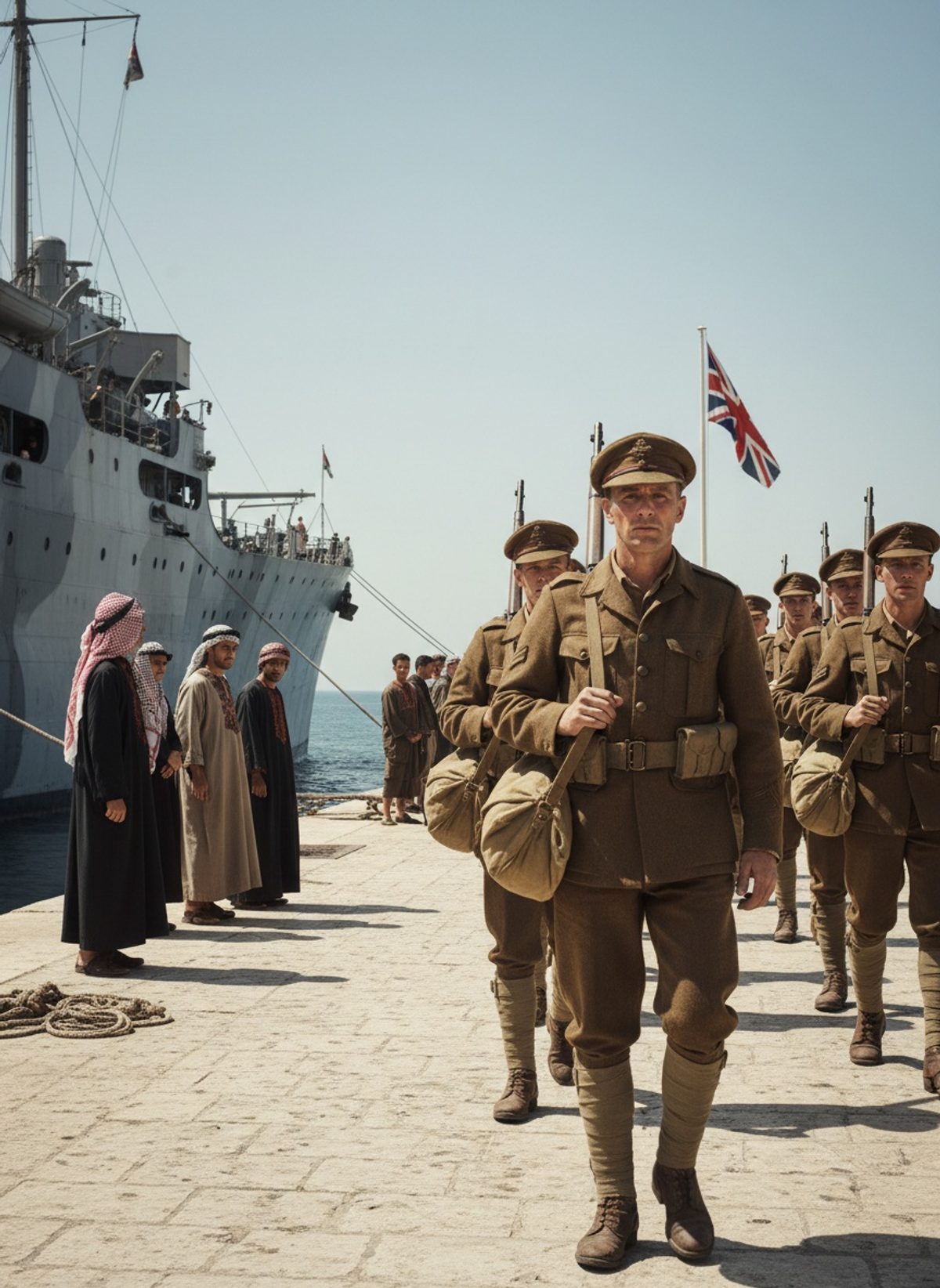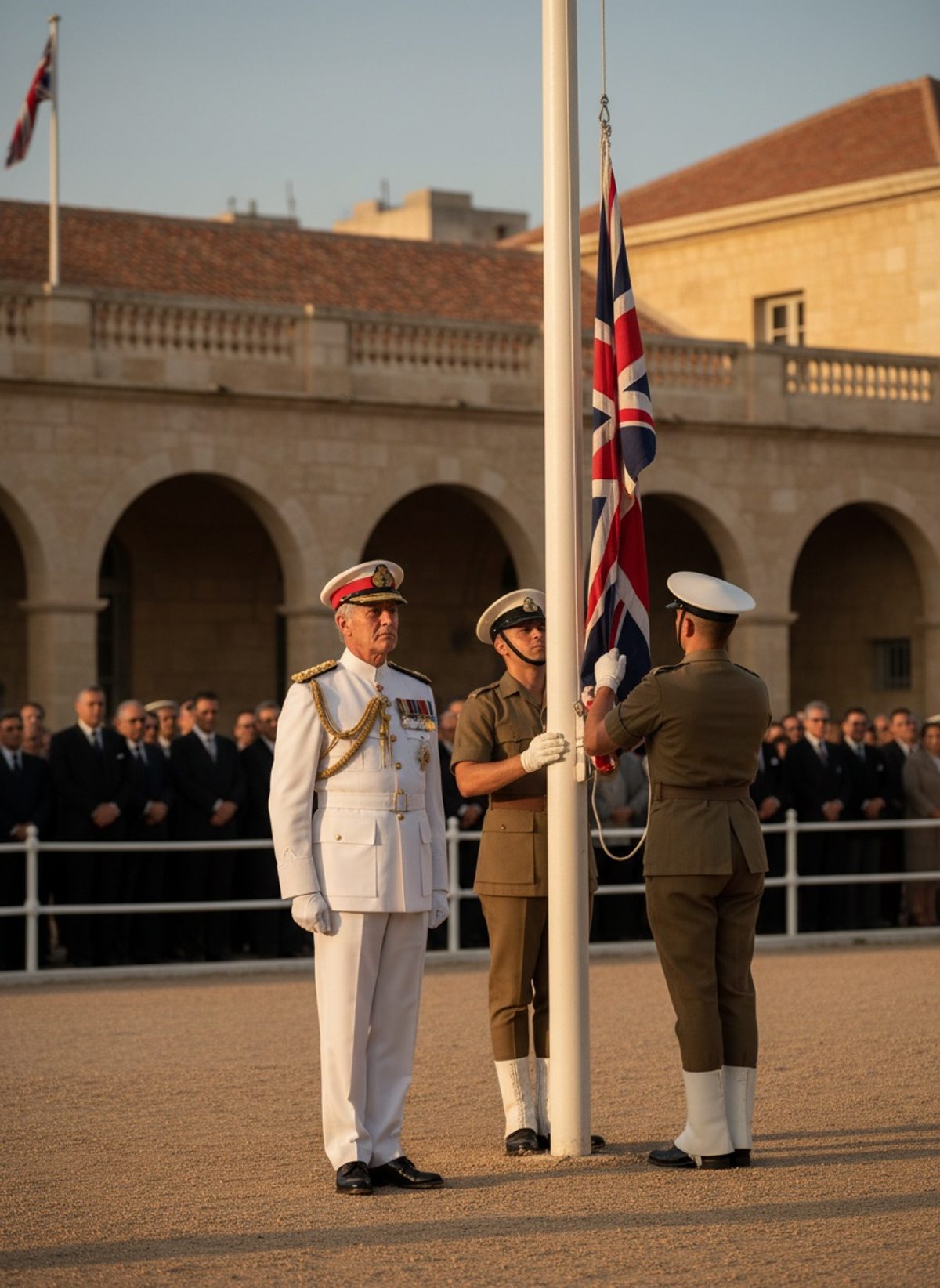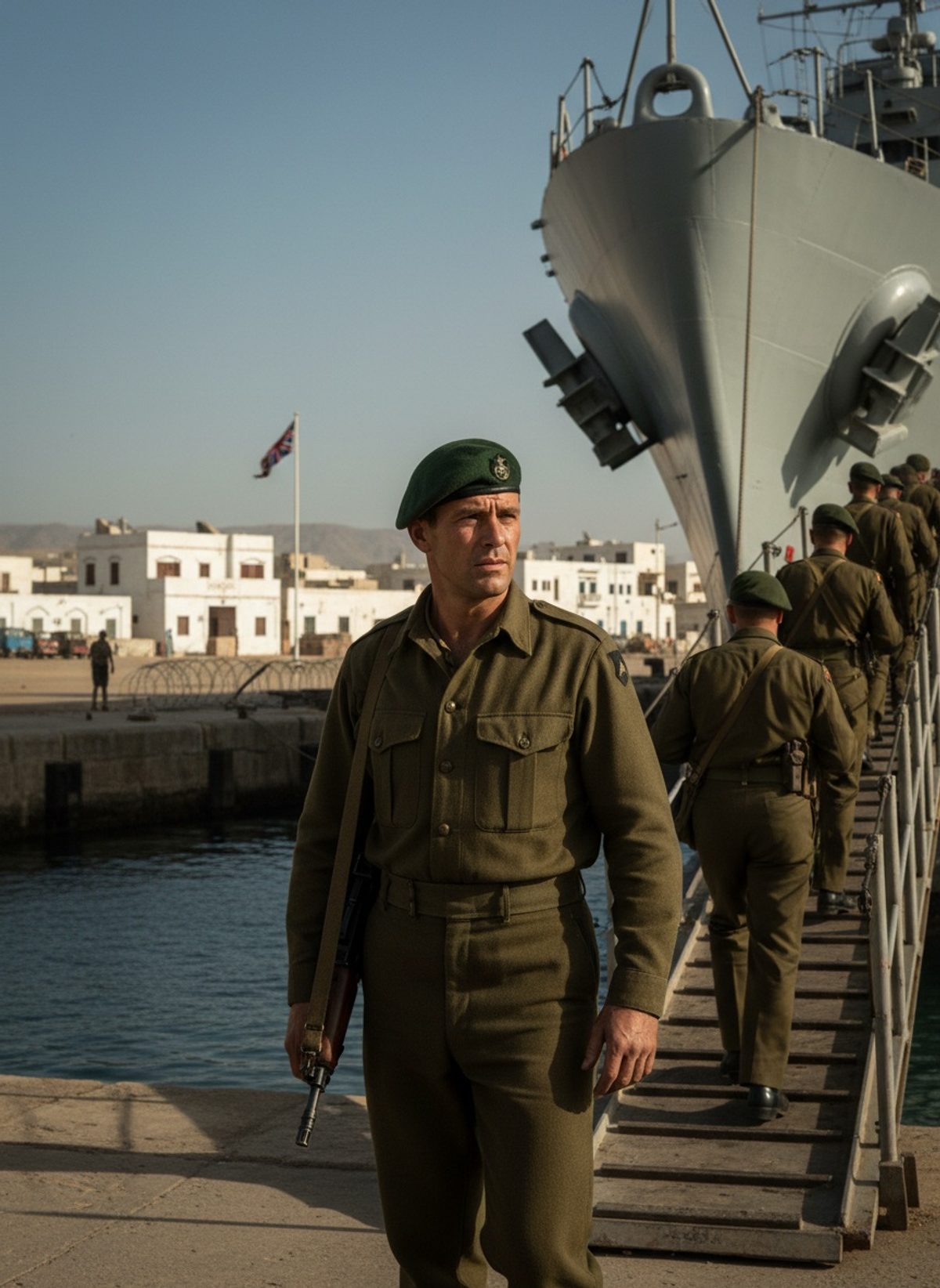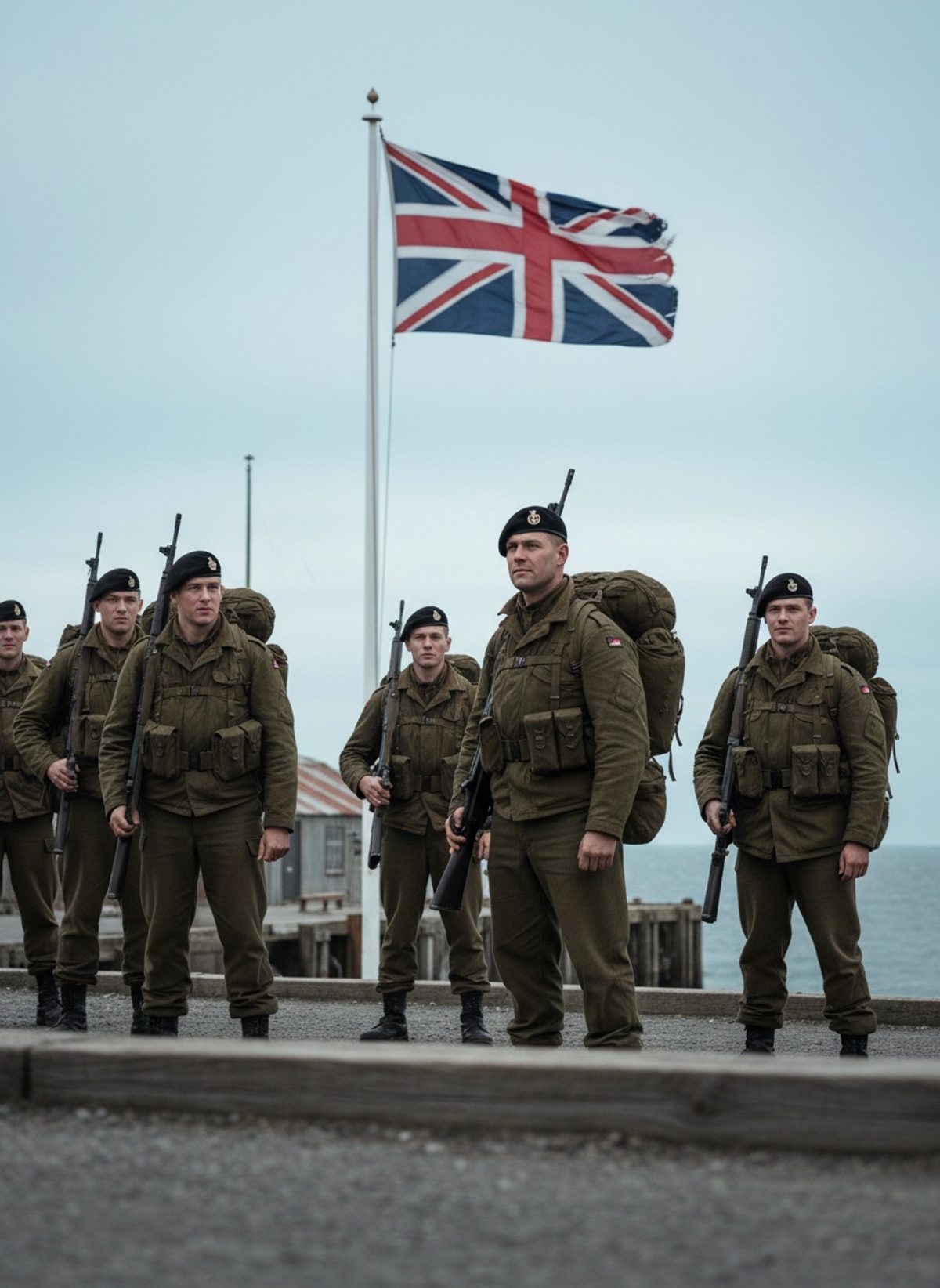
The South Atlantic winds swept across Port Stanley, mingling with the salt air to create a chilling embrace that clung to the skin. The early morning light was a diffuse grey, the sun's warmth yet to penetrate the heavy clouds that seemed to press down on the small island settlement. As waves gently lapped against the quayside, a solitary figure stood with an air of solemnity, looking out towards the horizon from which they had come. Behind him, the Union Jack fluttered idly on the breeze, a stark reminder of what had been reclaimed at a significant cost.
June 1982. The Falkland Islands had become the flashpoint of a fierce and bitter conflict that had captured the world’s attention. The British task force had sailed an astounding eight thousand miles, not just to defend a far-flung outpost, but to affirm the nation’s resolve and commitment to its history. Among the storied regiments that had fought for the windswept archipelago, the Welsh Guards stood resolute, a testament to bravery and sacrifice in a campaign that proved to be one of Britain's last colonial wars.
The campaign to reclaim the Falklands from Argentine control was an arduous endeavor, filled with peril at every turn. The path had been fraught with treacherous seas and unforgiving weather, the elements themselves seemingly conspiring against the British forces. The Welsh Guards, deeply embedded in the tapestry of the campaign, paid dearly in the cold South Atlantic hills. Their march was one of grit, as the regiment advanced over craggy ground, each step heavier than the last, carrying the weight of expectation and comradeship. The scars of battle were etched into the landscape, and more hauntingly, into the memories of those who fought.
Yet, as the conflict drew to a victorious close, it was on such rugged terrain that the Welsh Guards showcased their storied legacy. Their presence on the battlefield was not just a display of military might but a symbol of endurance. Among the lesser-known roles played by these guardsmen were their contributions to humanitarian efforts amidst the chaos. They helped establish makeshift shelters and shared the meager supplies they had with those affected by the tumult. These uncelebrated acts were small deeds of kindness in a landscape marred by war, forming an indelible bond between the soldiers and the inhabitants they came to know.
Read next: When the Last Pipe Major Played Aden Into Silence, 1967
In the end, the cost of the campaign was high. Lives were lost, and futures altered. The Welsh Guards buried their dead with the reverence of warriors who understood the sacred duty of remembrance. It was here, in the solitude of the South Atlantic, that they stood their final watch, each heart echoing the foundations of their forebears, who had defended Britain's interests in lands far removed from home.
Standing on the quayside in Port Stanley, the last Welsh Guardsman was more than a soldier witnessing the conventional end of an imperial chapter. As he prepared to leave the island, the distance from those who had fallen seemed to stretch further. The pervasive silence was eventually broken, not by gunfire or the roar of departing naval ships, but by song. “Hen Wlad Fy Nhadau,” the national anthem of Wales, carried across the water, each word resonating with the history and pride of a nation's lineage. In haunting cadence, the anthem served both as a farewell and an invocation of unity to all who listened, binding past, present, and future in a single moment of reflection.
The echo of that song lingered above the water, its power magnified by the realms of nature and memory. It was here, in the absence of grandiose ceremonies or stately departures, that a profound truth revealed itself: some empires do not end with a whisper, but with a harmonious tribute to what remains enduring. For the Welsh Guards, the Falkland Islands were not merely a conquest reclaiming British sovereignty; they had become another page in the historical narrative of perseverance against the odds.
As the troop transport eventually disappeared into the mist, the legacy of those who had served was not bound to the borders of the island, nor the political consequences of the conflict. Instead, it was woven into the fabric of human stories—those recorded in history books and those exchanged quietly among those who knew. The legacy of the Welsh Guards was one of valor and stoic resolve, a proud banner unfurled over countless chapters of service.
Today, the tale of the Welsh Guards in the aftermath of the Falklands War is more than a recounting of military engagement. It is a reminder of the inherent courage and unity that underscores human history, where voices united in song can hold profound meaning. In a world where empires have risen and collapsed, often shrouded in silence, it remains the songs, the stories, and the people that bridge the divide between history and the future, whispered intimately across time and place.