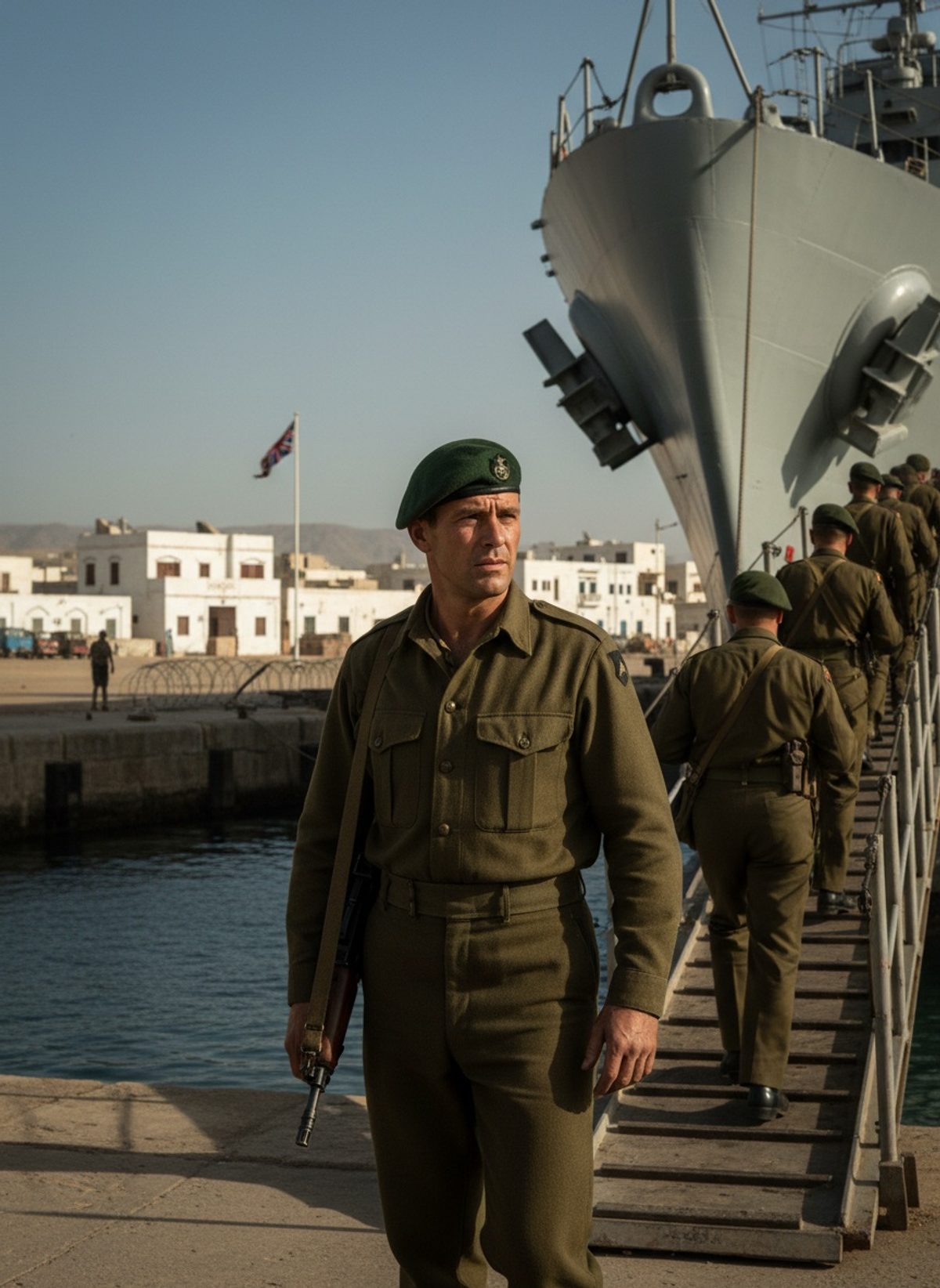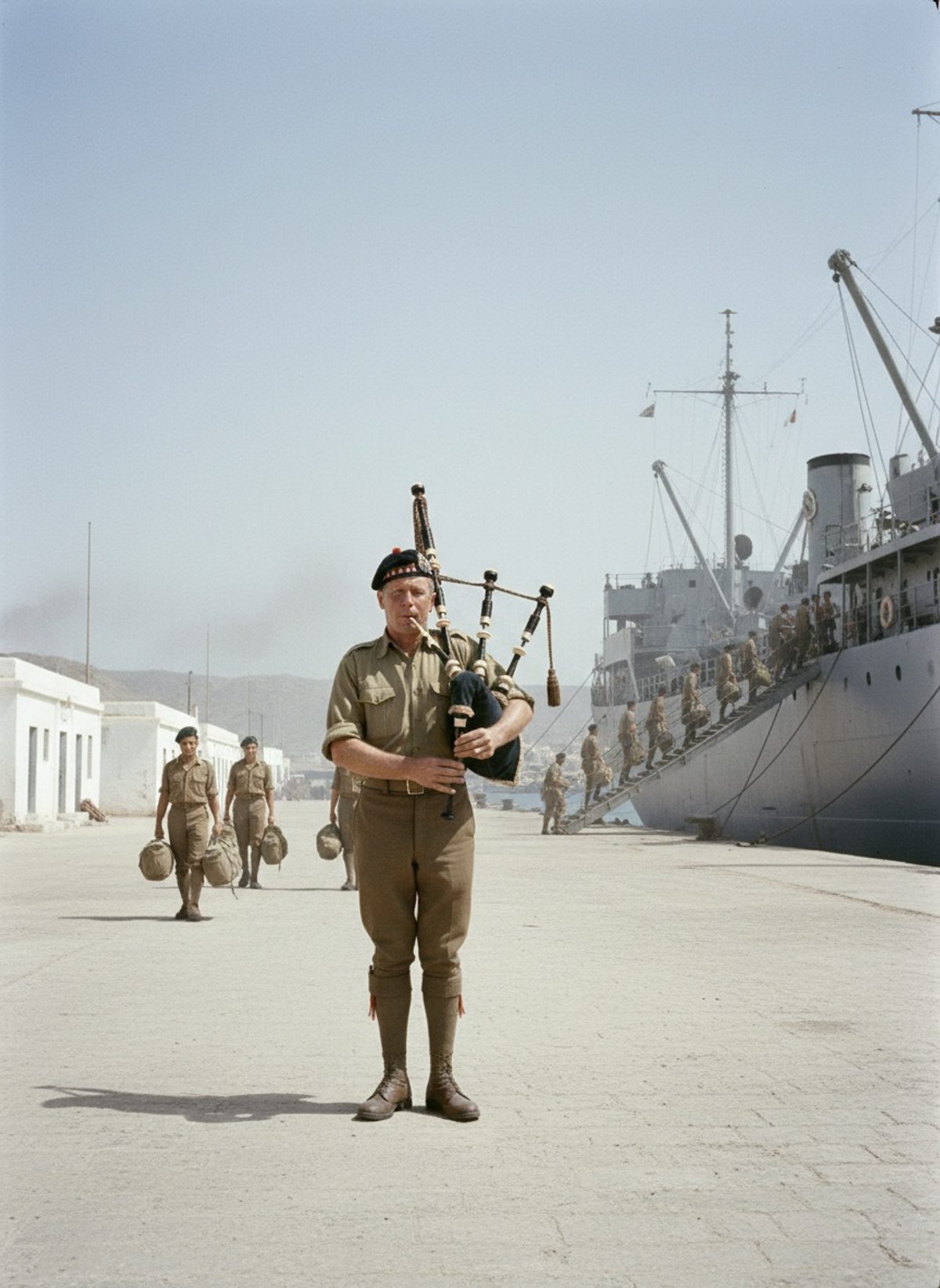
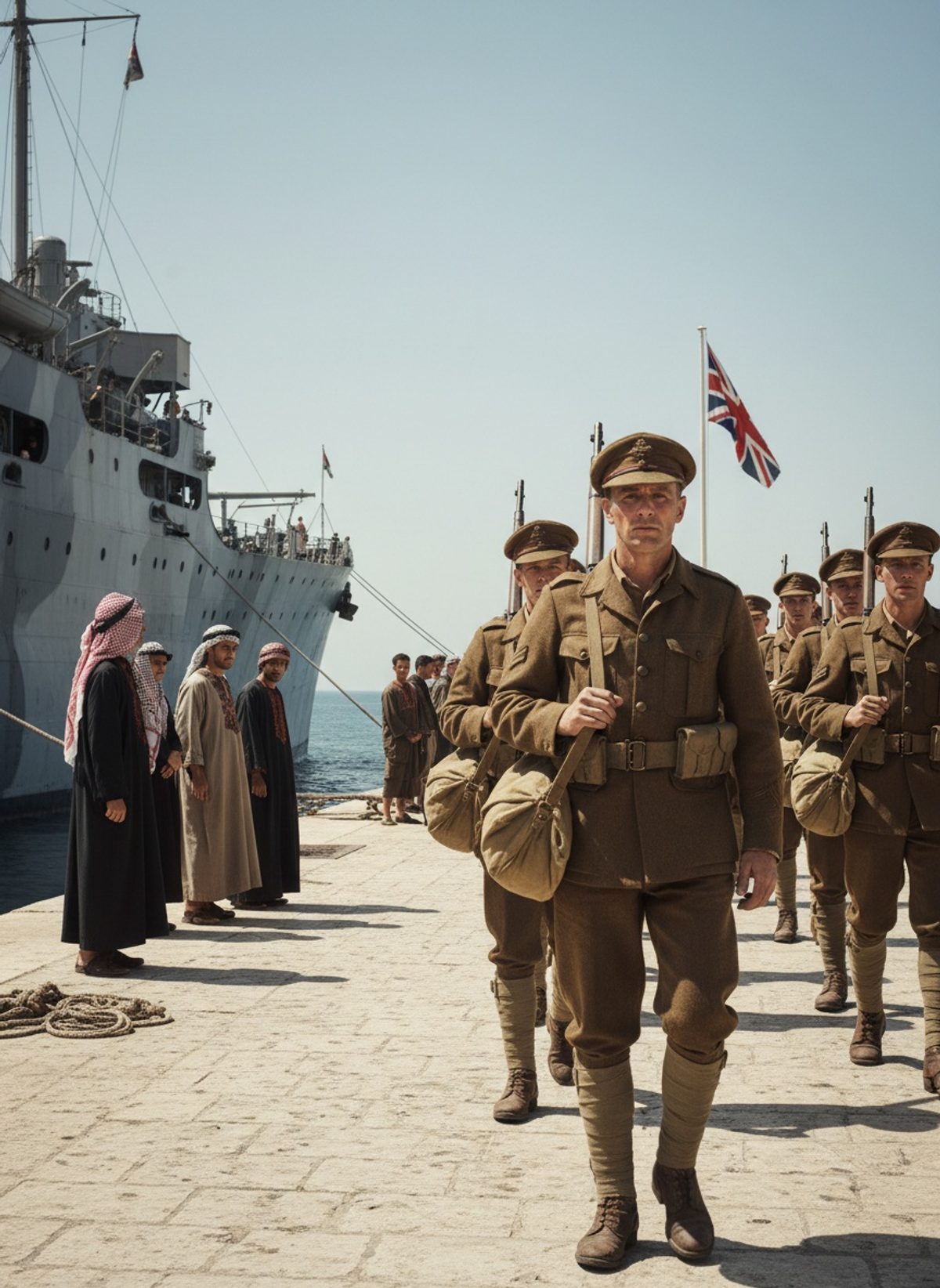
May 1948. The Mediterranean Sea glistened under the afternoon sun, its waves gently lapping against the piers of Haifa port.
Shadows of an Empire
As the end of the British mandate in Palestine loomed, no grand parade or ceremonious salute marked the departure of its military forces. Instead, there was a somber silence. Britain's presence in the region, once commanding and formidable, saw its chapter closing not with the bang of an empire's might but with the whisper of resilience fading away. The soldiers, weary both in heart and body, made their way to waiting ships, their minds weighed heavy with thoughts of a land torn by promises impossible to keep.
The British mandate had been a three-decade-long struggle to balance the conflicting aspirations of the Arab and Jewish populations. After World War I, with the dissolution of the Ottoman Empire, Britain took responsibility for administering Palestine under the authority granted by the League of Nations. Yet, what many thought would be a straightforward mission of tutelage turned into a complex web of political, social, and ideological conflicts. Each attempt to placate one side seemed only to aggravate the other.
Bureaucracy and Barbed Wire
The streets of Haifa, the bustling port city, were symbolic of the broader chaos engulfing Palestine. British troops were not only peacekeepers but also reluctant arbiters of stifling bureaucracy and hardened boundaries. While their rifles were often pointed downward, the tensions around them never were. Behind barbed wire fences and sandbag barricades, they watched as the outside world teetered on the brink of civil conflict. Movements were restricted, lives strained against a backdrop of checkpoints and curfews that failed to provide the promised peace or stability.
Read next: When the Black and Tans Crossed Into Ireland, 1920
Among the soldiers, there was a deep sense of frustration. Most had not planned careers as colonial arbitrators. Many had simply enlisted for World War II, only to find themselves, years later, caught in the quagmire of post-war promises that spiraled beyond their control. Their days were filled not only with military routines but with attempts to understand and navigate a labyrinth of cultural and historical complexities. Understanding local sentiments was not about winning hearts and minds; it was about preventing yet another spark of violence.
The Evaporating Mandate
Tensions reached their peak in the weeks leading to May 1948, with violence becoming an unfortunate prelude to the British withdrawal. The mandate's impending conclusion saw neither a resolution to the disputes nor a clear handing over of power. Instead, the British were faced with what they dreaded most: an uncertain future for Palestine and the assurance of escalating conflict between its inhabitants.
In the final days, administrative protocols unraveled along with morale. Orders were given to destroy records — an attempt to erase the footsteps of empire. Wherever ink had once defined boundaries, fire now sought to obscure them. The British left behind facilities and infrastructure, but the geopolitical legacy was far more complex, marked by invisible scars and unresolved loyalties.
A Departure Unheralded
On that day in May, as soldiers embarked onto waiting vessels, a profound silence followed them. Above Haifa, a lone Union Jack was lowered, not amid ceremonies or salutes, but quietly as if to acknowledge the solemnity of their departure. There were no cheering crowds or dignitaries waving them off, only the enduring echo of uncertainty that would continue to ripple through generations.
This moment signified not merely the end of Britain's involvement in Palestine, but it was also a poignant episode in the broader narrative of decolonization. The British Empire, once expansive and perceived as invincible, was inevitably being dismantled brick by brick, mandate by mandate. What remained was the quest to redefine influence in a changed and complicated world stage.
The departure of the last British soldier from Palestine is more than an anecdote in the annals of imperial history; it's a reminder of the human cost of geopolitical gambles. Striking a balance between conflicting promises and realities often comes at a price, one measured in trust, lives, and legacies that continue long after boots have left the ground. As the ships carrying British troops faded into the horizon, they did so leaving behind a land on the brink—a somber testament to the turbulence of attempted paternalism and the winding complexities of national self-determination.