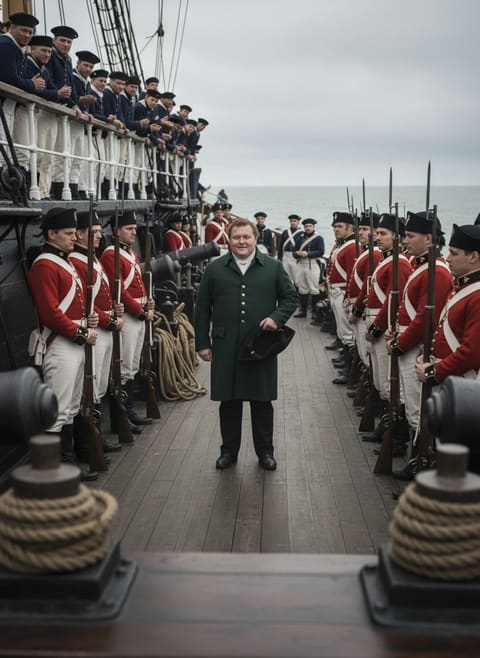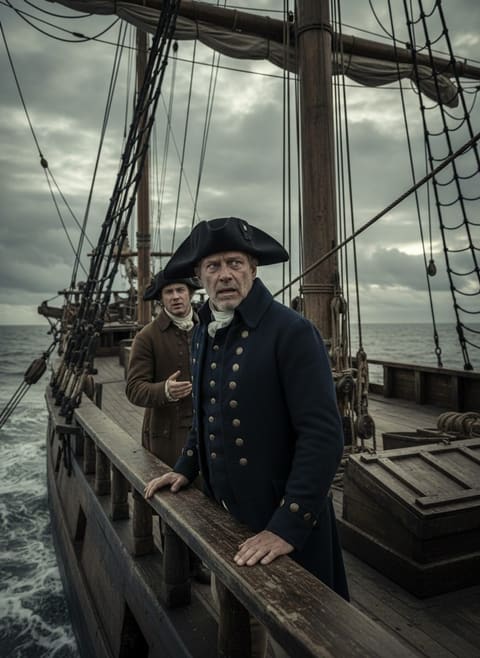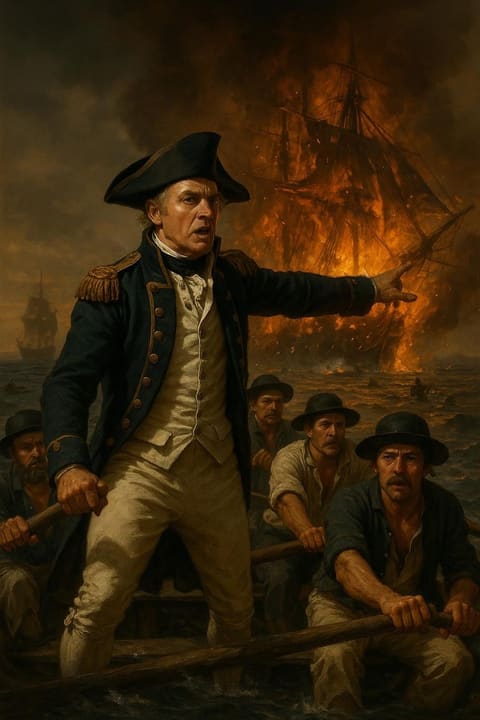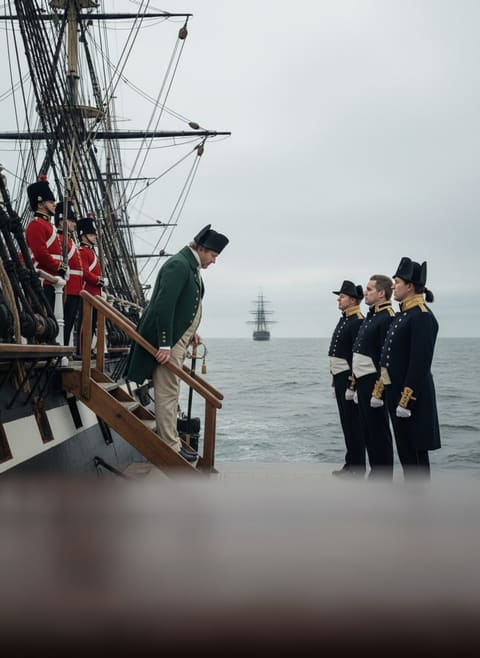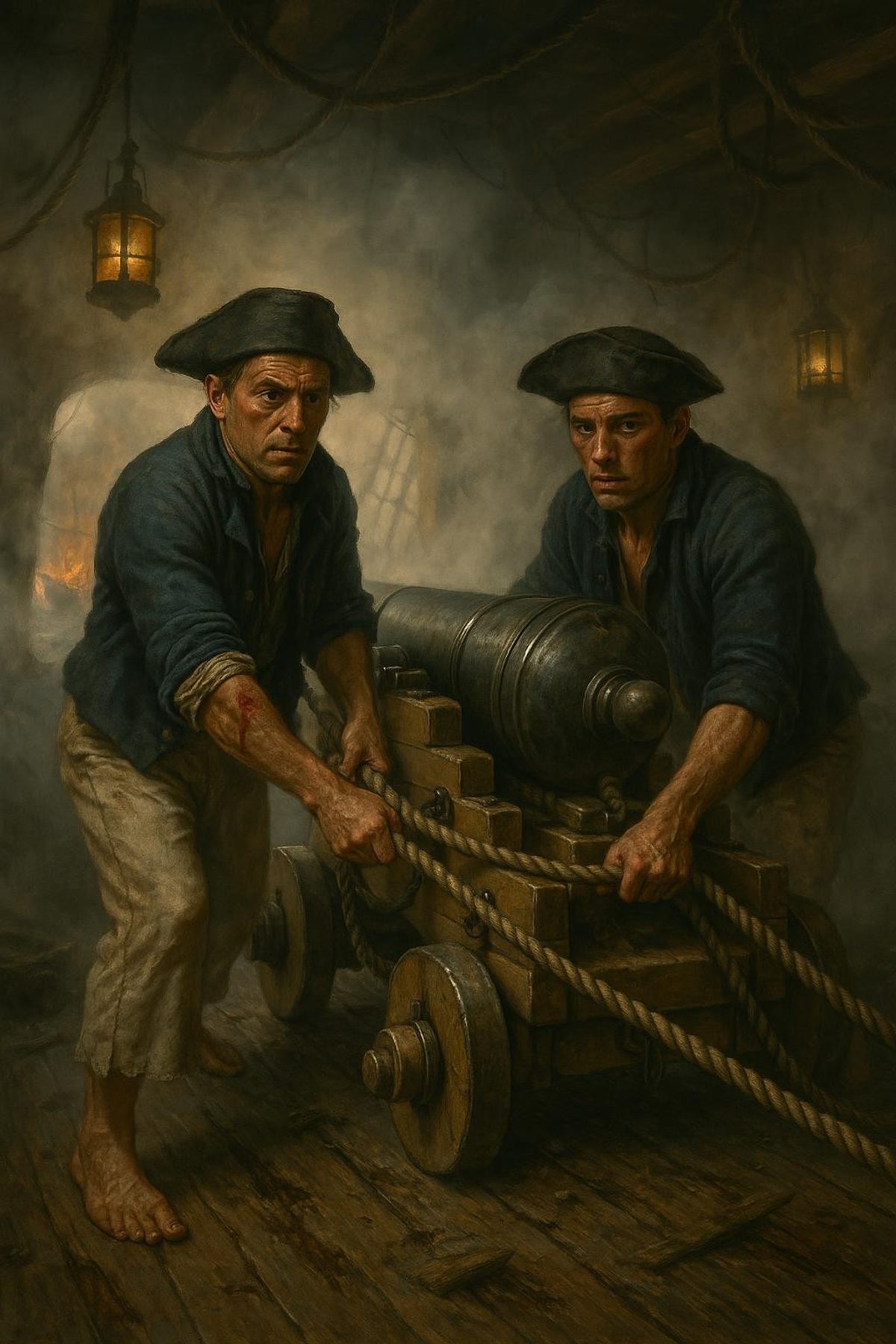
The sailor who refused to surrender was missing his right eye and half a leg. Yet, he stood tall among his fellow men aboard the HMS Belleisle, a symbol of unwavering resolve amidst chaos. The Battle of Trafalgar on October 21, 1805, saw many acts of valor. Still, the tale of this crippled crew holding the line, their ship dismasted and ablaze, remains one of its most unsung legends.
The British Royal Navy's aura of invincibility rested not just on its admirals but equally on the ordinary men who braved the impossible. The HMS Belleisle was one such ship, a 74-gun third-rate ship of the line, not the fastest nor the most heavily armed. On the day of the battle, she found herself another line in Admiral Lord Nelson's grand strategy to combat the combined forces of France and Spain. The plan was audacious — a perpendicular attack that aimed to break the enemy line in two and wreak havoc from within. As the fleet navigated towards the adversaries, Belleisle found herself at the forefront, absorbing much of the initial enemy fire.
Within moments, the heat of battle turned to flame for Belleisle. She was outnumbered, encircled by a hostile squadron intent on her destruction. The air grew thick with gunpowder smoke, cannonballs shrieked through sails, and splintered wood flew like shards from a bursting shell. The mainmast, a towering symbol of naval might, came crashing down. Then the foremast, and ultimately the mizzen. Reduced to a lifeless husk floating amid the wreckage, Belleisle seemed ripe for the taking. And yet, against the conventions of warfare and human survival, the British ensign continued to flutter defiantly above the desolate deck.
Amidst the harrowing scene, the crippled sailor, seasoned by years of such ordeals, performed his duty without hesitation or fear. His story defies assumptions about endurance and leadership in the line of fire. His missing limbs were less a handicap than a testament to his relentless spirit. Each blast of the cannon, every shout of command, resonated in flames that danced around him. His figure on the scorched decks was a beacon of resolve, visible to friend and foe alike, proclaiming that surrender was not an option.
Read next: The Night the British Ate the President's Dinner
For three arduous hours, the crew of Belleisle held their resolve. The ship’s guns, now pointing in all directions after the collapse of the masts, formed a floating battery of resistance. Each broadside fired was an act of defiance; each cannon ball finding its mark spoke of precision and determination under the most harrowing circumstances. Below decks, the atmosphere was tense yet focused. Officers and sailors worked in near silence, instinct and training guiding their every move.
Smoke enveloped the ship, and the acrid smell of burning mingled with the cries of the wounded. The sound of splintering wood and the clash of steel threatened to drown out the heartbeats of the men, yet never broke their spirit. Communication lines were severed, orders had to be shouted above the storm of noise, yet a silent understanding bound the crew together in their fight for survival. Above all, it was their unswerving determination to honor Nelson’s memory — a hero fallen at the height of his triumph — that fueled their fiery resistance.
Read next: The Day a One-Eyed Admiral Sailed Into the Line of Fire
The legacy of the Battle of Trafalgar often underscores Nelson's tactical brilliance and heroic demise. However, it is these tales of courage like Belleisle’s that enrich the broader story. Capturing the essence of human resilience, the word of Belleisle's struggle spread across the fleet as a tale of inspiration. When reinforcements arrived, invigorated by stories of her gallant stand, they were met not with the sight of a surrendered ship but one still flying her colors. Belleisle, though battered, was defiantly British to her core.
Eventually, salvation appeared on the horizon. British ships arrived, relieving Belleisle’s beleaguered crew. As the sounds of battle began to ebb and the enemy sailed off defeated, the realization of survival amidst such odds was palpable. So, what makes this crippled sailor’s endurance and Belleisle’s harrowing stand significant? Amid the narrative of Trafalgar, it exemplifies the courage that courses deep through the veins of ordinary men when faced with the extraordinary. The crippled sailor and his crew — unyielding among the raging chaos — remind us that heroism exists not solely in grand strategies or the lives of the famed, but thrives in the silent resolve of those who stand their ground without pause.
In our collective memory, we often celebrate the visionaries and leaders at the helm of history. Yet, let us not forget the undaunted hearts aboard vessels like HMS Belleisle — their spirit, an echo through paths less trodden, whispers of bravery that textbooks too often leave unsung.