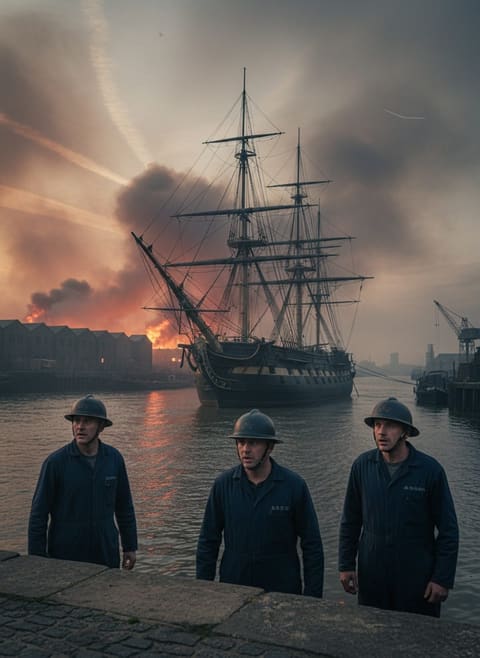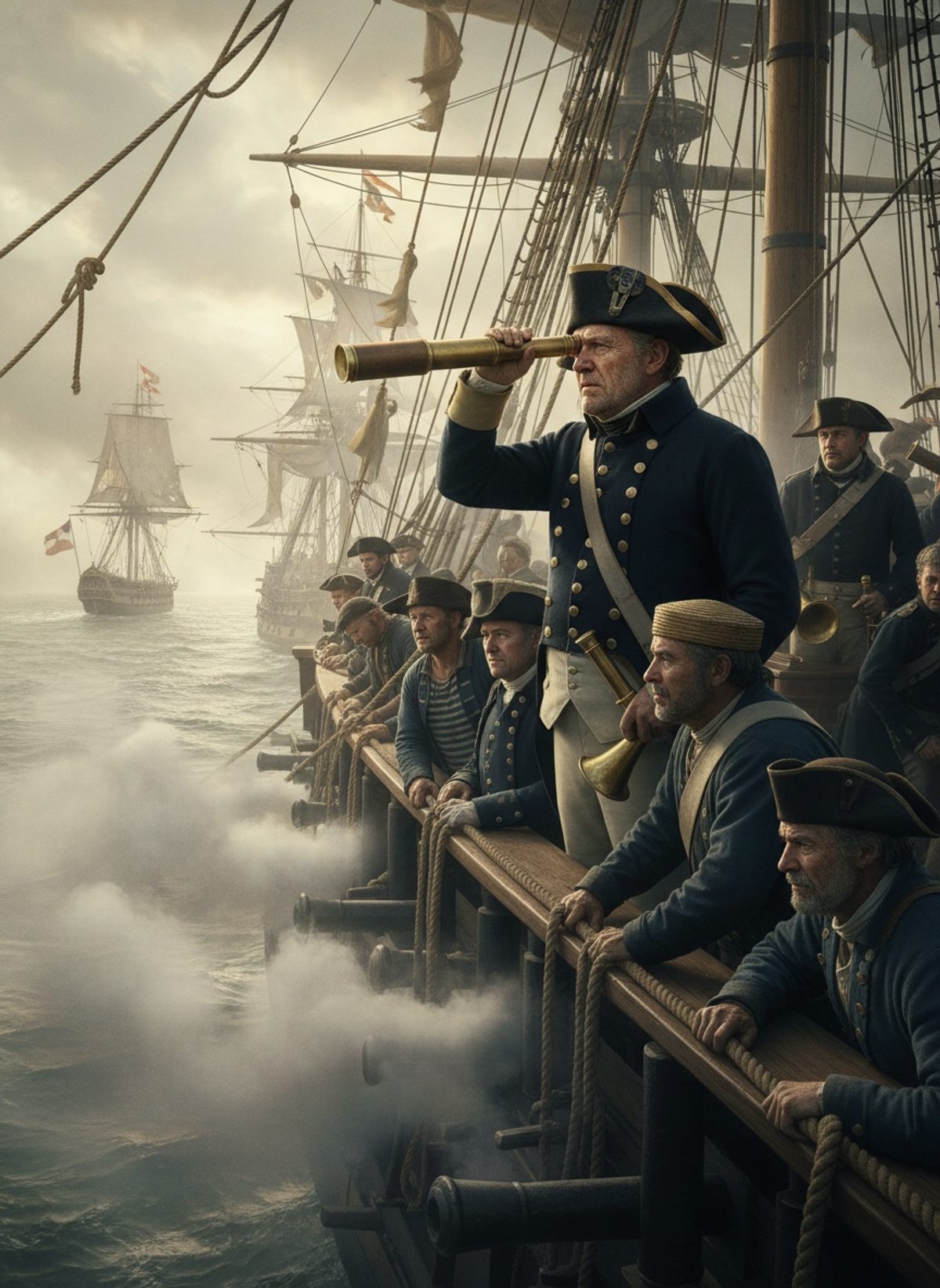
The Battle of Trafalgar was a resounding victory for the British. Yet, it was one secured by a strategic gamble that teetered on the brink of disaster.
The Making of a Legend
Few names are as synonymous with naval prowess as Vice-Admiral Horatio Nelson, a man whose presence on the deck was as electrifying as the battle itself. On 21 October 1805, the waters off Cape Trafalgar witnessed his most audacious plan, one thought by many to be sheer madness. Commanding only 27 ships, Nelson faced the combined forces of 33 Franco-Spanish vessels. Even the turbulent seas seemed to brace themselves for the clash that was to alter maritime supremacy.
It wasn't the numbers that favored Nelson's strategy. Instead, it was a unique blend of innovation and sheer audacity. Nelson rejected the traditional line of battle tactic in favor of a daring approach. By dividing his fleet into two columns, he intended to cut through the enemy line in a perpendicular assault. His ships, forming imposing columns, advanced in a manner that showed contempt for conventional methods but utter confidence in his sailors' mettle.
Signal Over the Horizon
As the morning mists lifted over the Atlantic waters, a single signal flew from the HMS Victory's masthead that encapsulated British resolve. "England expects that every man will do his duty." These were Nelson's words, brief yet potent, spreading through the fleet like wildfire. It wasn't just an order; it was a rallying cry, a plea echoing the sentiment of an entire nation poised on the edge of a new era.
Read next: When HMS Euryalus Brought the Fleet Home After Trafalgar
Against the expansive horizon, the two rival fleets maneuvered ever closer. Silence reigned before the storm, the task at hand looming larger with each knot shortened between keel and enemy prow. This was no ordinary naval battle; each ship, a mammoth of timber and sail, was a microcosm of strategy, tactics, and human spirit.
Clash of Titans
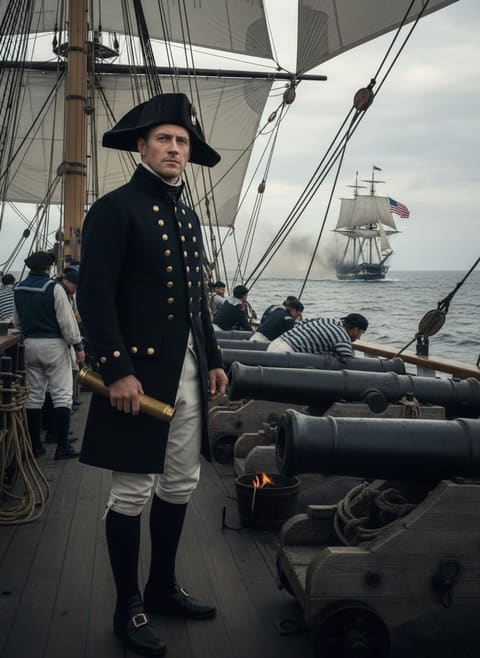
The shock came at noon. It began with the thunderous roar from Victory's cannons as they opened fire, and in an instant, the serene sea transformed into chaos. Sluggish winds added gravity to the scene, forcing vessels to rely less on wind and more on will to carry them into the heart of the enemy. Ships collided; masts splintered, and gunfire flashed across decks and rigging. The ocean was a cauldron of rolling smoke, wood chips, and the echoes of cannonades.
Nelson's strategy was a bold incision into the heart of the enemy's line, but it also came at a personal cost. This battle, which crowned him a hero in history books, was to be his last. In the midst of the melee, a French sniper from the rigging of Redoutable delivered the shot that would end Nelson's legendary career. Carried below decks, his concern remained unwaveringly focused on Britain’s fate in battle, asking fervently, "Are we winning?"
No Victory Without Sacrifice
The British victory was hard-won, a testament to naval discipline and leadership. As the afternoon waned, broken masts and vessels lay asomb testament to the ferocity of the encounter. The might of the combined Franco-Spanish fleet was irreparably shattered, with 22 ships captured or destroyed. Britain's 27 had prevailed over the larger enemy through tactics, tenacity, and the undeniable spirit instilled by Nelson's leadership.
Read next: When Cochrane Took a Frigate Into a Fleet of Thirty, 1801
With the horizon cleared of the enemy threat, a somber reality settled over the fleet. The cost of victory was profound—Nelson's death cast a pallor over triumph. Wrapped in his coat, he was laid to rest in a cask of brandy to preserve his body for transport home, cementing his status not only as a naval hero but as a revered national figure.
A Sea Empire Beckons
The events of 21 October 1805 did more than simply define an era; they ushered in an epoch of British naval dominance lasting over a century. Trafalgar's lesson was not merely in the tactics employed or the daring of a single man but in the ultimate demonstration of resolve and innovation when faced with the uncertain tides of challenge. Nelson's legacy, underscored by a strategy that defied conventional wisdom, secured not just a battle, but the empire's future on the global stage.
In the annals of history, the battle is often recounted in terms of its immediate military significance, yet its true impact extends beyond decades of unchecked maritime dominion. It is a story of how boldness in the face of insurmountable odds can transform the course of history, a testament to the power of vision backed by unwavering determination. As long as ships sail and nations vie for influence, the signal that once flew over Trafalgar remains a poignant reminder that destiny favors the bold.