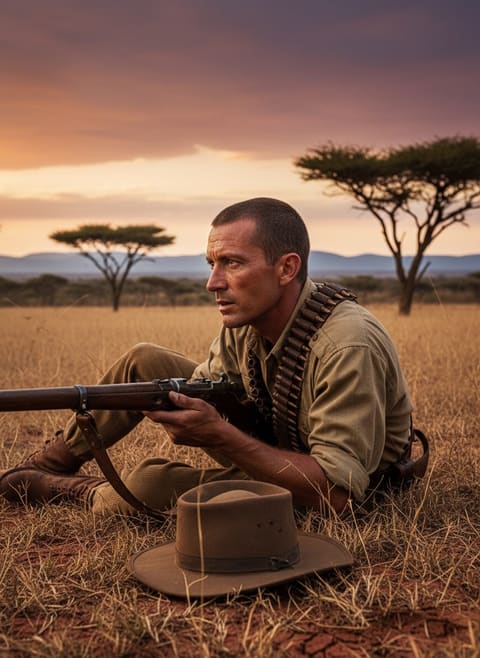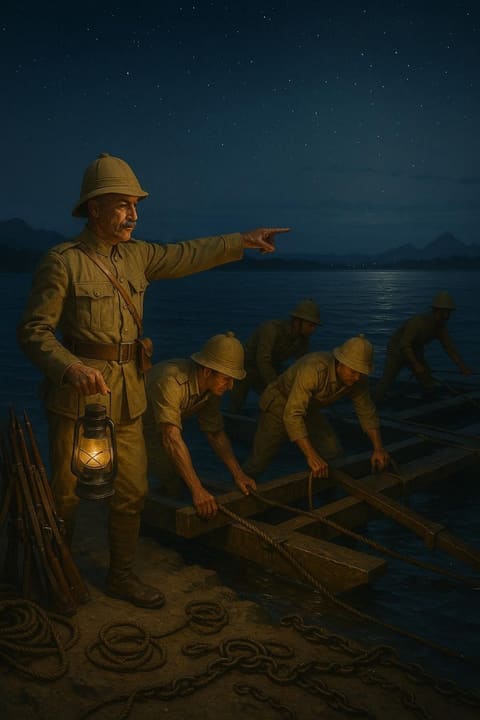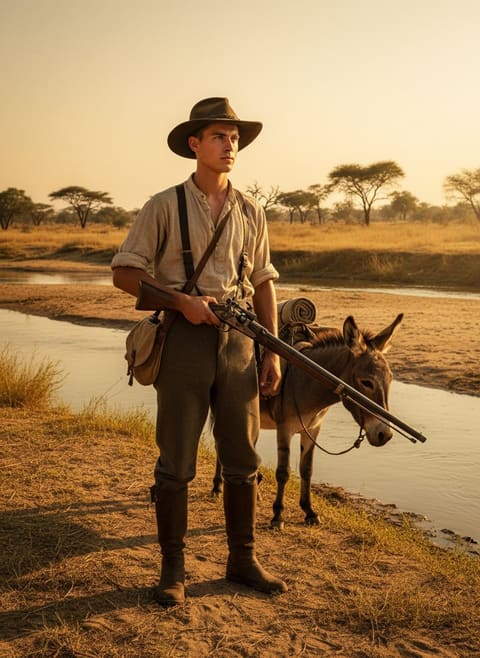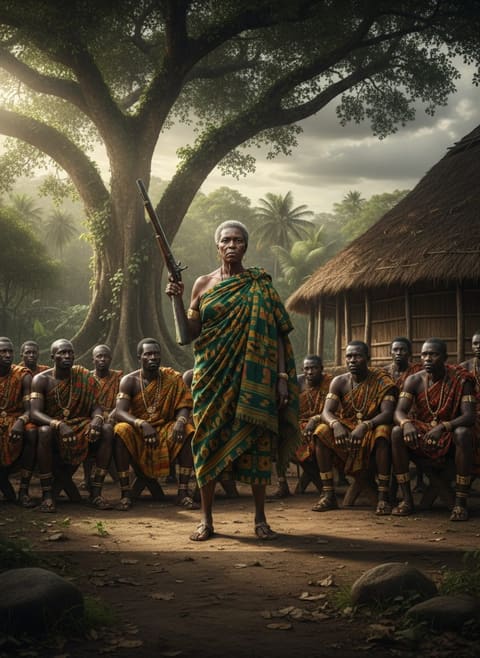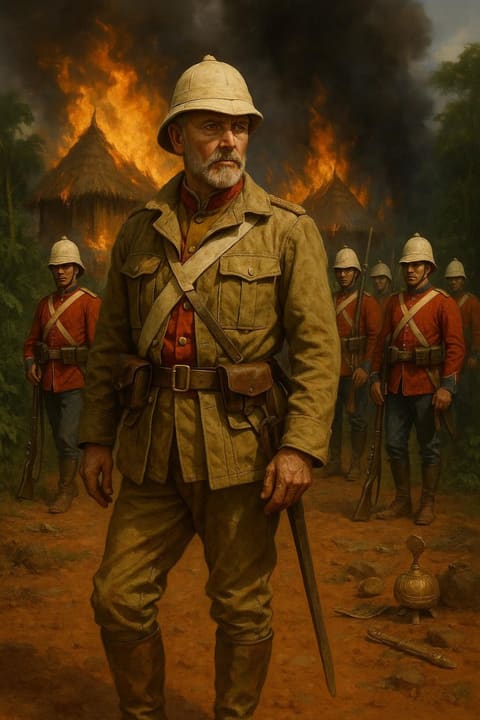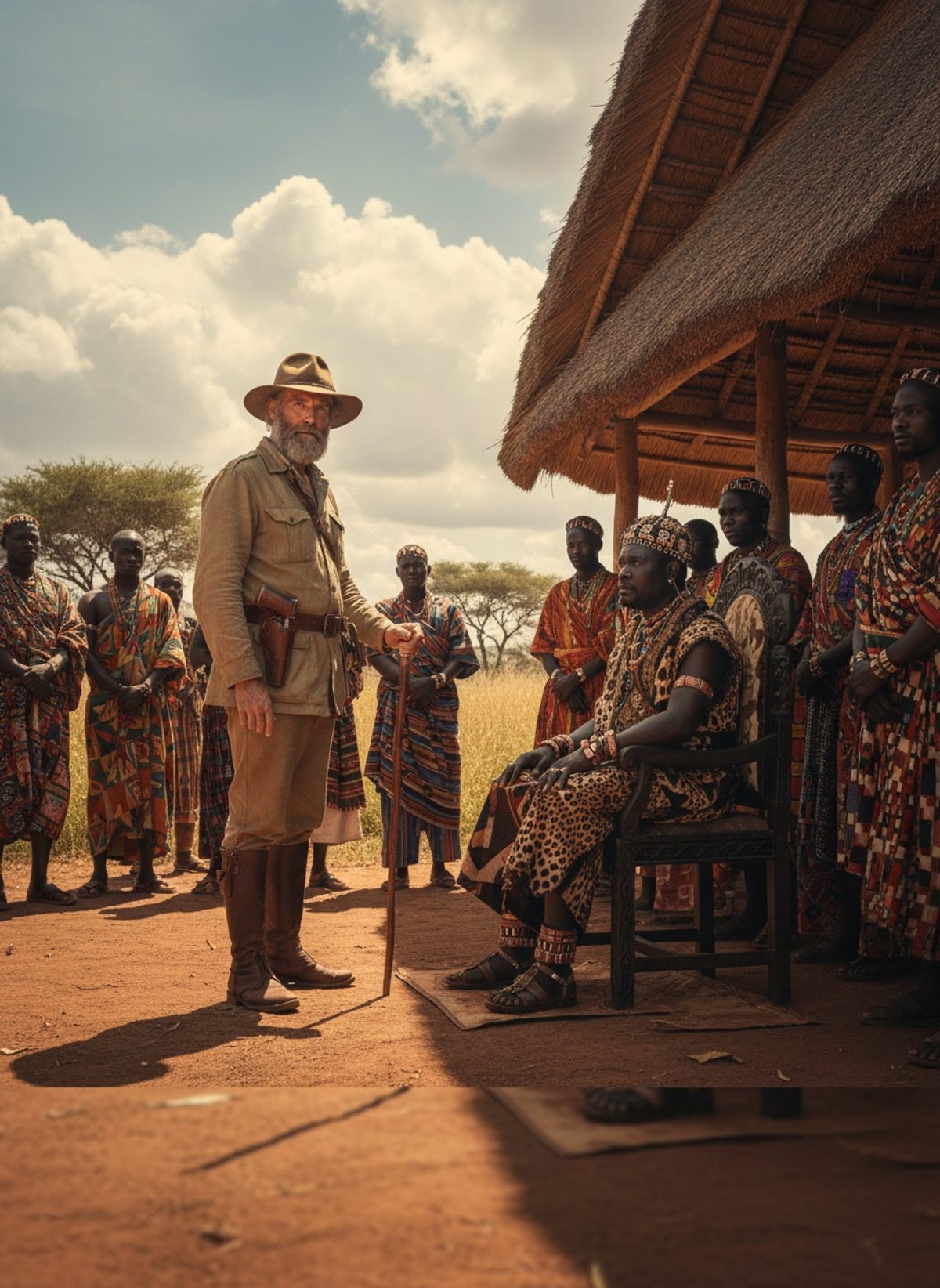
He was an unapologetic gentleman of the British Empire. Yet here he was, kneeling before a king in the heart of Africa.
The Unlikely Adventurer
Sir Samuel Baker was not your typical Victorian explorer. Those who knew him might recall his polished English manners, the kind that seemed fit for parlors rather than perilous escapades. With a mind as sharp as his appearance, Baker was nonetheless driven by a deep curiosity and an unyielding sense of mission. In 1872, he ventured into the mysterious and often hostile realms of Central Africa with nothing more than his courage and a royal decree.
Under the broad imperial directives, Baker was tasked with suppressing the slave trade—a malignant scourge spreading its tendrils through the Nile Basin. The European appetite for exploration was at full throttle, yet Baker's mission was distinct. He sought not treasure or territories, but the dismantling of an industry as old as civilization itself. His journey into the equatorial regions wasn't merely a footnote in the annals of the Scramble for Africa. It was a bold venture into a world only rumored about over the flickers of hearthside lamps.
The Kingdom of Bunyoro
The Kingdom of Bunyoro—a land rich in both history and suspicion—lay at the crux of Baker's mission. Deep within the continent, this formidable African state was ruled by the astute and resolute Kabarega. The king was a man of discernment, wary of foreign intentions and deeply protective of his people. His was a kingdom that had once basked in the light of a powerful confederacy, now fighting the encroachments of both slavers and imperialists.
Read next: When Samuel Baker Knelt Before the Khedive, 1869
Bunyoro's position astride major trade routes made it crucially strategic. Yet, it was also a kingdom plunged into turmoil, grappling with the slave raids that tore at the very fabric of its society. Baker's arrival at its borders was met with an air of apprehension. The British envoy, a symbol of a distant foreign power, entered as much an enigma as the motives of the empire he represented.
The Meeting of Minds
The confrontation between Baker and Kabarega was inevitable. As Baker approached the royal court, he understood that every word, every gesture would tilt the balance between hostility and cooperation. Kabarega, with his astute gaze and regal aloofness, embodied the very essence of Bunyoro's resistance. He was not to be underestimated, and Baker knew that the price of failure could be dire.
Kneeling before the king, Baker presented himself not as a conqueror but as an ally. His objective was to persuade Kabarega to collaborate in his fight against the slave trade, to loosen the vice grip it held over their lands. Baker spoke of moral obligations and the promise of lawful commerce, hoping to kindle a spirit of resistance against the raiders not too dissimilar from the medieval marauders Baker had read about in his youth.
A Thorny Alliance
The road to cooperation was fraught with mistrust. Fearing deception and colonial tethering, Kabarega's initial reticence mirrored a wider skepticism towards European ambitions in the region. Trust, like the rivulets that fed into the mighty Nile, would take time to carve a path. Baker offered the assurance of British support against the slavers, recognizing that the king's goodwill was essential to navigate the political labyrinth that stretched across the Nile Basin.
Read next: When Samuel Crowther Preached in Yoruba Before a King, 1857
Gradually, between tense negotiations and mutual agreements, a fragile understanding emerged. This alliance was not forged in the safety of inked treaties but through the palpable understanding that the disruption of the slave trade necessitated united fronts. In Kabarega, Baker found a king faced with the fracturing legacies of his ancestors, and in Baker, the king found a cautious but valuable partner—a bridge to bolster his kingdom's defenses against those who would see it drained of its strength.
A Legacy of Courage
Sir Samuel Baker's journey to Bunyoro was but a chapter in the tumultuous saga of Africa during the Victorian era. The encounter, however, stood as a testament to the confluence of European and African destinies during a time fraught with peril and possibility. For Kabarega, Baker's mission was a herald of changing dynamics—a reminder that in resisting darkness, one must sometimes embrace the light of improbable alliances.
As Baker re-traced his steps along the dusty trails to the Nile, leaving behind a land still grappling with the specters of the slave trade, he carried with him a story much larger than himself. It was a story of courage threaded through the shared aspirations of disparate worlds, an overlooked moment where kneeling was not about submission but about the humility required to bridge worlds. This narrative, though not etched into the mainstream textbooks, remains a profound narrative of humanity's inexhaustible quest for justice and connection.