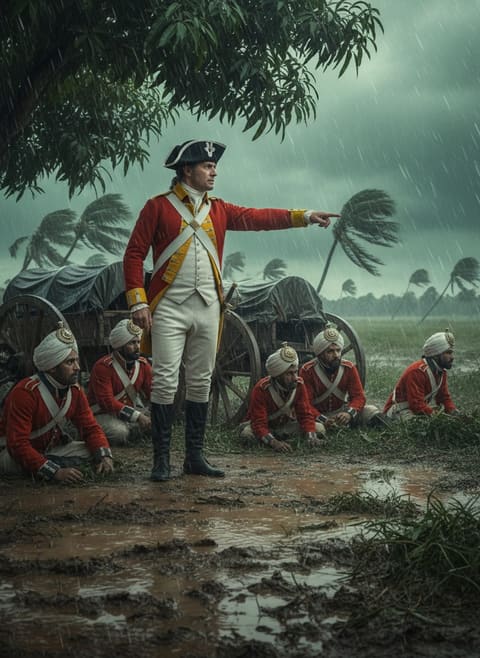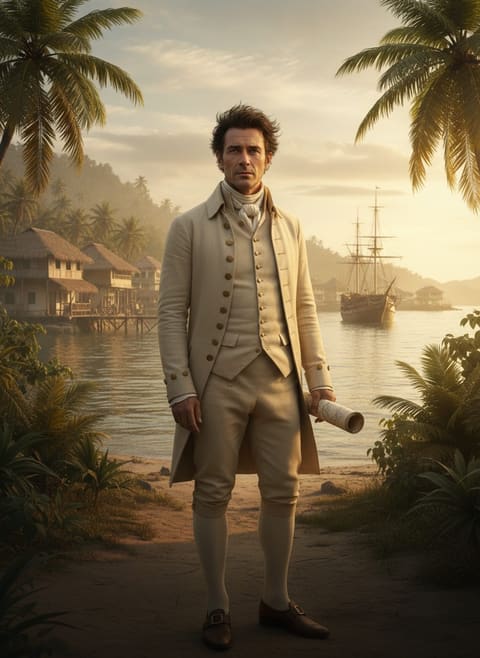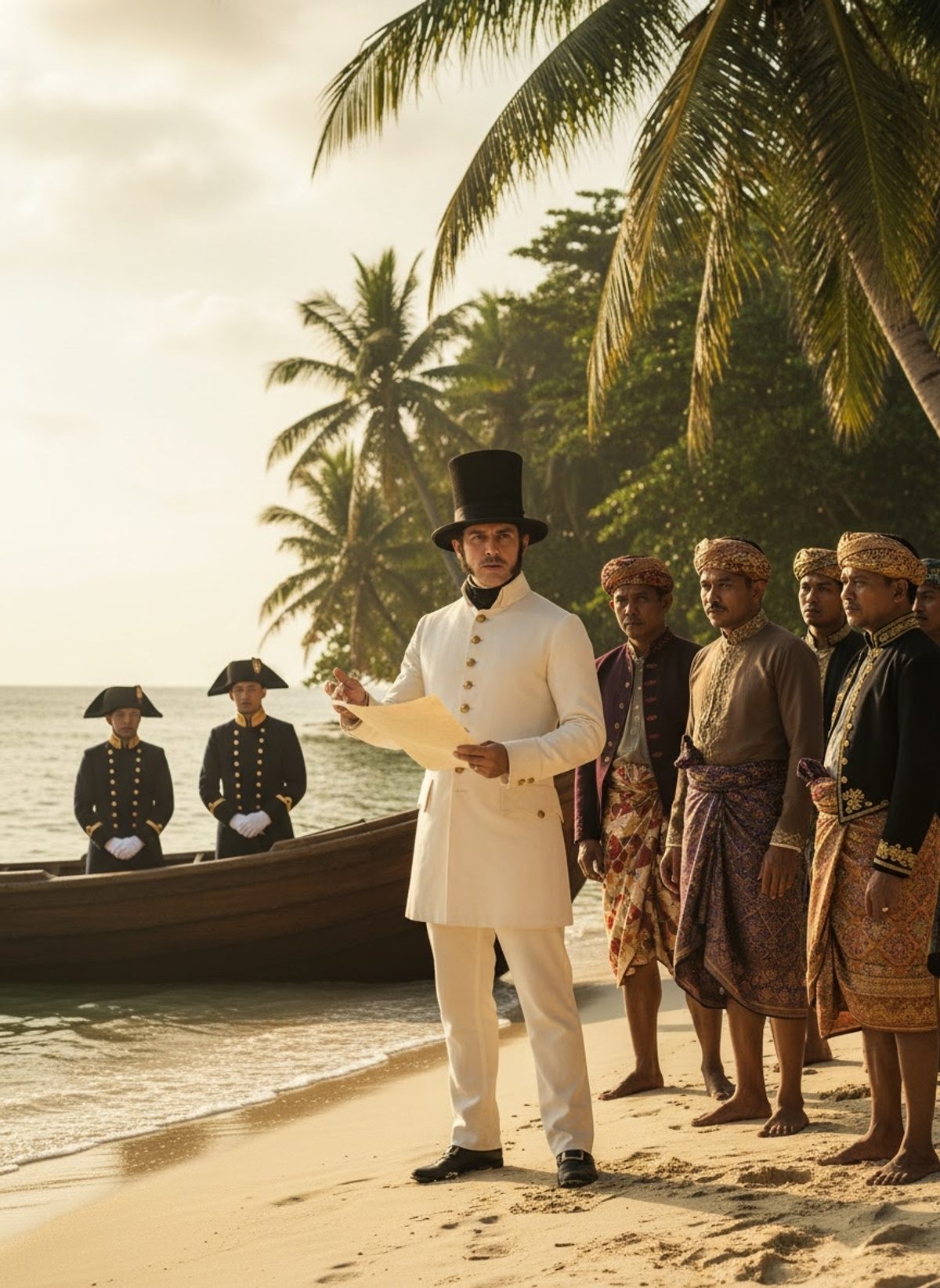
The humidity hung like a shroud over the island, the air dense with the scent of earth and salt. The relentless sun blazed overhead, casting long shadows on the dense foliage that framed the shoreline. Cicadas hummed, their song merging with the distant calls of exotic birds. On a January day in 1819, amid this symphony of nature, a singular figure stepped onto the damp soil of Singapore.
His boots sank slightly into the ground, but his resolve remained unwavering. The stakes were monumental. Without an army, without orders, and certainly without approval from the British crown, Thomas Stamford Raffles stood ready to change the course of history. He saw what others had not—a gem waiting to be polished into a beacon of trade and influence.
The Visionary's Gamble
Thomas Stamford Raffles was not an ordinary British official. Drawn by the allure of the far East, he possessed a rare blend of charisma and audacity that propelled him forward. His arrival on this unassuming patch of land was as unexpected as it was audacious.
Raffles had no army to back his intentions, no formal mandate under his belt. Yet, he bore something even more potent—a vision. As he surveyed the landscape, Raffles perceived beyond the immediate reality. To him, the swampy jungles and muddy shores whispered promises of bustling streets, vibrant markets, and ships docking from every corner of the globe.
Read next: When John Hanning Speke Walked Into the Court of Mutesa, 1862
The island's strategic location was apparent. Nestled at the crossroads of critical maritime routes, it promised unparalleled access to the rich resources of Southeast Asia and a conduit between the British Empire and China. Raffles understood that controlling such a nexus meant unprecedented influence and economic potential.
So, with no guarantee of recognition from his superiors or assurance of his personal safety, Raffles embarked on a daring feat. His first task was to negotiate with local leaders—a delicate dance of diplomacy and determination that had to unfold with precise finesse.
In those critical hours, he brokered a treaty with the regional rulers, securing the rights for the British to establish a trading post. This agreement planted the seeds from which a modern metropolis would eventually sprout.
By nightfall, under a sky awash with stars and possibility, the pirate-haunted waters of Singapore bore witness to an event that the world only slowly began to comprehend. Raffles had not just claimed a piece of land; he had set the stage for the rise of one of the world's greatest cities.
A Landscape Transformed
The transformation of Singapore from an outpost of little consequence to a linchpin of empire was nothing short of miraculous. From the moment Raffles inked the treaty, work began to reshape the landscape physically and administratively. Workers cleared swathes of the humid jungle, replacing it with the bones of a city: roads, port facilities, and administrative buildings. The hustle of construction echoed across the island as the British sought to tame the wild terrain.
Yet, the physical transformation was only one part of the story. Raffles had to institute a framework that would bind the burgeoning community. He approached this challenge with the keen understanding that diversity would be Singapore’s strength.
His policies welcomed settlers of various backgrounds, creating a mosaic of humanity that brought forth a rich tapestry of culture and trade. Over time, the syncretism of Malay, Chinese, Indian, and European influences not only defined the social fabric but also propelled economic growth.
Every arriving ship in Singapore’s harbor was a testament to Raffles' daring foresight. Each transaction conducted in the bustling markets echoed the dreams Raffles had glimpsed when the ship first touched these shores.
Underpinning the new city was Raffles' staunch belief in free trade, a radical departure from the protectionist policies that shackled other colonies. This open port would thrive as a sanctuary for commerce as ships sailed in and out unimpeded by the duties and red tape that stifled trade elsewhere.
Read next: When the Church Militant Sailed to Africa and Planted a Cross
Reflections on Destiny
Stamford Raffles’ momentous afternoon in January 1819 did not instantly change the map of the world. It was an act born of daring calculated risk that would only be fully understood in hindsight.
His decision, made in stark isolation from the directives of British high command, eventually stumbled its way into the annals of history as a pivotal turning point in colonial expansion. Raffles saw not just a strategic outpost, but the heart of a future city that would become one of the busiest ports globally.
But why risk everything? What was it that drove this maverick to act so decisively on mere intuition? The answer lies somewhere in the nebulous realm between ambition and insight, a leadership hallmark that defined Raffles’ career.
His legacy is a compelling reminder of how audacious human vision can sculpt entire futures from the intangible essence of dreams. In the squelching mud of Singapore’s shores and the humid embrace of its jungle, Raffles did not just plant a flag; he planted the invisible roots of globalization itself.
Today, the vibrant, sprawling city-state of Singapore stands as a testament to Raffles' leap of faith. The small outpost has morphed into a cosmopolitan giant, and its echoes, born from that single afternoon of audacity, continue to ripple across history. Understanding this narrative challenges us to recognize the power of vision to transcend circumstance, urging us to ask: what dreams, should we dare to plant them, could similarly shape our own future?