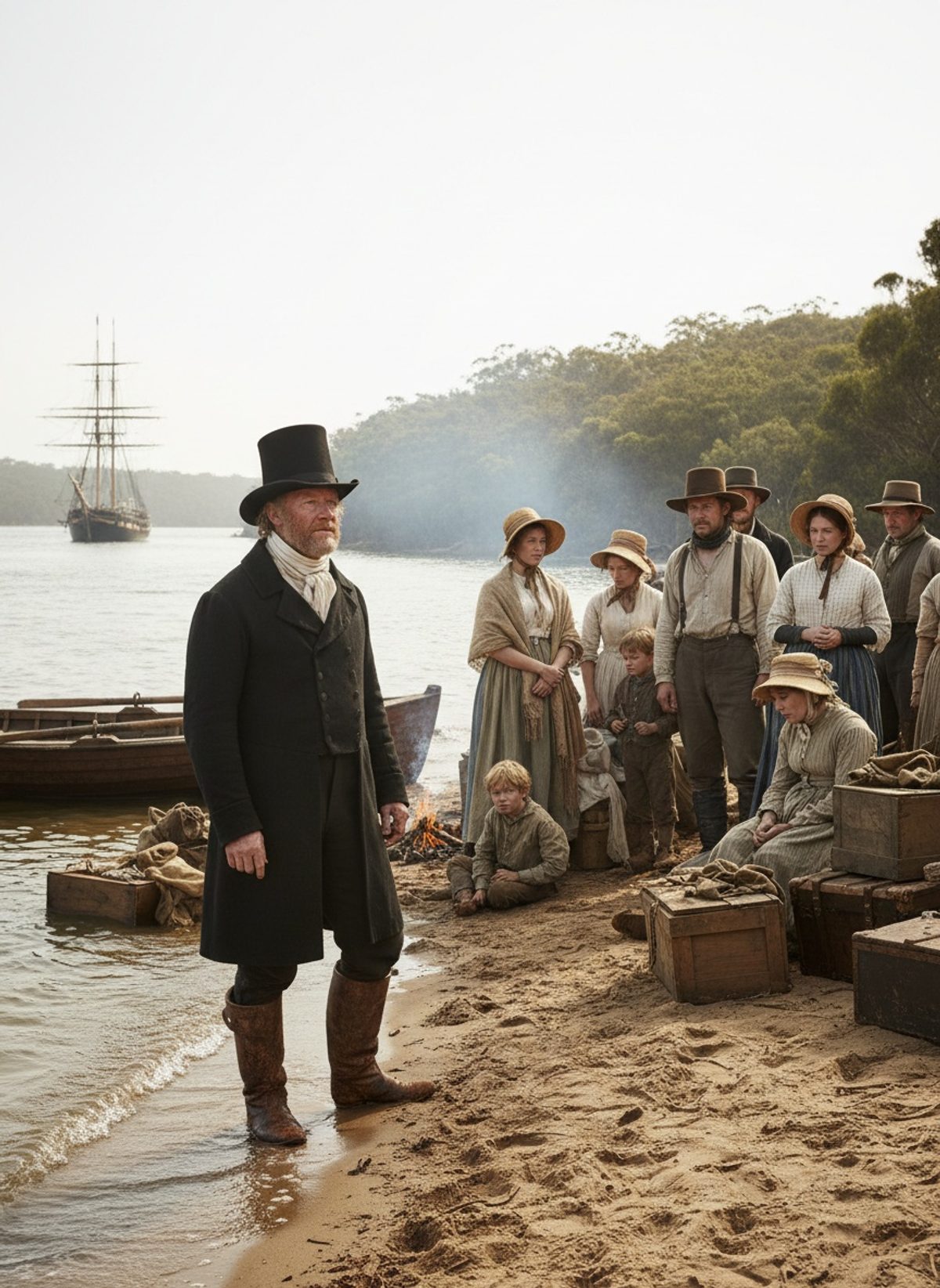
The winds shifted suddenly, causing the ship to lurch, and Thomas Peel gripped the railing tightly. Before him lay the unbroken expanse of the Western Australian coast, a formidable stretch of dense undergrowth and jagged brambles. The air was heavy with salt and anticipation. Behind him, four hundred weary souls gazed out at the same sight, the promise of paradise now starkly transformed into a wild, untamed land that was both beautiful and terrifying. For Peel and his settlers, the arrival at Swan River in 1830 was not just a disembarkation from their vessel but the commencement of an unresolved struggle between expectation and stark reality.
The Land They Found
Envisioned as the end of a weary journey for these 400 settlers, the Swan River settlement promised a bountiful new beginning, far removed from the crowded and rigid confines of England. Peel, once a prosperous land speculator, painted vibrant images of fertile fields and prosperous communities to entice those seeking a fresh start. Escorting them on this perilous maritime voyage, he assured them that the fertile lands of Swan River would provide for their every need. However, what lay before them was not the cultivated landscape they had been promised but a wilderness fraught with challenges yet unseen by European eyes.
In stark contrast to Peel's assurances, the settlers encountered a land with no infrastructure—no roads welcomed them, no stores brimming with provisions, and certainly no grandiose homesteads. Instead, the bush, thick and unyielding, offered only the reminder that their fate now rested on their adaptability and resilience. Very few had any agricultural knowledge beyond hearsay; still, they were expected to transform this alien terrain into a thriving settlement. Supplies dwindled rapidly as they faced the relentless divide of modernity and survival in an untamed world.
Native flora and fauna, resilient yet entirely unfamiliar, lurked in the dense foliage, occasionally emerging to the astonishment of the settlers. The Noongar people, custodians of this land, observed this new intrusion with understandable trepidation—it was a sight they had not encountered, a foreign encampment armed with mysteries. Isolation swallowed optimism, and an encroaching specter of starvation soon followed. The settlers, once buoyed by promises of abundance, found the gift of land laden with hardships that none, especially Peel, had foreseen.
Read next: When John Batman Shook Hands at Port Phillip, 1835
In the Shadow of Dreams
The initial months tested every skill and strength of Thomas Peel and his settlers. Without a substantial plan and immediate resources, Peel's optimistic vision crumbled under the relentless pressure of reality. Their agricultural efforts yielded pitiful returns; native pests claimed what little crops were cultivated, and the settlers' lack of bushcraft further compounded their misery. Winter brought not only cold but despair, as many faced starvation. Illnesses unknown to them spread among the camp, exacerbated by exhaustion and malnutrition.
Peel, a man who had promised so much and staked his fortune alongside those who followed him, found himself entwined in the settlers' anguish. His resources exhausted, Peel stood increasingly powerless, watching his once grand venture unravel. The loyalty of his settlers waned as their need for basic survival replaced the initial kinship and hope. Many chose to abandon the Swan River colony, making their way to the more established settlements or eking out a subsistence living with the skills they managed to acquire in desperation.
Others were less fortunate. The specter of death crept into camp under cover of night, gnawing away at the suffering and desperate. It was a confrontation with nature's unyielding dominance, one that few in England's structured society could have ever envisaged. This was a world where survival came not through the exchange of gold or social merit but through sheer determination and adaptability. Yet even amid such trials, the settlers forged a unique community, defined not by its triumphs but its resilience—a testament to human endurance.
The Lessons of Swan River
The sanguine dream sold by Thomas Peel had turned into a nightmare for many. Yet at Swan River, a painful but crucial lesson unfolded—a lesson that would shape the colonization strategies of future expeditions. Perhaps the most enduring irony is that Peel, once a wealthy sponsor of this venture, died penniless, outlived by the legacy of his unattainable promise. The settlers left behind carried scars both physical and emotional from their ordeal, but those who persevered became unsung forge of a new frontier spirit.
Beyond the veneer of failure, Peel's settlement attempt underscored the sheer magnitude of what European settlers faced in their quest to tame new worlds. Despite the failure, this was the birthing ground for deep understanding, mutual respect, and eventual collaboration between settlers and the Aboriginal people—a relationship initially marred but driven through necessity and survival. The land, unforgiving yet immensely enriching, pushed settlers towards resourcefulness, which eventually became the cornerstone of survival in this foreign realm.
Swan River's poignant story serves as a haunting echo of the past—a reminder of hubris in the face of nature, and of the resilience in breaking beyond limits imposed by the familiar. It prompts reflections on humanity's relentless quest for expansion and development, a journey intertwined with both destruction and beauty throughout history. In its harsh realities and the embers of hope it ignited, the experience of Thomas Peel and his settlers was one of profound trial, securing its place in the annals of Australian colonial history as both a sobering lesson and a tribute to the enduring human spirit.