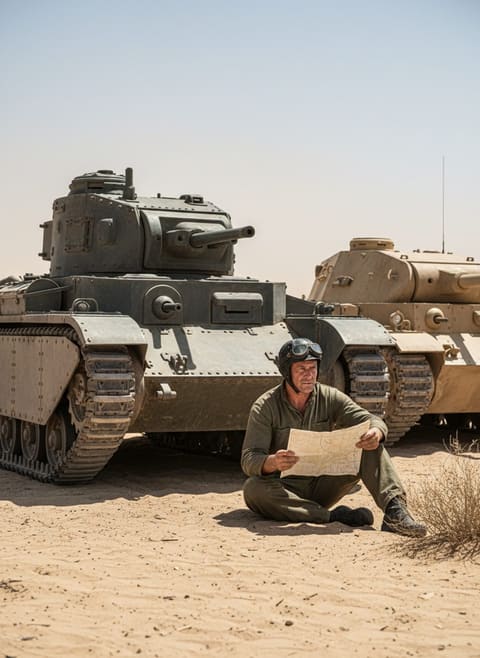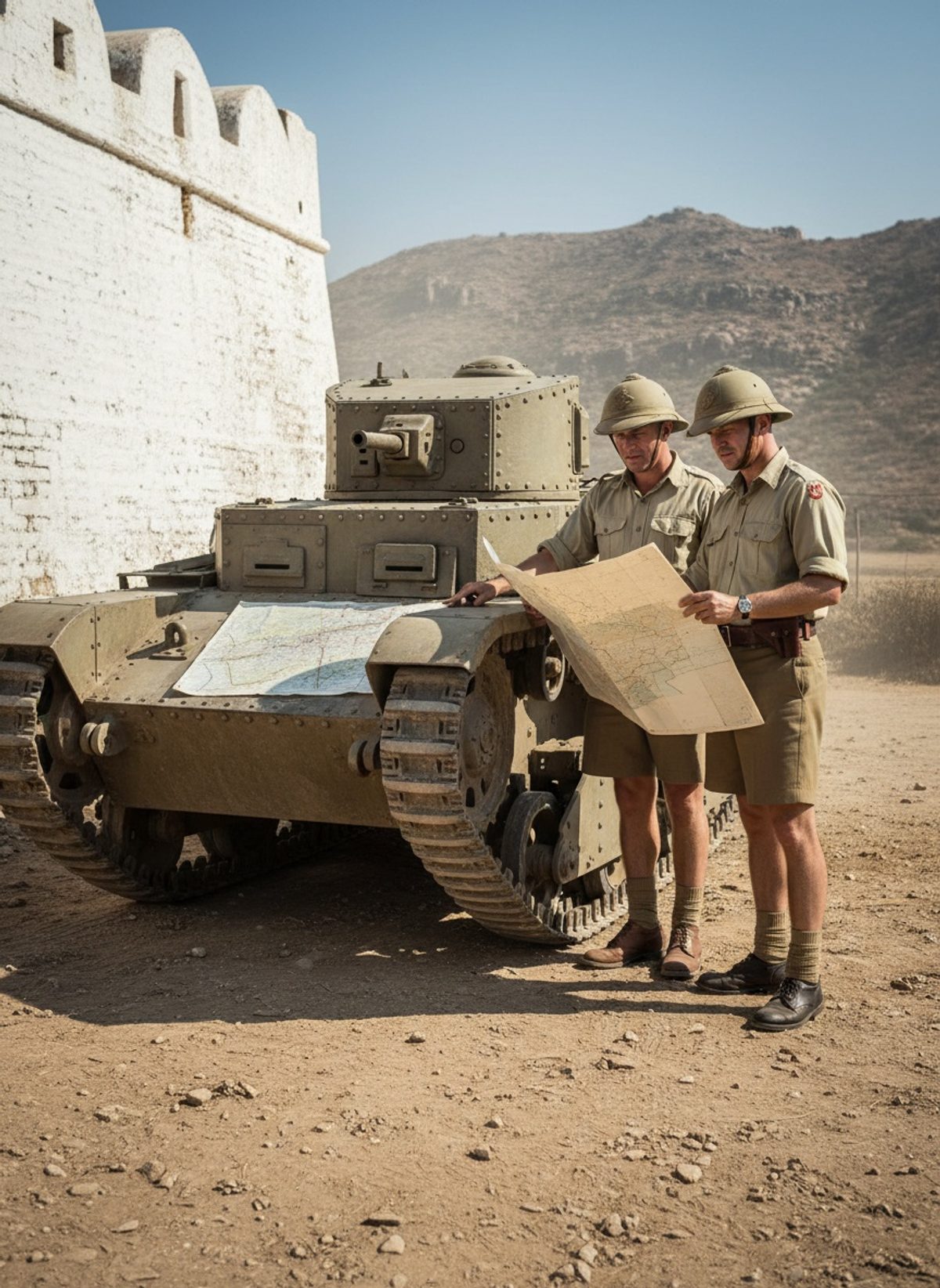
The British Empire's grasp extended across the globe by the late 1920s, but its military budget was shrinking faster than its territories were expanding. Yet, out of necessity, came innovation—a solution that rolled out of Vickers-Armstrongs' factories and into the pages of history.
Tanks on a Budget
The global conflict of World War I had proven the strategic significance of tanks, with heavy metal behemoths grinding across no man's land. Yet, in the post-war era, the British War Office faced a conundrum. The empire's loyal subjects in India, Africa, and beyond required security, but the Treasury's cupboard was more bare than ever. Thus emerged one of Britain's remarkable military contributions: the Vickers-Armstrong Light Tank.
Unlike the lumbering giants that had rumbled to victory a decade earlier, the Light Tank was compact, agile, and most importantly, affordable. Its development was a masterstroke of cost-cutting ingenuity. In a world constrained by shrinking defense budgets and increasing responsibilities, the Light Tank offered a versatile solution. It could patrol vast frontier expanses, navigate harsh terrains, and serve colonial armies at a fraction of the price of more robust armor.
Made to Move, Built to Export
The design ethos of the Vickers Light Tank centered around speed and simplicity. Stripped of the excessive trappings of wartime tanks, it became the poster child for economy of scale. It featured a machine-gun armament instead of cannons, reducing the weight and production costs. Today, it's hard to imagine that such a stripped-back machine could alter the landscape of colonial military strategy—but it did.
Read next: When Young Soldiers Refused to Sail for the Boer War, 1899
The Light Tank’s commercial viability soared. It transcended its initial technical specifications, becoming an international commodity shipped to a dozen nations. From the windswept deserts of the Middle East to the humid jungles of Southeast Asia, its practical design and low cost made it a hot ticket item. In regions that had never owned a tank, this little armored vehicle offered a new kind of military empowerment.
Transforming Doctrines
Beyond its economic contributions, the Vickers-Armstrong Light Tank altered military thinking. The British Army began revising their strategies to incorporate these nimble machines. Instead of focusing solely on heavy, slow-moving tanks for frontline engagements, they embraced a more agile doctrine. It was a tactical pivot that allowed forces to be more responsive, from Indian princely statesmen to African governors.
Read next: When Britain Forgot Where Its Soldiers Were, 1902
This paradigm shift in British strategy was subtly reflected around the world. Nations started to look at the Light Tank not only as a combatant but as a symbol of modernity. It implied that being militarily prepared didn't necessitate a drain on financial reserves. It became clear that an army equipped with these versatile machines could maintain order and project power without monumental expenses.
The Legacy of Ingenuity
What, then, is the legacy of the Vickers-Armstrong Light Tank? Its story is more than one of technological efficiency; it is an account of strategic foresight in times of fiscal constraint. This little tank offered a blueprint not just for military tactics but also for how innovation could thrive when resources were limited.
In the decades that followed, military theorists and policymakers would frequently look back at this era, noting how necessity had been the mother of invention. It's a reminder that amidst austerity, bold thinking and decisive action can leave lasting impacts. Here, in the unassuming Light Tank, was a lesson that continues to resonate: true power often lies in the ability to adapt and innovate when the going gets tough.