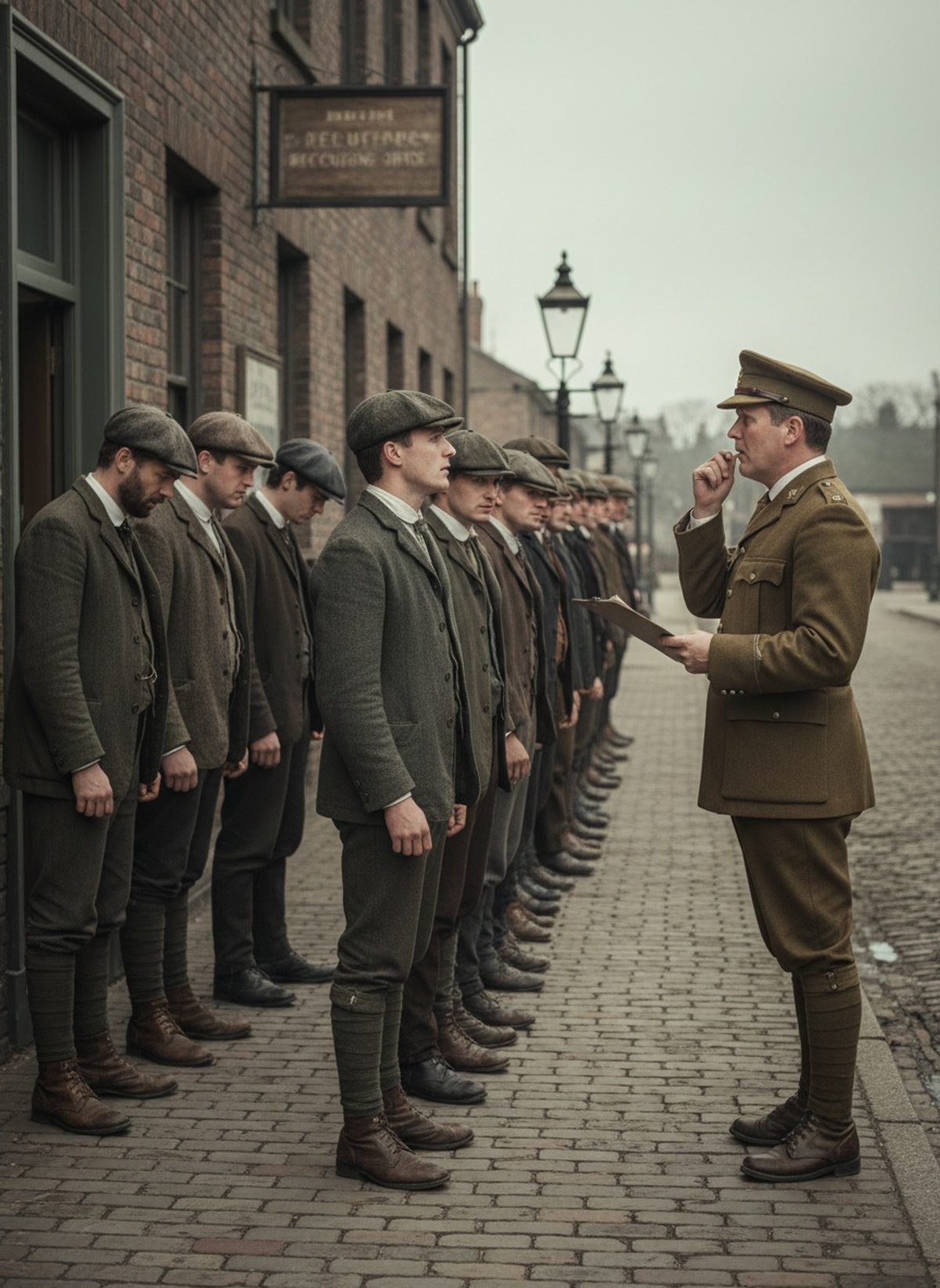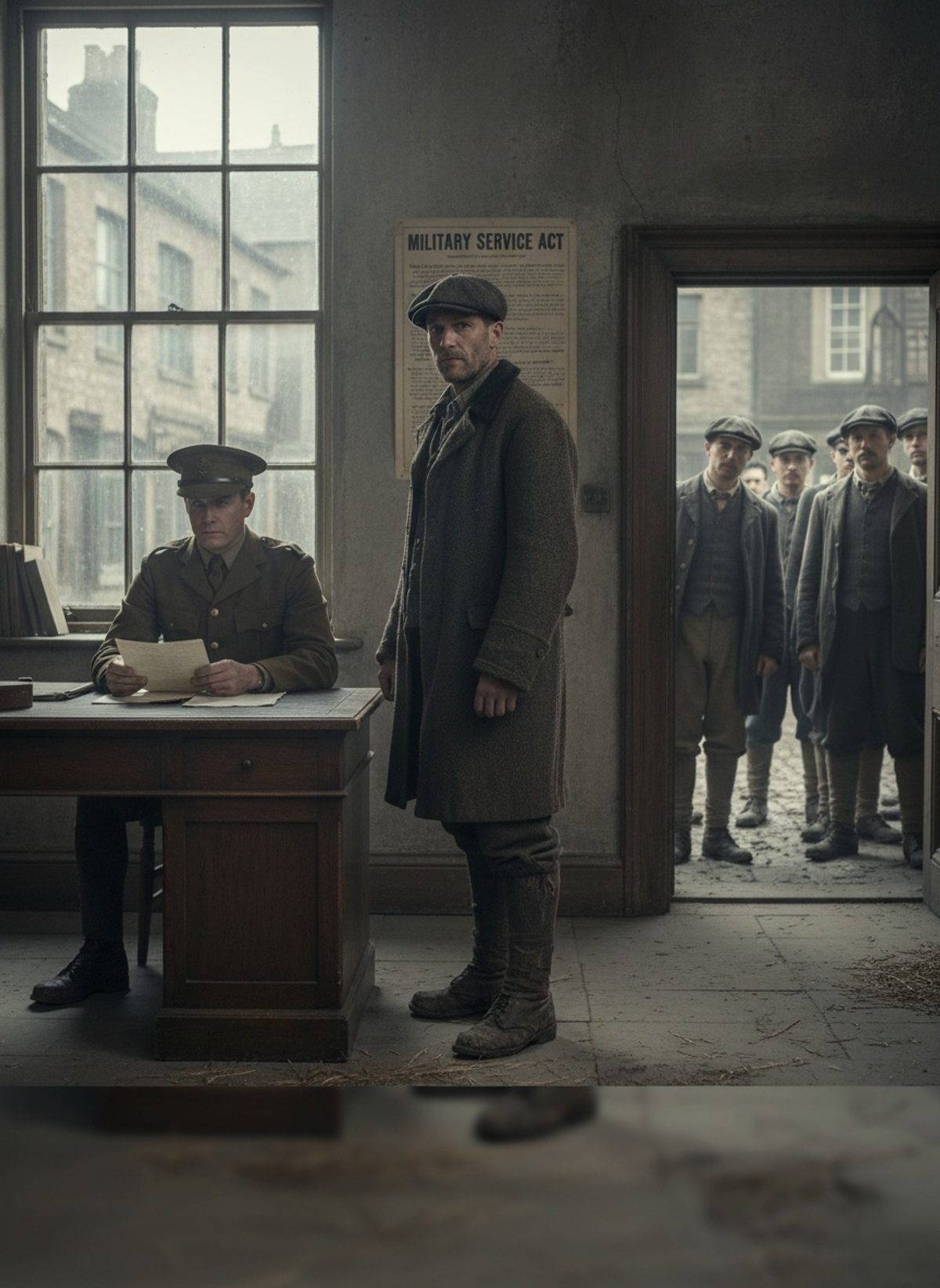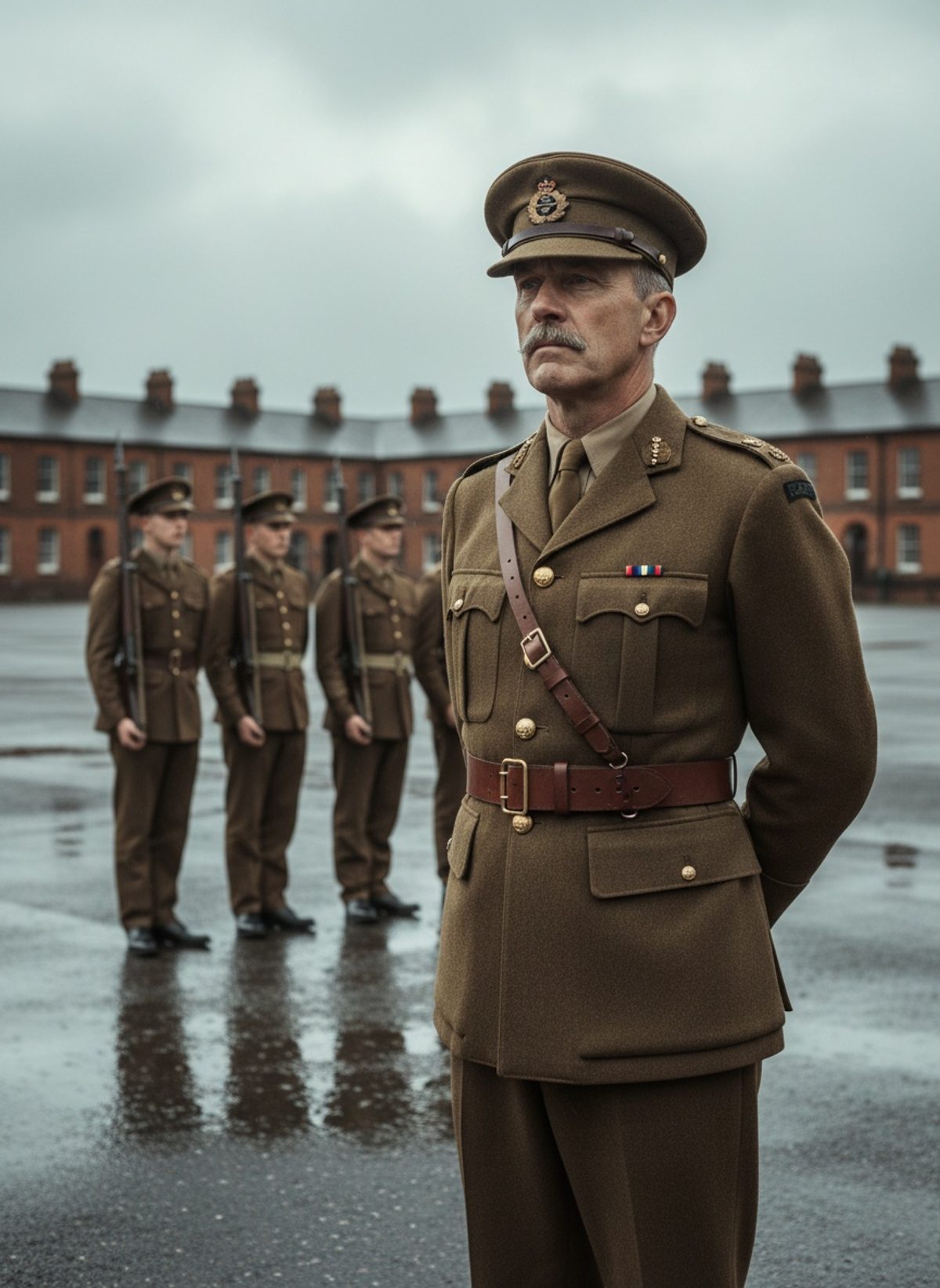
The clattering of wooden sticks shuffled across the dry parade ground like brittle leaves in an autumn wind. Young British soldiers, in khakis dulled by the sun and wrinkled from wear, moved in unison, their hands gripping broomsticks instead of rifles. It was 1932, and the financial cold hand of austerity had stripped away the tools of war, leaving these men to practice the art of combat with household implements. As they thrust the broomsticks forward, simulating a bayonet charge, the air of absurdity hung over the ranks like a fog of unease. For beneath this charade lay an unsettling truth: the empire's security was being pawned in a desperate bid to balance the books.
The Relics of Peace
In the echo of the Great War's deafening end, a different kind of battle took silent root in the halls of the British Treasury. The financial toll of keeping a global empire was proving another kind of formidable adversary. This war on expenses found its most stark articulation in the Ten Year Rule, a bureaucratic ghost penned into policy to protect wallets over soldiers. It was a construct of optimism, born in 1919, suggested by Winston Churchill in his role as Secretary of State for War and Air—a guiding mantra imagining a future free of "great war" for a decade. Churchill, at the time, painted in hope, even when Arthur Balfour's cautions echoed that preparation should always be one heartbeat away, lest the lion of the empire slumber unprotected.
By 1928, this rule was not just envisaged—it was strengthened to be self-renewing under Churchill's tenure as Chancellor of the Exchequer. It meant military estimates carried the currency of peace indefinitely, unless countermanded in affirmation of disaster. The British Army was set adrift in this fiscal sea, with the Admiralty and Air Force alongside. Under this regimen, budgets shrank, equipment aged a generation, and drills were conducted without ammunition, sometimes even weapons. Regiments resorted to substituting rifles with broomsticks and tanks with painted cardboard.
The austerity-driven narrative found scant opposition; after the carnage of the trenches, peace was both a political mandate and a popular craving. However, the "relief of peace dividends" overlooked the empire’s frailty, stowing war readiness beneath layers of bureaucratic hope—a condition that left empty shells where pistols should be and emboldened those in Europe who watched Britain's dwindling might with great interest.
Read next: When a Private Soldier Paid the Price for His General's Blunder
Not a Drill, but a Doctrine
Aboard the continent, in the twisting corridors of rising political ambition in Berlin, Adolf Hitler's grasp tightened on Germany's rudder. In early 1930s London offices, the wind of these changes registered as little more than a distant breeze against the stolid timbers of establishment. But the intent was seismic. In 1932, a mere spit of water and three short years from Hitler’s Rhineland gamble, British regiments drilled on tight constraints, signed not with the ink of military necessity but with the digits of financial ledgers.
The underestimation of the aggressor was not so much blindness as administrative arithmetic. Each broomstick gripped by a parade soldier was another line item balanced on the Treasury ledger, but devoid of the weight of consequence. The government's cautious optimism fostered a brittleness beneath a veneer of seeming composure. Outdated tanks sat in mothballs, and naval ships grew barnacles at dockside. Yet even as military exercises pivoted between impossibilities, murmurs for rearmament were often politely nudged aside in budget sessions.
It was within this paradox, a shield forged of peacetime optimism, that the lessons of preparedness ebbed away—quietly, like silt carried downstream. The gravity of the situation would not fully manifest until March 1936, when Hitler reoccupied the Rhineland, a move so brazen it essentially shredded the Treaty of Versailles' deliberate dictums. Britain listened, prone under its self-imposed twenty-year spell of unawareness.
An Empire’s Lesson Ignored
In the spring rivulets of 1936, news broke of jackboots striking determined rhythms on Rhineland soil, and with it, a sobering wave struck Britain: not the splintered wooden sticks, nor the empty training rifles, nor the balance sheets that made sense of austerity could weigh against the tangible threat now cresting in Europe. In that somber frame, the phantoms of economized training were laid bare by comparison to the encroachments of a militarizing adversary.
For those who wielded broomsticks in 1932, what had seemed an exercise in frugality had become an emblem of strategic follies gone unchecked. The realization that preparedness cannot be wished into being, nor economies served in exchange for deterrence, left its stain on the imperial conscience. The avoidance of the war machine in anticipation of peace had only invited the very specter it sought to evade.
Why does this narrative reach to us through time's arms like a cautionary tale? While peace is often pursued with fierce obstinance, history whispers its gratitudes more often to the watchful and the ready. As those young soldiers marched with their broomsticks under an uninformed sky, they paved a road to understanding with stark reminders on readiness and the costs of quiet complacency. For empires and ages alike, enemies evolve, not in probabilities measured over decades, but in intentions unchained by diplomatic optimism. The time to be prepared is never ten years away.