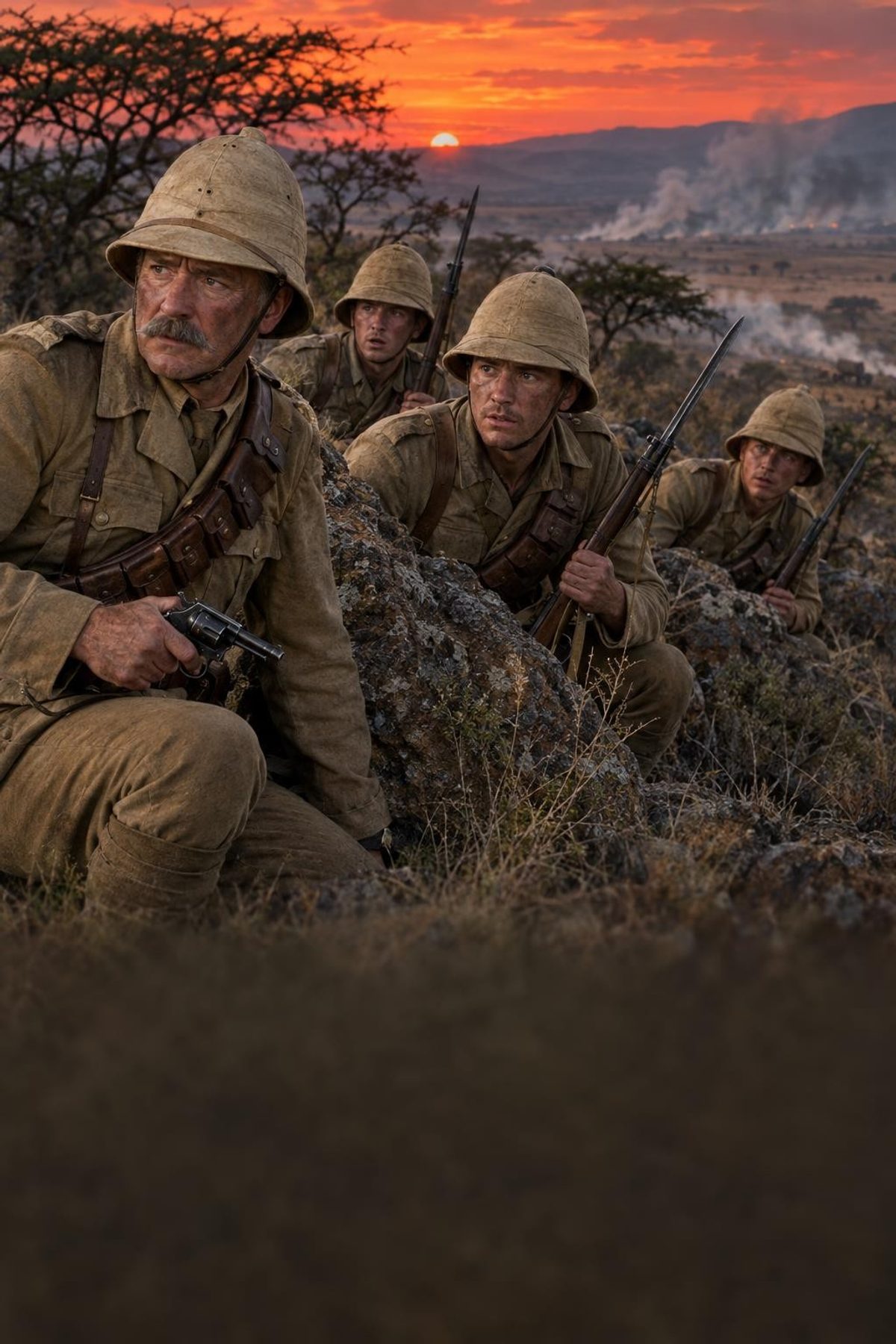
The crack of gunfire shattered the stillness just before dawn, the sharp staccato echoing across Wagon Hill. Dense mist clung stubbornly to the landscape, obscuring vision and cloaking the determined Boers who swarmed up the incline with grim intent. The defenders, a determined mix of the Imperial Light Horse and Gordon Highlanders, scrambled to respond, their breath fogging around their faces in the chilly air as they shouldered muskets and steeled themselves for the coming battle.
The Battle Breaks
For fourteen relentless hours, an unyielding gale swept across the hilltop, biting at exposed skin and adding to the misery of battle. The Boers, seasoned in guerrilla warfare, were adept at using the terrain to their advantage, picking off the weary defenders with unsettling accuracy. Under a dull sky, communication was a labyrinth of shouts and hand signals, the din of warfare swallowing all but the loudest orders.
British forces, entrenched in their hastily erected defenses, fought tenaciously. Each attempt by the Boers to crest the hill was met with fierce resistance, bayonets gleaming in the dim light as lines blurred in the chaos. The ground, sodden with rain and trampled underfoot, became a morass, yet neither side yielded in their resolve.
Moments of Unyielding Courage
Amid the carnage, acts of individual bravery stood out starkly against the grayness of the day. Highlanders, adorned in tartan and steadfast in their duty, stood shoulder to shoulder with their comrades, eyes steely against the onslaught. Their cries mingled with the bugle calls, echoing across the battlefield with ancient resonance.
Read next: When The Last Post Echoed Over Spion Kop, 1900
As mid-afternoon bowed to evening, exhaustion took a cruel hold. Ammunition ran low, and men resorted to desperate measures. Stories of soldiers gripping unloaded rifles, swinging viciously as club weapons, became the stuff of legend. On every side, courage shone in small, defiantly stubborn ways.
The Final Assault
As day began to fade, the Boers, their resolve undiminished, launched a final ferocious assault. It was here, as dusk fell, that the fate of Wagon Hill hung perilously in the balance. The air thick with gunpowder and cries of the wounded, the defenders prepared for a last stand.
Then, as if to herald hope, the bugle rang out. Crisp and clear, its melody carved a path through chaos, signaling a counter-charge. Desperate and inspired, British forces surged forward, clashing once more with the Boer fighters. This echo of brass, soul-stirring and resolute, galvanized the exhausted soldiers into action, turning the tired tide one final time.
Read next: When Piper Laidlaw Stood Up at Loos and Played, 1915
A Legend Lives On
The sun finally fell behind the hills, granting a cold reprieve. The emboldened bugle call had fortuitously tipped the scales, and by nightfall, the Boers were in retreat. The defenders remained masters of the battered hill, the notes of the bugle entwined with their survival, etching itself into history as more than sound—a symbol.
Those frigid hours atop Wagon Hill became a testament to human tenacity in the fiercest conditions. The echo of that decisive bugle became enshrined in the stories told by survivors, a haunting reminder of courage tested in extremis.
As the echoes of battle faded into history, the tale of that day remains a point of poignant reflection on the indefatigable spirit of those who hear the call to protect, defined not by their survival but by their actions in the shadow of peril. In the end, it's the stories of endurance and unity, like that of Wagon Hill, that linger in the annals of time—legends that textbooks too often leave behind.