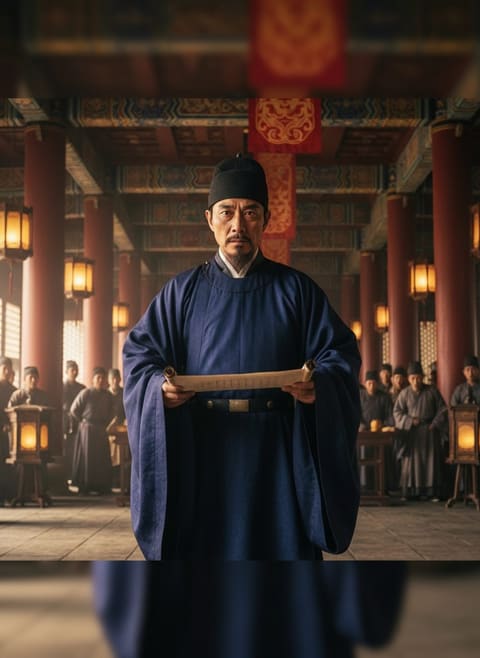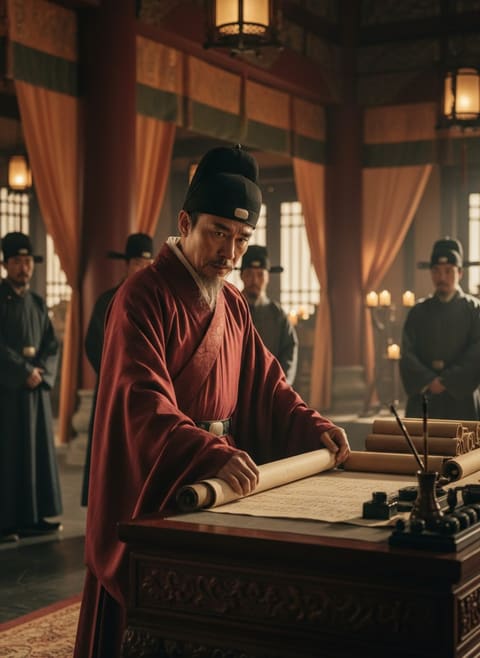
819 AD. A single document fluttered in the Emperor's hand, each character scrawled with the weight of conviction.
The Scholar's Bold Defiance
In the tapestried halls of the Tang Dynasty's imperial court, where the scent of incense mingled with the rustle of silk, a brewing storm of discontent was about to reach its zenith. Scholars and officials had gathered to honor a relic of the Buddha—a bone said to contain otherworldly powers. Yet, not all in the court basked in the divine aura of this artifact. Han Yu, a Confucian scholar known for his staunch traditionalism, viewed this spectacle with thinly veiled disdain.
Han Yu was a man for whom the essence of Confucian ideals ran deeper than the decorative rituals that seemed to captivate his contemporaries. In an act that would have seemed like scholarly seppuku to others, he penned a memorial to the Emperor, decrying the worship of the relic as a transgression against Chinese tradition. To Han Yu, true piety lay not in imported mysticism, but in the moral and ethical teachings of Confucius, a philosophy entrenched in Chinese culture.
A Letter Courting Death
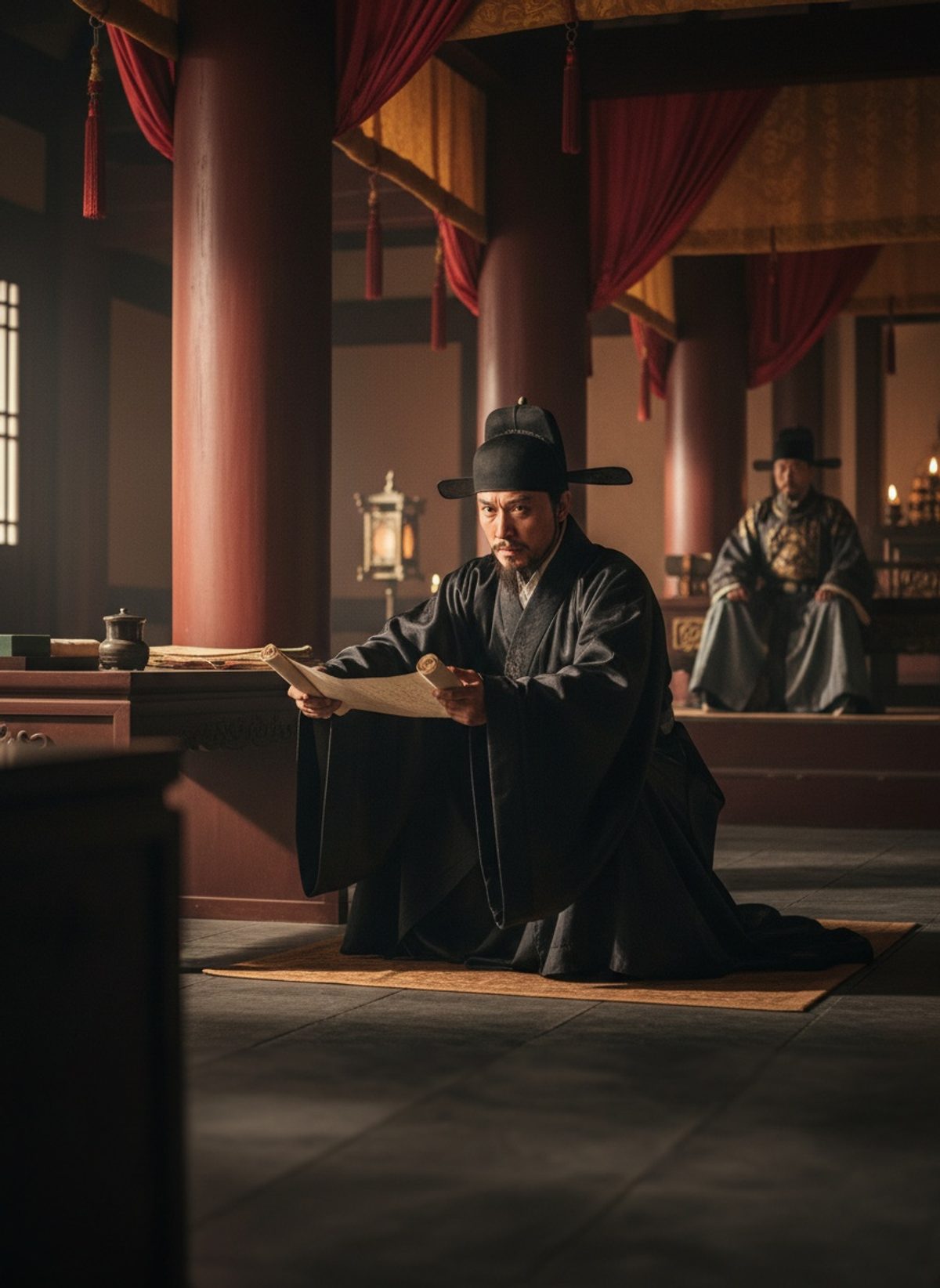
The scene was set for one of history’s boldest intellectual rebellions. Han Yu’s words leapt from the page as if aflame, criticizing what he saw as hollow ritualism. His memorial argued provocatively that the Emperor, in honoring the relic, dragged the court and country into the quagmire of superstition. It was an insubordination destined to draw the Emperor’s ire; such candor had claimed the lives of many who had dared to voice dissent.
Read next: Bi Sheng Had One Idea. It Changed How the World Reads.
Yet, the letter was more than a critique—it was a personal call to integrity. Han Yu insisted that the nation's core identity was being bartered for the ephemeral charms of foreign gods. His pen sliced through centuries of cultural drift, imploring the court to remember the guiding principles of Confucius and the divine mandate bestowed upon the Emperor himself.
The Emperor's Decisive Moment
As the letter made its way through corridors bustling with sage advisors and ministers, it reached the Emperor’s chambers. The court watched closely; everyone knew the predictable trajectory of such defiance—death awaited those who dared to embarrass the throne. But Han Yu’s memorial, with its raw honesty and eloquent reasoning, rendered normality obsolete.
The Emperor was known for his inscrutability, yet as he read Han Yu's words, something shifted. Perhaps it was the sheer audaciousness wrapped in respect that captured his attentions. Perhaps it was an unacknowledged fear that wisdom rested with his renegade scholar. For reasons known only to him, the Emperor laid down the death mask of tradition and chose mercy.
An Exile Over Execution
Han Yu was spared the blade. Instead, he found himself exiled to Chaozhou, a remote outpost that stood as a mere afterthought on the empire’s vast geological canvas. To many, exile was considered a soft death, a stripping of spirit and societal standing.
Read next: He Dug a Well in the Desert. It Saved Ten Thousand.
In Chaozhou, Han Yu faced unfamiliar challenges. Yet, his pen remained his greatest weapon. He took this forced break from courtly politics to further explore and refine his thoughts. He wrote, he taught, and he built bridges—not only in the physical realm, where he literally reorganized and improved local governance, but also in the philosophical landscape, where his influence continued to stretch across the empire.
Remarkably, it was here, in these relatively barren lands, that Han Yu found an eager audience for his principles. His ideas took root, finding fertile ground among the local intelligentsia, emboldening them to look inward toward their own cultural traditions.
The Lasting Echo of Courageous Intellect
The tale of Han Yu stands as a singular moment in the annals of the Tang Dynasty. This was a time when the tension between faiths and philosophies could alter destinies. Han Yu’s intellectual defiance and his subsequent survival became something of a folk legend. His memorial, preserved through time, has become an emblem of courage in an era when the written word could level empires.
Why does this tale of a lone scholar matter? It matters because history often remembers the battles fought on fields of blood, but the quieter, weaponless wars waged by ideas can shape the moral terrain of civilizations. Han Yu's risk bore a lesson: sometimes a solitary voice, as insistent as a mallet on a gong, can steer the arc of history. In our own world, rife with the noise of half-formed dogmas and tumultuous ideas, Han Yu’s story resonates, urging us to question, argue, and sometimes even defy, armed with nothing more than words.