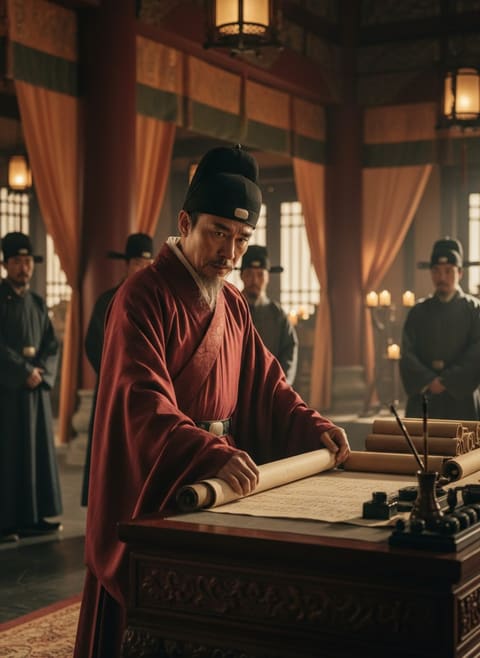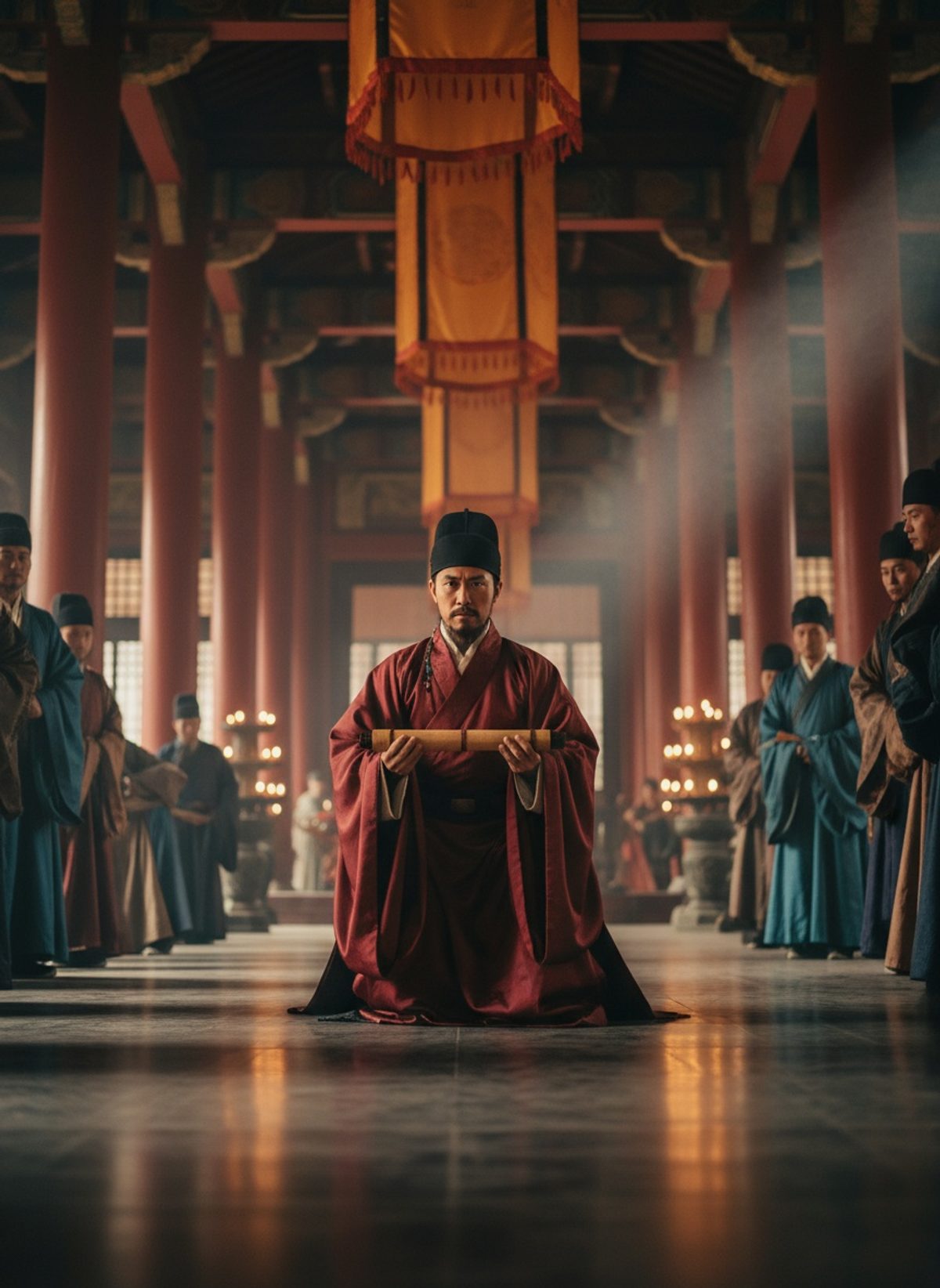
He was a devout Confucian scholar. His words would almost cost him everything.
The Emperor’s Decree
In the year 819 AD, an acute tension brewed within the heart of the Tang Dynasty. The grand corridors of the imperial palace echoed with worry, for a proclamation had shattered the court's decorum. Standing before the emperor was Han Yu, an erudite scholar and a steadfast Confucian official. His offense? A daring memorial criticizing the imperial veneration of a Buddhist relic—an action that Han Yu argued was not only a departure from Confucian propriety but a transgression against the very harmony that Confucianism sought to uphold.
At the core of this conflict was the emperor's endorsement of a relic said to contain the Buddha’s finger bone. The emperor believed that worshipping such a relic would bless the dynasty with divine favor. For Han Yu, however, this spectacle was an affront to Confucian values—an unnecessary reverence that detracted from practical governance and moral leadership.
The emperor's wrath was swift, for questioning the imperial practice was akin to questioning the emperor himself. Stripped of his rank, Han Yu was banished to the far southern region of Chaozhou, a place plagued by malarial swamps and considered a sphere of exile for disgraced officials.
Read next: He Dug a Well in the Desert. It Saved Ten Thousand.
The Scholar’s Stand
Han Yu's decision to address the emperor directly in his memorial was bold to the point of audacity. Officials, steeped in the rituals of an elaborate bureaucracy, seldom challenged imperial edicts. Yet, Han Yu’s Confucian convictions ran deep, formed by years of study and a profound belief in the importance of maintaining societal harmony through traditional values.
His memorial was not merely a litany of disagreement but a structured argument, appealing to the emperor’s role as a moral and ethical leader responsible for setting a virtuous example for his subjects. Han Yu’s words were meticulously chosen, underlining the philosophic discord he perceived in the emperor’s actions.
This courage to defy imperial edict for the sake of principle showcased Han Yu’s dedication as a civil servant. Unlike others who remained silent, Han Yu saw himself as a conduit for the beliefs of those who could not speak, an advocate for the traditions that laid the foundations of society.
Exile in Chaozhou
Chaozhou was a realm far removed from the bustling culture and scholarly circles of the capital, a region marked by its subtropical climate and difficult living conditions. To many officials before him, Chaozhou was akin to a slow descent into irrelevance. Yet Han Yu, in his isolation, found a new purpose.
Instead of succumbing to despair, Han Yu devoted himself to the welfare of the local populace, dedicated to alleviating their hardships through practical measures that improved their lives. Reports of his efforts in constructing schools, organizing flood defenses, and introducing agricultural reforms gradually reached the ears of those back in the capital.
Remarkably, Han Yu managed to transform his banishment into an opportunity to practice the Confucian ideals he so fervently advocated. His writings from this period reveal not a man defeated but one rejuvenated, his pen as sharp as ever and his conviction undiminished.
The Pen as His Sword
Despite the physical distance from the political epicenter, Han Yu never ceased writing. His essays, rich in the stylistic flourishes for which he became renowned, continued to champion Confucian principles and criticize the excesses of Buddhist practices. It was through these writings that Han Yu’s voice not only survived but also thrived, reaching scholars and officials still tethered to the capital's cultural and intellectual life.
Read next: He Walked Into the Emperor's Court. He Spoke for the Slaves.
Han Yu’s prose captured the challenges of his time with an eloquence that blended argumentation with a poetic sensibility. His works became essential reading for scholar-officials who sought to understand the philosophy underpinning governance, positioning Han Yu as a luminary even in exile.
It was said that his literary contributions helped rekindle an interest in the classical Confucian texts, weaving a thread back through time to the teachings of Confucius himself. Han Yu’s role in the literary renaissance of the Tang era can hardly be overstated.
The Legacy of Defiance
Han Yu's exile eventually came to an end, and he returned to official service before his death. Yet the significance of his defiance echoed long after his time. The tensions between Confucianism and Buddhism persisted throughout Chinese history, and Han Yu’s stand became emblematic of the struggle to balance religious influence with secular governance.
In modern times, Han Yu is commemorated not merely for challenging an emperor but for crafting a legacy that celebrated the power of the written word. His story is one of resilience, emphasizing that the courage to voice dissent can sometimes catalyze change silently and inexorably, like a slow-moving tide reshaping the shoreline.