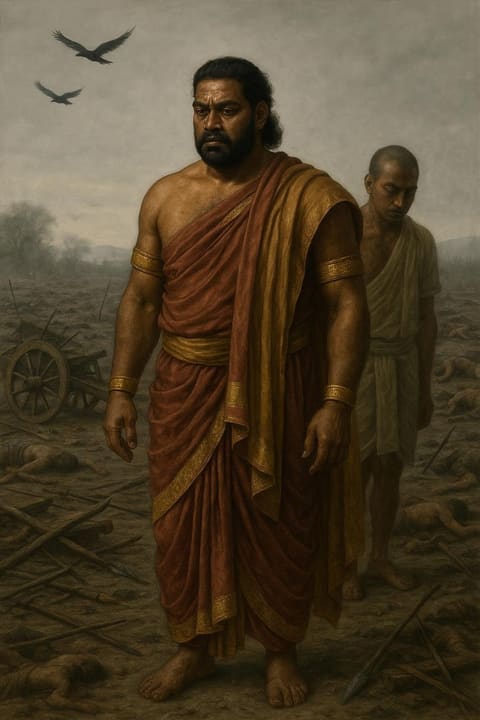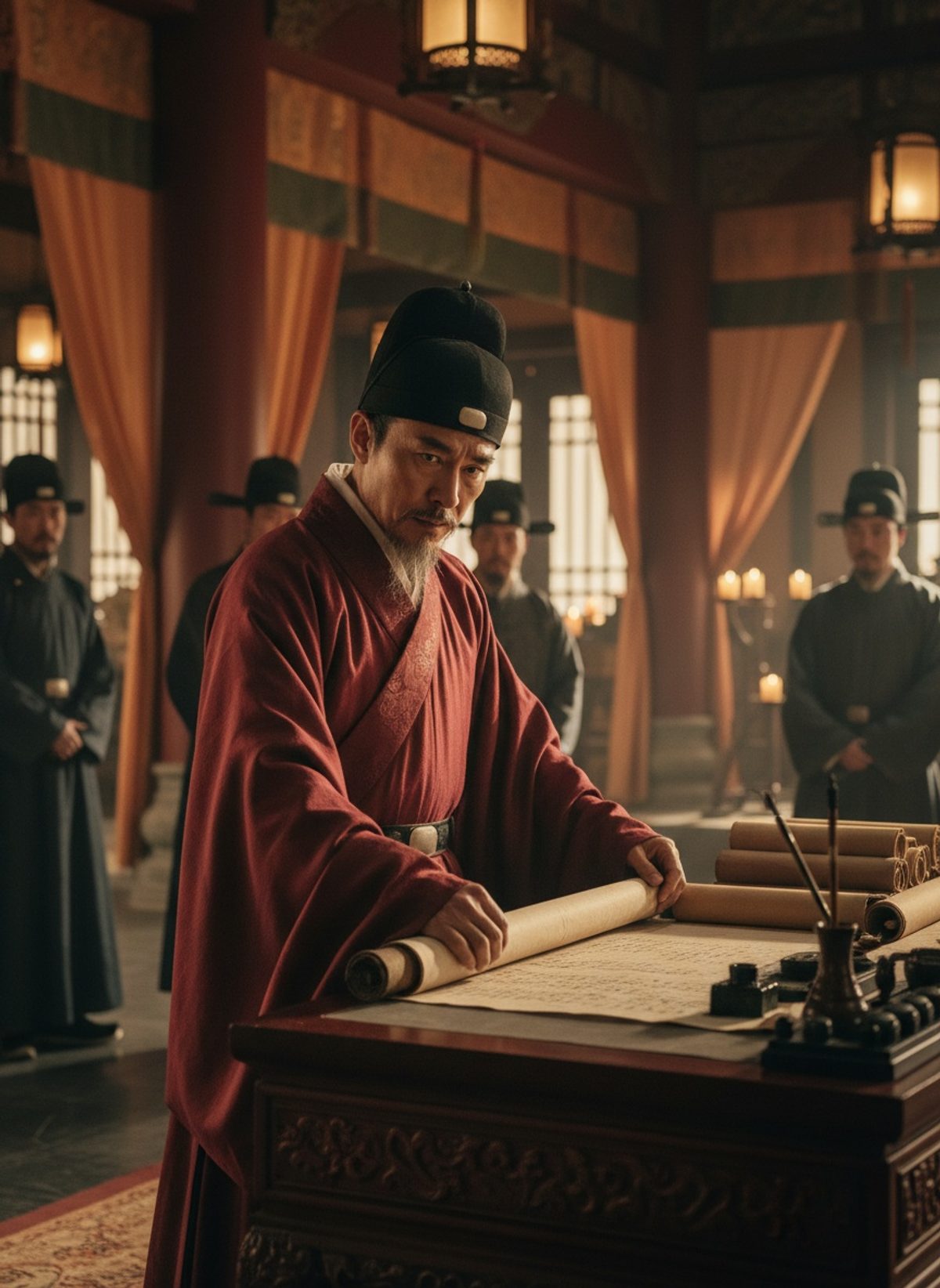
The air was thick with anticipation as Fan Zhongyan stood before Emperor Renzong, the ruler of the sprawling Song Dynasty, in the formidable splendor of the imperial court. The hall buzzed with whispered conversations among the courtiers, their robes rustling like leaves in the wind. All eyes were trained on the lone figure, resolute and firm, presenting his revolutionary Qingli reforms. Despite the imposing pressure of the grand court and the risk it posed to his own career, Fan's voice did not waver, each word a striking blow against the entrenched interests that opposed the very notion of change.
The Vision of a Reformer
Fan Zhongyan, born in September 989 in the Wu County of Su Prefecture, was not simply a man of his times but a visionary who deployed his intellect to light a path towards a more equitable society. Losing his father at a young age, Fan was raised by his mother and stepfather, Zhu Wenhan, a civil official. Despite changing his surname to Zhu briefly due to his stepfather's kindness, he later reclaimed his family name, embodying the duality of tradition and innovation that marked his life.
The formative years saw Fan immersed in the pursuit of knowledge, learning from Confucian scholars and sages across regions. By 1015, Fan had excelled in the imperial examinations, marking the start of a career that would take him from regional magistracies to vice chancellor in the central government. Yet, throughout his rise, he remained profoundly connected to the struggles of the common folk, understanding their plights and ardently believing in a Confucian ethos that made him "worry the worries of all-under-Heaven."
The Radical Reforms
In 1043, Fan's journey of service would culminate in the bold Qingli reforms, a series of proposals designed to restructure the administration of the empire with justice and equity at its core. These reforms advocated for a merit-based bureaucratic system, aiming to dismantle the nepotistic networks that benefited only the privileged few. Fan's reforms proposed improved salaries for local officials to reduce corruption, advocating for a system where efficiency and fairness dictated governance, especially favoring those in dire poverty.
Read next: Sundiata Could Not Walk. He Rose Anyway.
Moreover, he worked to elevate charitable family estates as essential mechanisms for social welfare, providing resources for the downtrodden. These reforms were not only administrative or financial; they represented a shift in the philosophical moorings of the state, drawing on the Confucian principles of compassionate governance and the moral duty of scholar-officials towards the less fortunate.
The Fall from Favor
Despite the fact that his ideas carried the endorsement of Emperor Renzong, the conservative factions within the court—intent on preserving their power—were quick to undermine Fan's position. The shockwaves of Fan’s reforms threatened the ageless privilege that had empowered the courtiers for generations. Accusations and denunciations flew thick and fast, wielding rumors like weapons, aimed at tainting Fan's noble intentions.
Leading the Qingli reforms was tantamount to juggling fire with one's bare hands, knowing full well it could lead to one's undoing. And so it did. Shortly thereafter, Fan was dismissed from his chancellorship and relegated to an exile—his place now the distant reaches of China's provinces, far from the political gales that whipped within the capital’s confines.
Read next: The Picts Ruled Scotland for 500 Years. Then They Vanished.
Exile, however, did not silence Fan. From afar, he continued to compose writings and letters infused with the indomitable spirit of reform and advocacy for change, which resonated beyond his time and heritage. Among his contributions was his profound Ci poetry, where his reflections and beliefs were persistently echoed.
A Legacy of Influence
Though the Qingli reforms were eventually dismantled, Fan Zhongyan's courage in standing before the emperor and his integrity in the face of political annihilation left an indelible mark. His ideas, audacious for their time, inspired successors like Wang Anshi, who would later attempt to revive and build upon Fan’s reforms. Fan’s life and work represent a powerful narrative of one man's unwavering dedication to improving society against formidable odds.
The story of Fan Zhongyan is a vivid reminder of the eternal conflict between progress and status quo, the fuel that powers the engines of history. Beneath the grand sweep of dynastic chronicles are tales of individuals like Fan, who, armed with conviction, dared to speak for those muffled by power. Fan's story underscores the timeless truth: that change, though perilous, remains the crucible for a society yearning for justice and fairness.