He was thirty-three years old. He had never fought a duel before that fateful morning on the banks of the Mississippi River. Abraham Lincoln, the man who would later become one of America’s most revered presidents, found himself in an extraordinary situation. In 1842, long before he would lead a nation through its darkest hours, Lincoln stood on the cusp of a violent resolution to a matter that had begun with ridicule and misunderstanding. A future beacon of diplomacy and persuasion, Lincoln faced off against a political rival with a cavalry broadsword in hand.
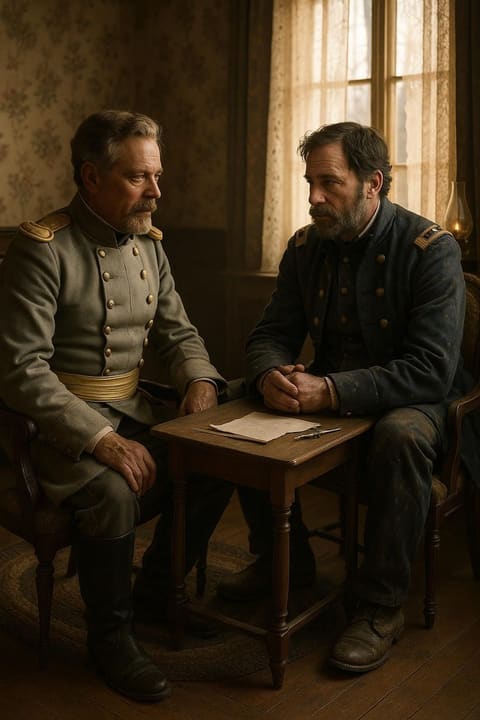
The story starts with Lincoln's famed wit and humor, which, like many strengths, had its pitfalls. Mary Todd, the woman who would become his wife, was at the center of the controversy. Lincoln's rival was James Shields, a fiery young politician of Irish descent known for his quick temper and pride. As Illinois State Auditor, Shields had supported a controversial measure regarding currency, leading to public disapproval. In a series of letters published anonymously in the Sangamo Journal, Mary Todd and her friend teased Shields mercilessly for his alleged follies. His fragile ego bruised, Shields demanded satisfaction and, suspecting Lincoln's complicity in the affair, issued a formal challenge for a duel.
In that era, such challenges were not just matters of personal honor but reflections of one's status and reputation. Rejecting such a duel could tarnish one's name with the stain of cowardice. Lincoln accepted the challenge but leveraged the duel's protocols to his advantage. As the challenged party, he had the right to choose the weapons, an advantage he would wield with shrewd calculation. He opted for cavalry broadswords, a choice that seemed peculiar for a man who had never wielded such a weapon but was, in fact, meticulously calculated.
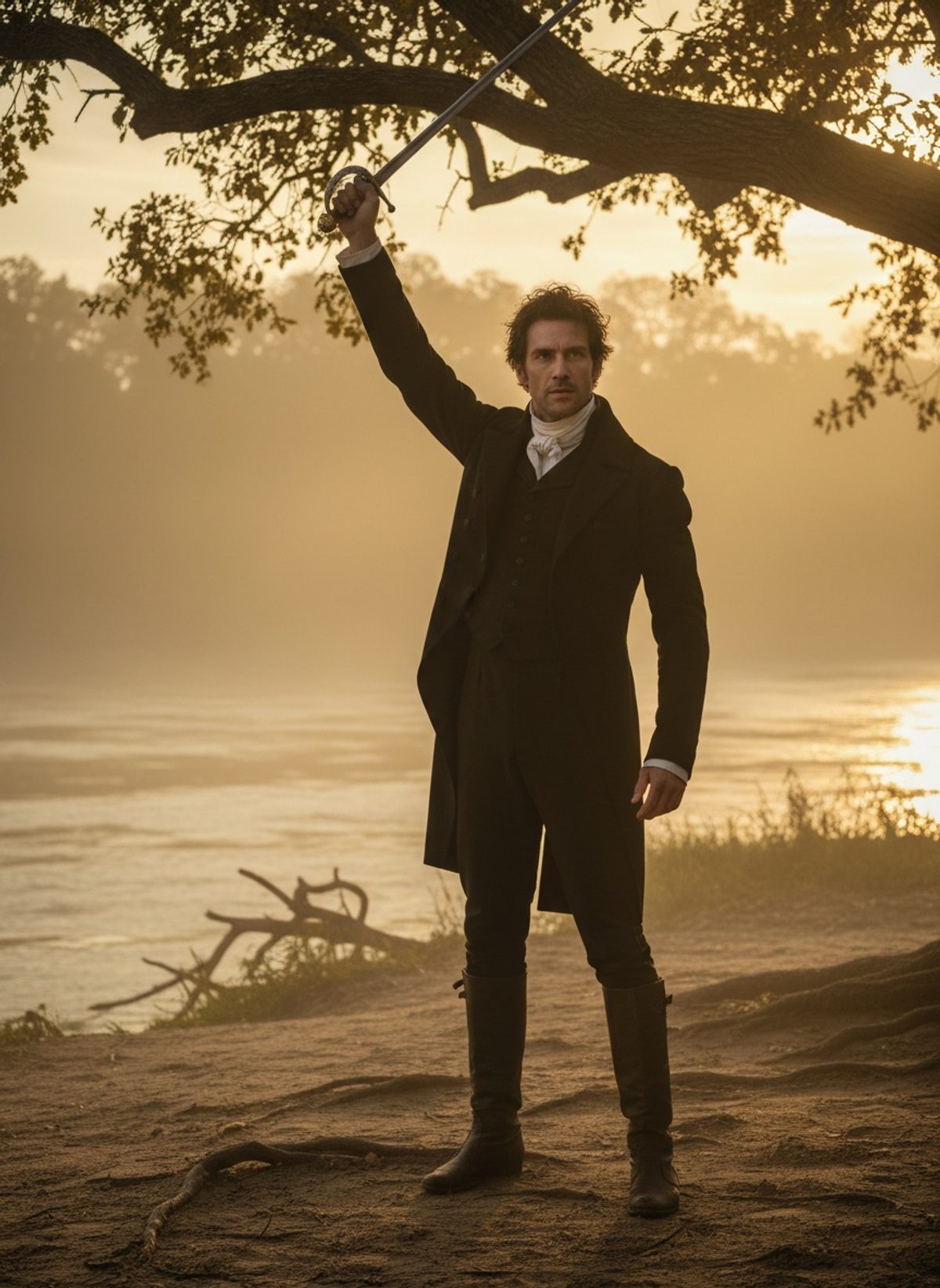
Abraham Lincoln stood at six feet four inches, towering over most men of his time. He was already known for his tremendous physical strength and reach, attributes honed from years of manual labor and wrestling. The choice of cavalry broadswords was strategic; it capitalized on his natural advantages while neutralizing any experience Shields might have had with pistols, the more customary dueling weapon. The very image of Lincoln, broad of shoulder and long of limb, wielding a broadsword that gleamed in the morning light, speaks to a man who turned the rules to his favor in a physical and symbolic sense.
Read next: Churchill Said No Men. Then He Changed Everything.
On September 22, 1842, the two men met in a secluded spot along the Mississippi, near Alton, Illinois. The duel was set at Bloody Island, a notorious locale for settling such disputes. The tension was palpable as the seconds, mutually chosen men whose role was to ensure fairness and adherence to the duel's rules, ensured all was in order. But here, on this muddy isle, amidst the clatter of swords and a dismal overcast sky, it became evident that Lincoln had little intention of letting the matter proceed to bloodshed.
The seconds had prepared the ground, marking off the duel space with grim precision. But before a blow could be struck, Lincoln, in a moment that would define the narrative, took a giant swing with his sword, cleaving a branch high above, demonstrating the extent of his reach and skill. It was an emphatic statement—a testament to his unwillingness to let violence dictate the outcome. His opponent, confronted with the towering combatant and the implicit message that Lincoln's swing carried, reconsidered the need for violence.
Read next: She Slowed Them Down. That Is Why They Lived.
The seconds, especially John J. Hardin, a mutual friend, and political colleague, seized the moment to press for reconciliation. Hardin and others used Lincoln's display as leverage to negotiate a truce, highlighting the foolishness of proceeding to an actual clash of arms. This intervention, combined with Lincoln's formidable—and daunting—demonstration, turned the course from confrontation to conversation. The duel was called off, honor was salvaged for both parties, and the incident concluded without a drop of blood spilled.
This event could have been an obscure footnote lost to history were it not for Lincoln's rise to prominence. Instead, it offers a glimpse into the character of the man before he ascended to the presidency. Lincoln's actions that day, favoring strategy and psychological prowess over the brute force of combat, would echo in his political life, where he often pursued negotiation and unity over divisive conflict. It was a lesson in the power of intellect and reason, values that would underpin his later tenets of leadership.
At a time when political disagreements could culminate in life-or-death confrontations, Lincoln demonstrated a preference for peaceful though still calculated, resolutions. It's a curious anecdote: how an almost-violent event was resolved with hardly any violence, thanks to the clever maneuverings of a young Lincoln. The story of the almost-duel tells us not only of the man he was but the kind of leader he would become. Today, it serves as a poignant reminder that sometimes the greatest victories are in battles never fought, and the truest strength lies in the restraint to understand when one should walk a step back rather than charge forward. In Lincoln's world of politics and strife, where the stakes often found resolution in the last stand, this tale echoes with relevance for every age that seeks peace in the shadow of conflict.