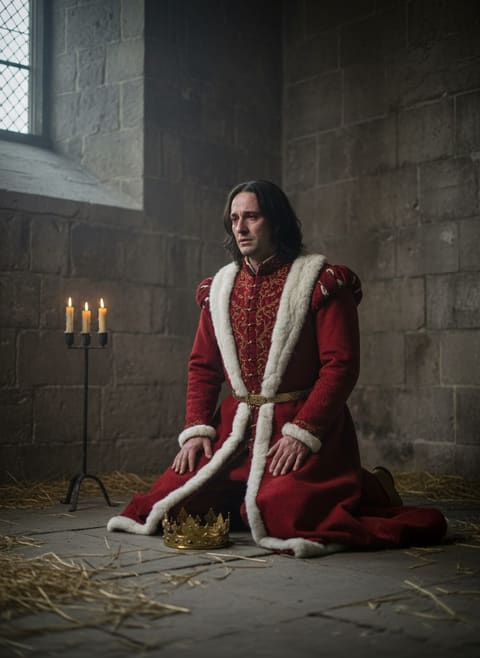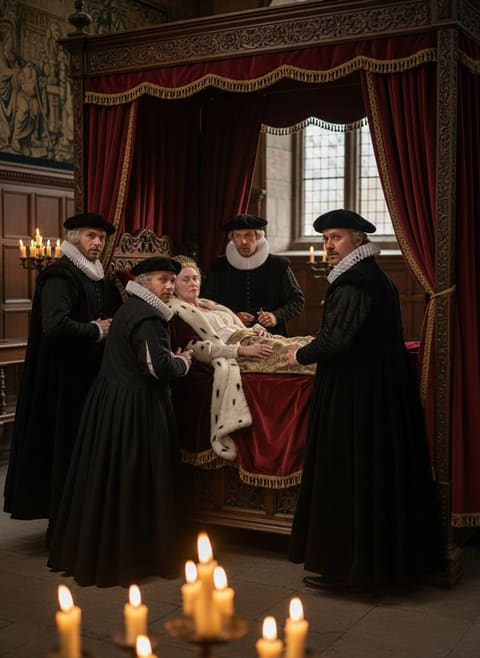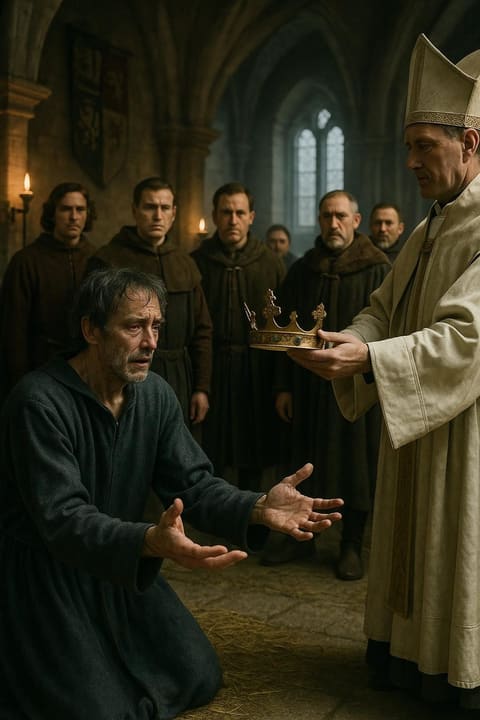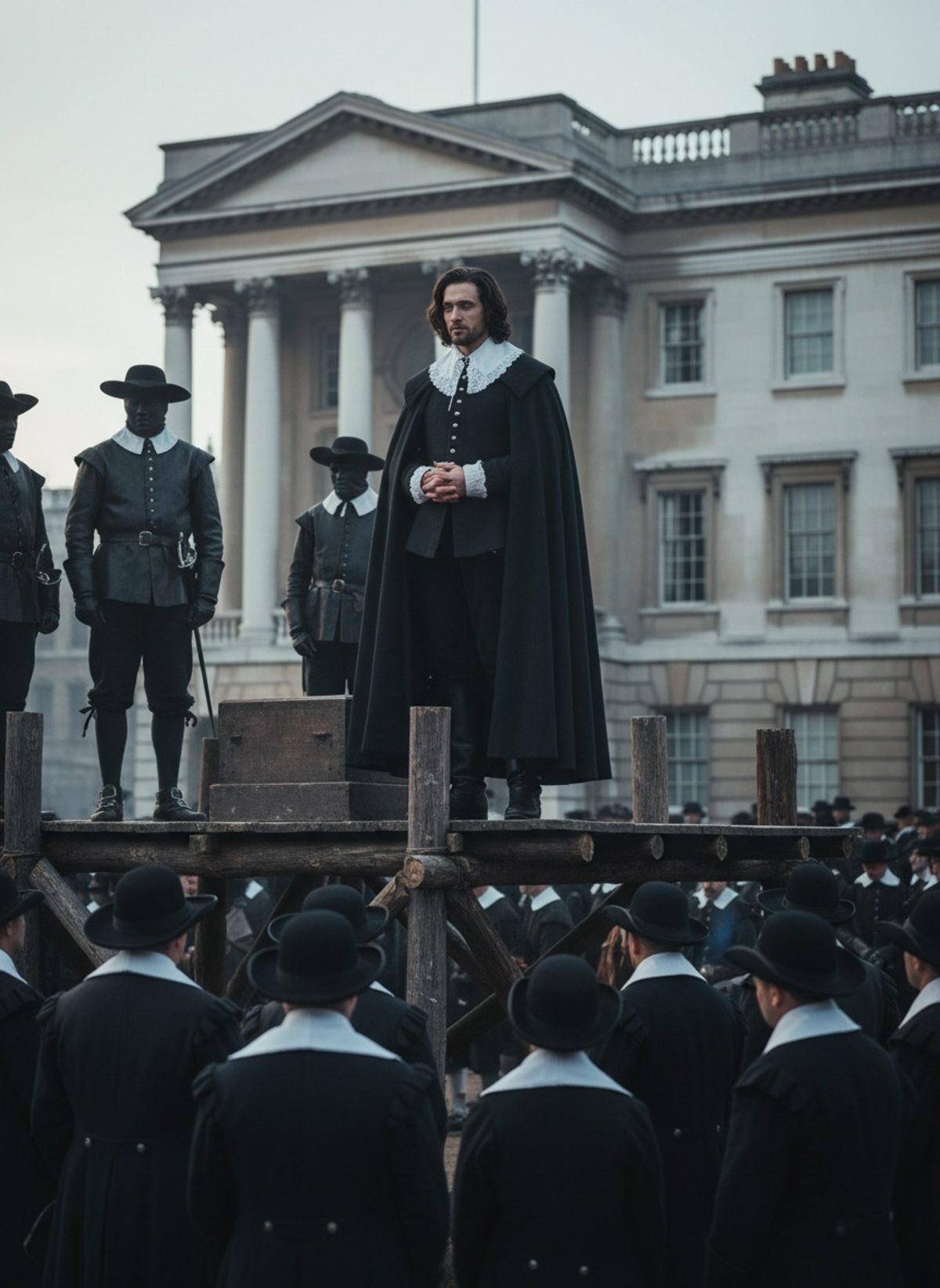
On January 30th, 1649, King Charles I walked steadily to his execution. The crowd expected fear. His calm stunned them into silence.
The Calm Before the Tipping Point
Picture a bitterly cold morning in London, an ambience punctuated by the stillness only fear and anticipation can bring. Thousands of Englishmen crowded into the courtyard outside the Banqueting House at Whitehall, their voices a low and uncertain murmur. Each attendee, shivering against the January chill, understood that this day marked a turning point in English history. January 30th, 1649, was not an ordinary day; it was a day of revolution and regicide—the execution of a king.
King Charles I had been thrust onto this precipitous brink following years of political and religious turmoil. His reign had witnessed the violent upheavals of the English Civil Wars, a conflict that pit the Royalists, known as the Cavaliers, against the Parliamentarians, or Roundheads. The struggle had battered the English landscape, leaving a legacy soaked in the blood of civil strife. King Charles I, a monarch believing in the divine right of kings, had maintained staunch opposition to the demands for governance reform, exacerbating the nation's smoldering tensions.
That frosty morning, Charles I emerged into the courtyard not through a door, but through a window of the Banqueting House, embodying the symbolism of a man breaking through the confines of tradition into the stark pragmatism of political reality. Clad in multiple layers of clothing to fend off the brutal cold—a recurring theme of this poignant day—he walked towards the scaffold with a composure that belied his imminent fate. The onlookers, previously buzzing with nervous energy, fell silent as they observed his unyielding resolution.
Read next: The Funeral That Drew More Mourners Than Any in Living Memory
Just days earlier, on January 27th, the High Court of Justice had sentenced Charles to death. His treason was deemed a transgression against the people he was meant to govern, an unprecedented judgment that shocked not only the British Isles but Europe as well. For the first time in English history, a reigning king was put on trial and condemned by his own subjects. Charles accepted not an ordinary trial, but a proceeding heavy with the weight of centuries of royal inviolability being questioned and dismantled.
Words That Echoed Through Time
On that scaffold, King Charles I faced not only his mortality but centuries of tradition collapsing beneath him. In his final moments, he delivered a calm and composed speech. Though the exact words remain lost to history, the essence of his address was recorded—an assertion of his innocence and a reaffirmation of the divine right of kings. He insisted he had never intended to subvert “the laws of the kingdom,” a claim delivered with a stoic dignity that left a profound mark on witnesses.
Those present reportedly huddled closer, straining to hear the king’s voice as it pierced the icy air. The king’s speech was an act of defiance wrapped in grace, reiterating his belief in monarchy as divinely ordained. His words reflected a conviction unwavering even in the face of obliteration, a testament to his unbroken spirit. Yet, he also expressed forgiveness to his executioners, recognizing their actions as compelled by duty.
Such sentiments were not only an address to those gathered in London but a message intended for a nation unraveling at the seams. Charles’ ability to transform his execution into a final act of royal valor was widely reported by those who wrote of his cool demeanor at a time of unprecedented violence. His conduct aimed to cement his legacy within the narrative of suffering and sacrifice rather than defeat.
He did not tremble, an observation that fueled both the stories and the silent reflections among those who returned to their homes that winter evening. The dignified execution of a king created a specter that haunted the imaginations of thousands, elevating Charles’ demise from a mere execution to a dramatic testament of personal belief.
Read next: The Day a King Wept and Gave His Crown to His People
The Fall of a Crown and Rise of Reflection
The English had never witnessed the fall of a monarch through such violent and formal means, and Charles I’s passing into death didn't just mark an end—it was a seed for contemplation about governance, power, and legitimacy. The execution symbolized a seismic shift, stirring thoughts about accountability and the power vested within crowned heads. As the axe descended and a king’s life was severed, the monarchy’s invulnerability, once thought impregnable, lay shattered upon Whitehall's cold stones.
The public execution of Charles I marked the beginning of a republic, yet the Commonwealth of England—an era led by Oliver Cromwell—would struggle to find the stability and continuity many had hoped the king’s removal might inspire. Several years later, the monarchy would be restored. This oscillation between royal rule and republicanism etched deeper questions regarding the balance of power into the country’s political psyche, questions that linger in the cobbled streets and old halls where these grand dramas unfolded.
Nearly one year after regicide, the execution of King Charles I became a subject of deep reflection. England, a land once defined by monarchs who ruled with near-absolute authority, grappled with the questions of governance that this singular, chilling day had inspired. His steadfast and composed walk onto the scaffold did not just mark the end of a monarch’s chapter; it instigated a narrative evolution that continues to capture and provoke the minds of those seeking to understand the costs of power.
The tale of King Charles I is a reminder of the nuanced complexity within the cycles of history—how acts of bold defiance or resignation often play out long after the executioner’s axe falls. His life, his trial, and his death remain a stark tableau, revealing the tension between authority and accountability. His story is as much about the power of rituals, legacies, and the moments that forge an indelible mark on the historical canvas—each stroke painted with the layered subtleties of human conviction and consequence.