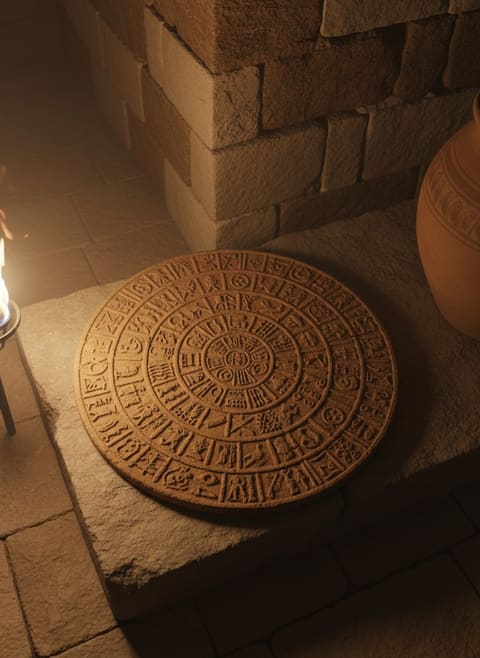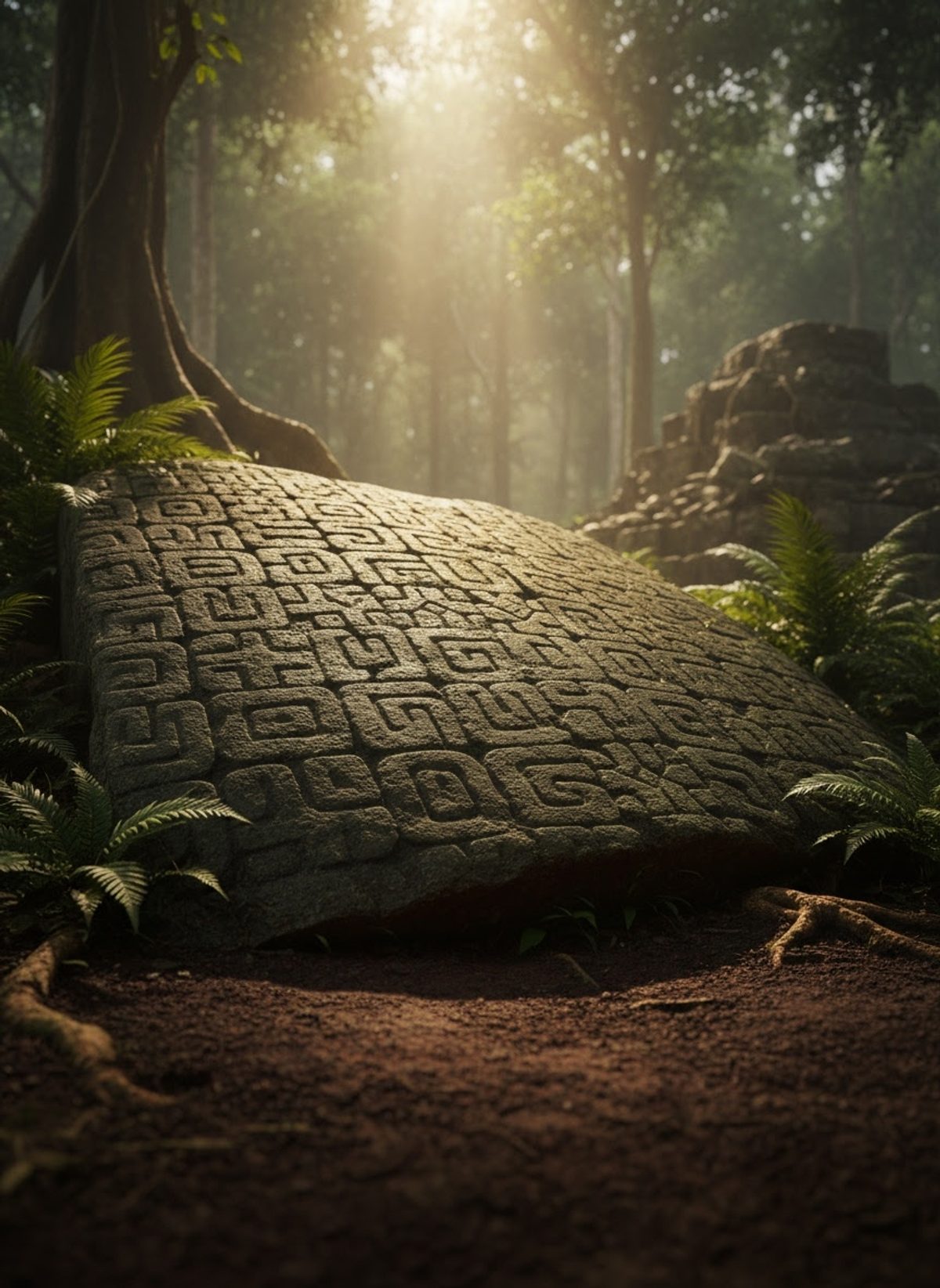
The sun bears down relentlessly on the gravel quarry in Veracruz, Mexico, as workers prepare the next blast. The air vibrates with anticipation. The explosion reverberates through the earth, stone shatters, and dust clouds the afternoon sky. Amid the clamor, someone spots a curious object unearthed among the debris — a stone block inscribed with symbols unlike any seen before in the Americas.
A Mysterious Discovery
The Cascajal Block emerged from obscurity in the late 1990s when road builders in the village of Lomas de Tacamichapan stumbled upon it. Buried among ceramic shards and clay figurines, it was as if the relic had been waiting to tell a story long-forgotten. Registered with the Mexican government’s historical authorities by archaeologists Carmen Rodriguez and Ponciano Ortiz, it quickly captured the interest of historians and linguists worldwide.
Measuring just over 14 by 8 inches, the 11.5-kilogram serpentinite slab seemed modest at a glance. Yet its surface bore an exotic narrative scripted in 62 glyphs, an enigma carved with a precision that suggests it conveyed something significant.
Dated to around 900 BCE by the context of associated ceramics, the block precedes known Mesoamerican writing systems, such as those of the Zapotec, by centuries. As researchers scrutinized the symbols — some resembling plants and animals, others abstract — it became clear: the Olmec, a civilization already renowned for their colossal stone heads, might have pioneered the written word in the Americas.
Read next: The Pictish Symbol Stones: A Language No One Has Decoded
The Enigmatic Olmec
Flourishing on Mexico’s Gulf Coast between 1250 and 400 BCE, the Olmec are often referred to as the "mother culture" of Mesoamerica. Their legacy is embedded in the enigmatic stone heads, monumental sculptures which have fascinated and puzzled archaeologists for generations. Now, the Cascajal Block hints at a complexity to their society previously unimagined — the potential that they employed a fully-fledged writing system.
Yet this writing, if it is indeed that, complicates the narrative rather than clarifying it. Unlike any other known Mesoamerican scripts — which typically use vertical rows — the symbols on the Cascajal Block are organized in horizontal sequences.
Stephen D. Houston of Brown University suggests the arrangements might be independent units of information, akin to sentences, but acknowledges that without a Rosetta Stone, decoding the script remains elusive. Despite this, he asserts confidently: "The linear sequencing, the regularity of signs, the clear patterns of ordering, they tell me this is writing."
Piecing Together the Past
Amidst the flurry of scholarly activity, theories abound. Some researchers, like Houston, speculate the symbols might include homonyms, using pictographic signs to alert readers to different meanings for similar-sounding words. Parallels might be drawn to how “I” and “eye” function in English. Such insights tantalize scholars with the promise of unlocking the “earliest voices of Mesoamerican civilization.” However, without corroborating documents or further examples, these interpretations hover in the realm of educated guesswork.
Read next: The Yonaguni Monument: Japan's Underwater Pyramid Explained
Archaeologist Karl Taube from the University of California, Riverside, captures the zeitgeist of this discovery: "We've known they have very elaborate art, and iconography, but this is the first strong indication that they had visually recorded speech." His excitement is palpable; the Cascajal Block doesn't just underline the literary capabilities of the Olmec but could redefine our understanding of pre-Columbian Mesoamerican history.
The Meaning and Implications
The unanswered questions surrounding the Cascajal Block fuel its mystique. Is it the record of a historical narrative, a political statement, or perhaps a spiritual invocation? Each glyph carved represents a piece of a puzzle, a beacon from the ancient world whispering secrets yet unrevealed. With every new discovery, whether another similar artifact or a breakthrough in glyph interpretation, the potential insights into the Olmec’s influence over successive cultures, like the Maya and Aztec, grow stronger.
For now, the block rests as a symbol of lost knowledge, an artifact embodying the dual nature of history — how it reveals yet conceals simultaneously. As historians continue to puzzle over the symbols, the significance of the Cascajal Block endures.
It forces a reevaluation of early writing systems, challenges our perceptions of cultural innovation, and serves as a poignant reminder of the complexities that lay beneath the surface of human history. Each chiseled mark asks us to consider not just what we know, but what we have yet to learn about the world that shaped us.