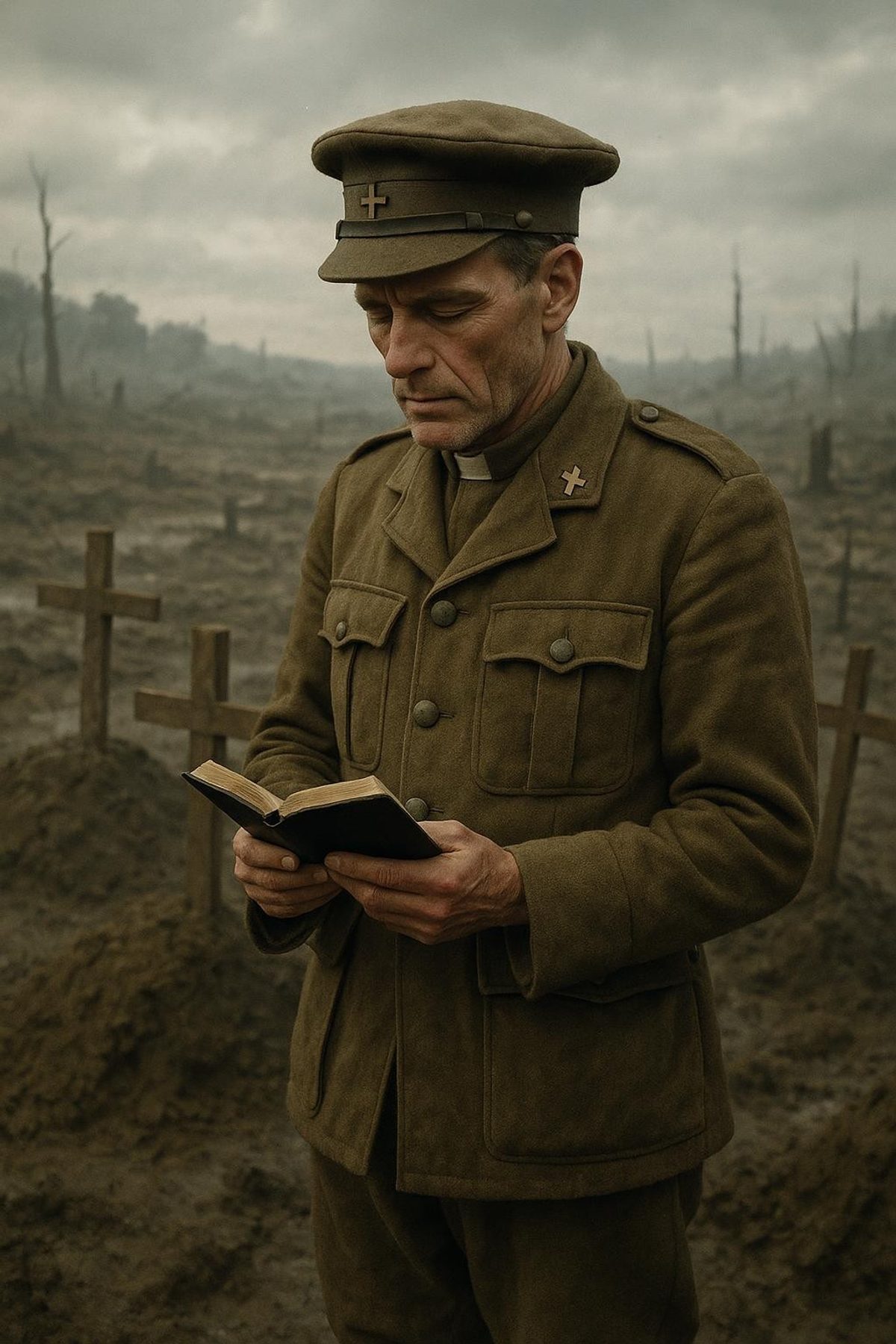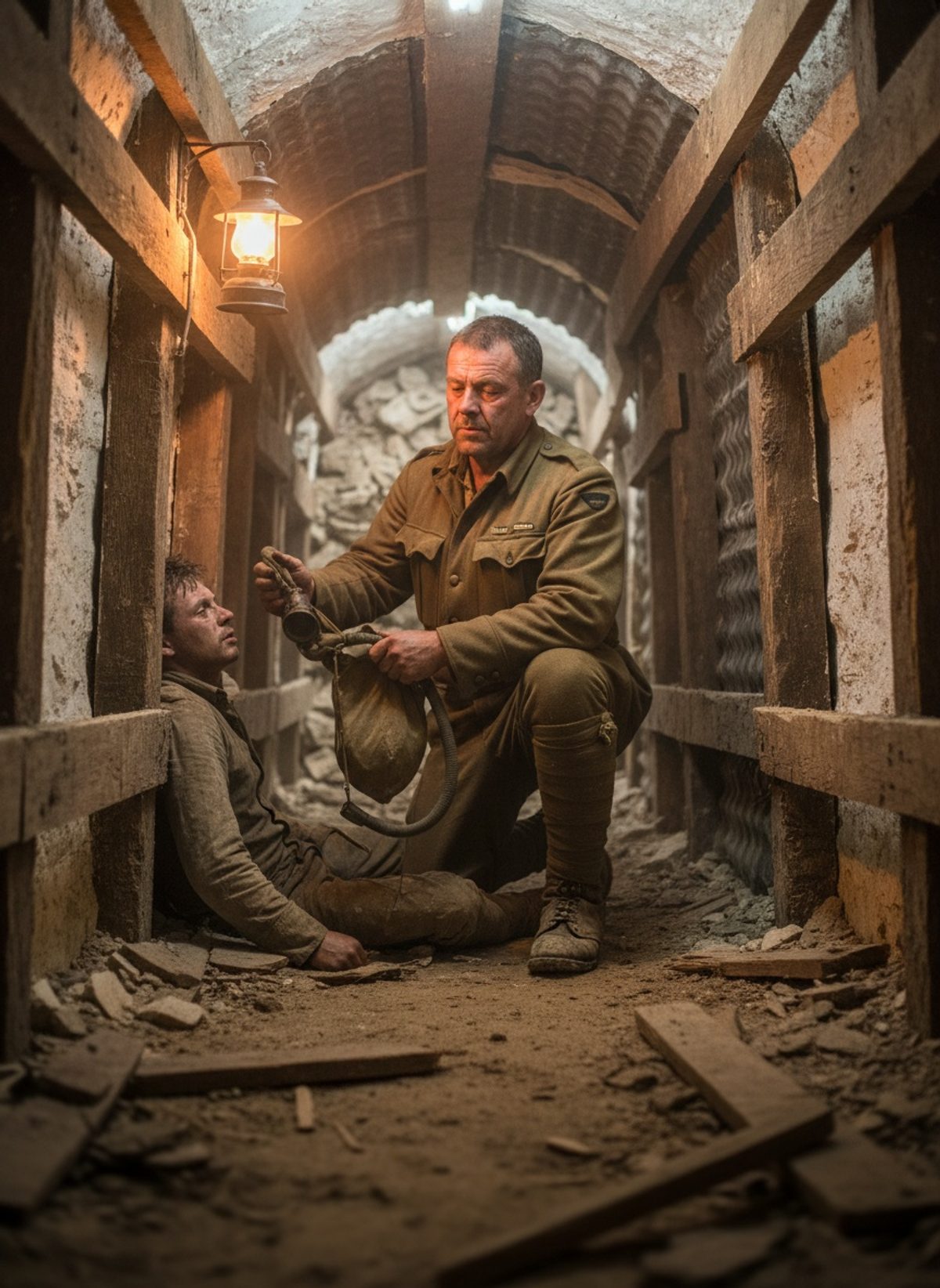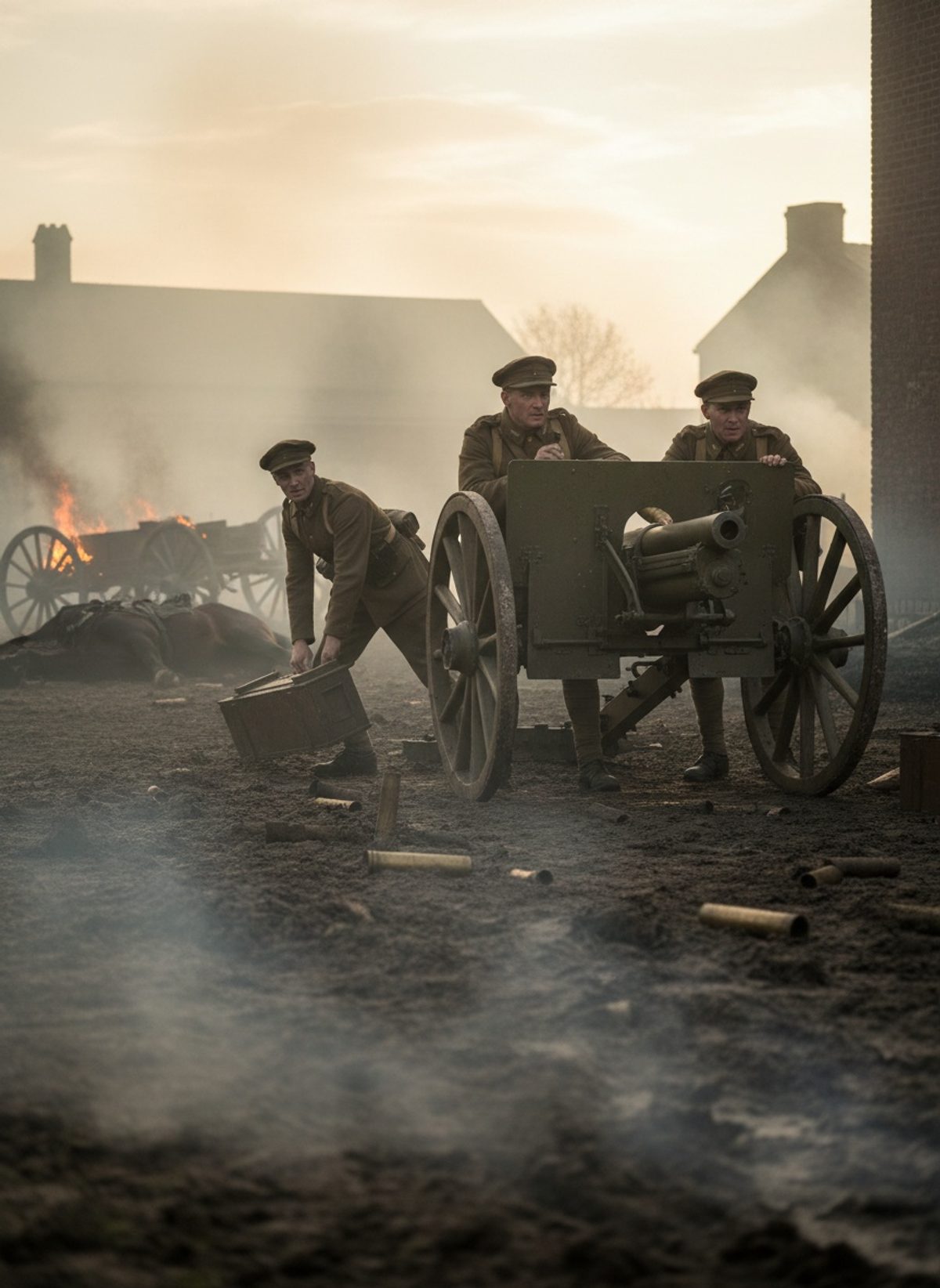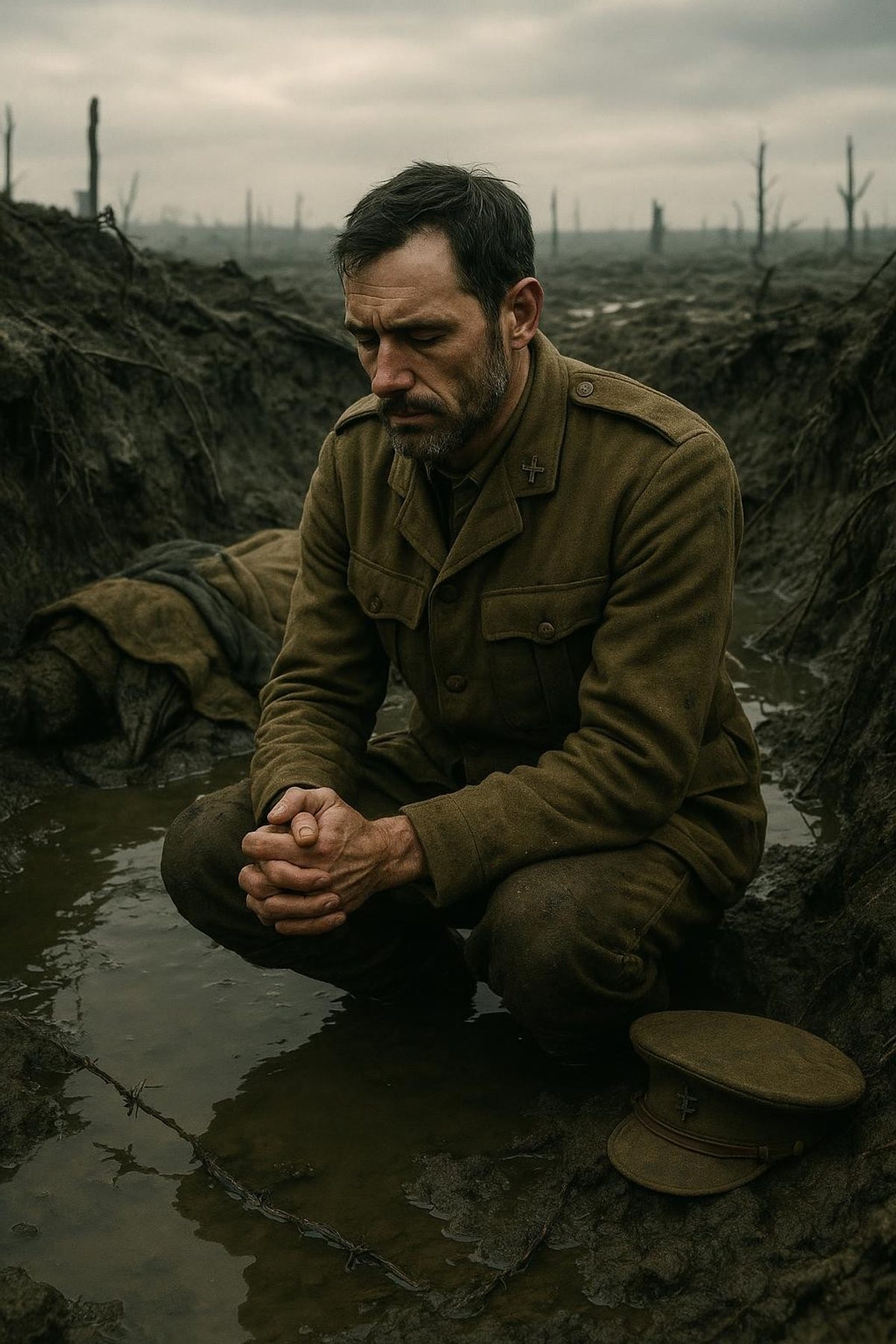
The grey skies of November hung low over the churning mire of Passchendaele, where the earth bled with rain and hidden perils. Mud clung to everything, a relentless, tenacious beast more feared by soldiers than bullets. The fractured landscape was a miserable quagmire with gaping craters full of water, nature's cruel contribution to the war. As the wind whispered ghastly tales through the ruined remnants of tree stumps, a heavy silence cloaked the battlefield, save for the occasional, distant thunder of artillery. It was here, amidst the forsaken chaos of the Western Front, that the true measure of humanity was laid bare.
Compassion Amidst Chaos
In the final months of 1917, the struggle for Passchendaele had devolved into a battle against the elements as much as against the enemy. The ferocity of the rains and the resultant swampy ground accentuated the horrors of warfare. Mud and mire rendered weapons useless, made movement torturous, and created a grotesque landscape where men disappeared into the earth, never to be seen again. Yet, in the middle of this landscape of death and despair, a singular act of profound humanity unfolded, elevating a British army chaplain to legendary status.
The man at the heart of this story was Geoffrey Studdert Kennedy, affectionately known by the troops as “Woodbine Willie” for his habit of distributing cigarettes along with spiritual solace. Amidst the ceaseless shelling and cries of agony, Kennedy's unwavering commitment to his fellow man transcended boundaries, a beacon of light in the darkest of times.
As the war raged around him, Kennedy crawled out into no man's land—an arresting act of bravery, given the constant threat of enemy snipers and the perilous terrain. His mission was not driven by the color of a uniform but by the color of compassion. He scoured the battlefield in search of souls to comfort, and on this particular day, he found one such soul: a wounded German soldier lying in a shell crater, his life ebbing away with the bitter cold seeping into his bones.
Read next: The Day a Stretcher-Bearer Refused to Stop at the Wire
With little regard for his own safety, Kennedy entered the crater, the chill air mingling with the raspy breaths of a dying man. Ignoring the enmity forged by war, Kennedy removed his coat and wrapped it around the German's frail body, a simple yet powerful gesture. For hours, he sat there, a solitary figure of solace and warmth in the midst of desolation, holding the soldier’s hand, whispering prayers, like a ship's captain standing by the helm as the inevitable storm bore down.
The Legend Takes Root
In the war that promised to end all wars, acts of kindness were rare treasures, and word of Geoffrey Studdert Kennedy’s deed spread among the troops. Here was a man who had stepped into the void of death not to claim victory, but to offer peace. The story became folklore, whispered in the very trenches that groaned under relentless bombardment.
As the conflict dragged on, Kennedy's embodiment of selflessness inspired his comrades. His presence was like a light in a dark cave, guiding men overwhelmed by the shadows of war. It was his simple acts of kindness, like the sharing of his coat, that often offered soldiers a small anchor of sanity amid chaos.
The empathy that Kennedy displayed was more than just an act of compassion; it was a challenge to all involved in the conflict to remember their shared humanity. This remarkable event defies the narrative of division, reminding everyone that the war was fought by men who, at their core, were not so different from each other. The battlefields of the First World War were transformed, however briefly, by Kennedy's actions, which planted the seeds of understanding and compassion in soil too often watered by blood.
Today, historians look back on that fateful November with something akin to awe. In an environment where life was often cheap, Kennedy’s actions were a resounding declaration of the sanctity of the human spirit. His story is not simply one of war, but one of peace that defied the boundaries drawn by politicians and generals. It presented a poignant counterpoint to the violence of the time, suggesting that hope and humanity could survive in even the most horrible circumstances.
A Legacy Beyond War
The tale of Geoffrey Studdert Kennedy's unselfish courage is more than a single act of humanity; it is an enduring narrative that calls into question how history frames the heroes of war. Though the history books rarely taught his name, his actions left ripples that reverberated long after the guns fell silent in the armistice of 1918.
Long after the war, Kennedy continued his commitment to social justice and care for his fellow man, advocating for the oppressed and striving for peace—a testament to the seeds planted in the mud-soaked fields of Passchendaele. Yet, his tale was not just personal redemption or duty; it was a narrative that challenged others to think beyond the confines of nations and crowns.
This story matters not only because it illustrates the power of individual courage but because it serves as a timeless reminder that in moments of shared hardship, true humanity can shine through. Geoffrey Studdert Kennedy may have left his coat with a dying enemy soldier, but more so, he left a legacy of compassion that transcends time and conflict.
In the echoes of history, those who listen can still hear Kennedy's whispered prayers, a call to compassion and unity across all lines. As we delve into stories often left untold, let us not forget the moral that such acts impart—a suggestion of how we, too, might act when faced with the choice between conflict and compassion.