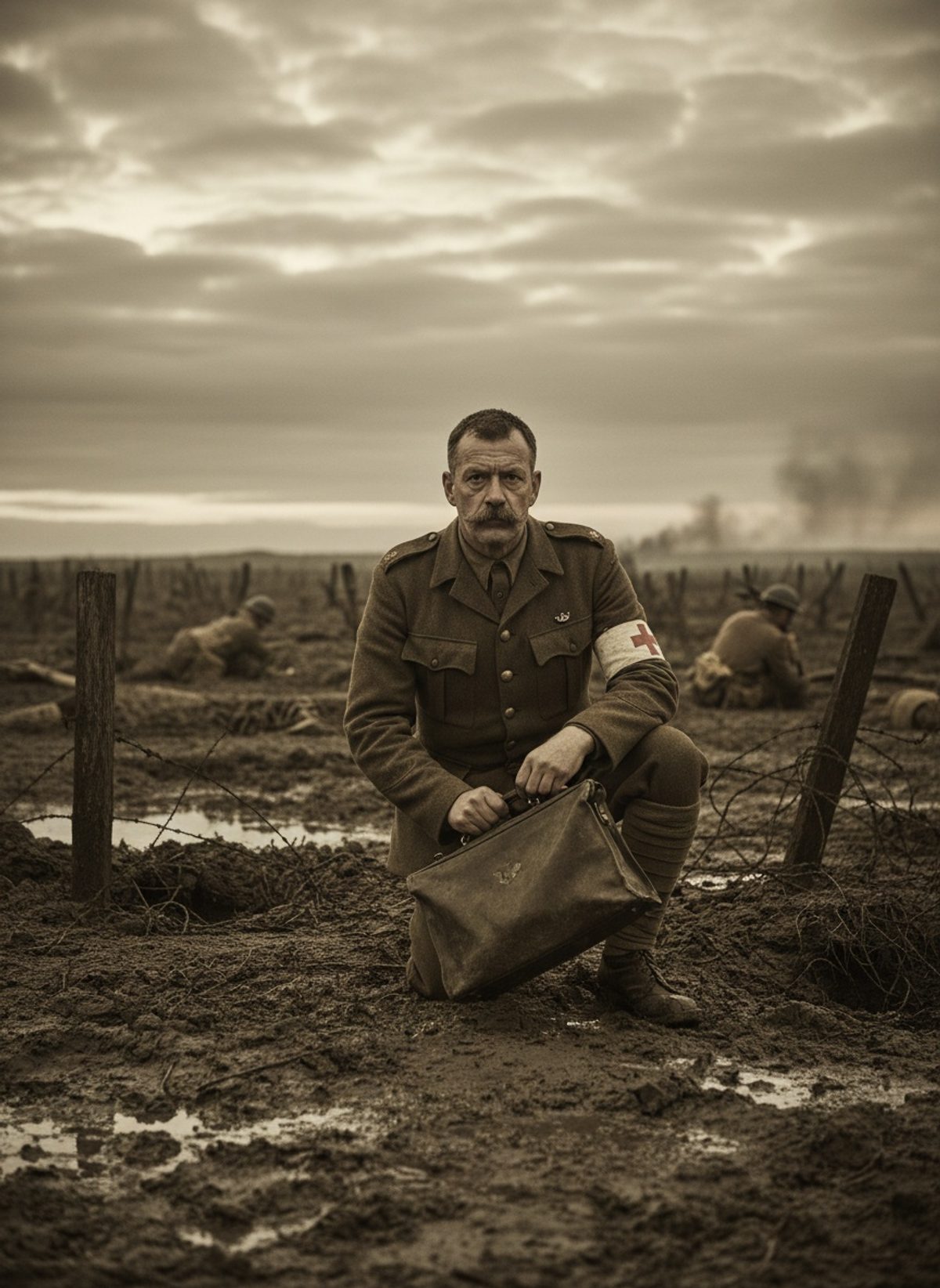
Rain lashed the churned mud of Passchendaele as Captain Arthur Martin-Leake took a deep breath and pushed his way through the dank remnants of wire entanglements. The moment he crossed the lip of the trench, he was enveloped by the pervasive quiet of no man's land—a rare and eerie stillness that came only after days of ceaseless shelling.
A thin scree of mist hung in the air, settling over the jagged remnants of war. Each step forward was an act of will and courage, his medical bag the sole company in this desolate expanse.
The Reluctant Hero Returns
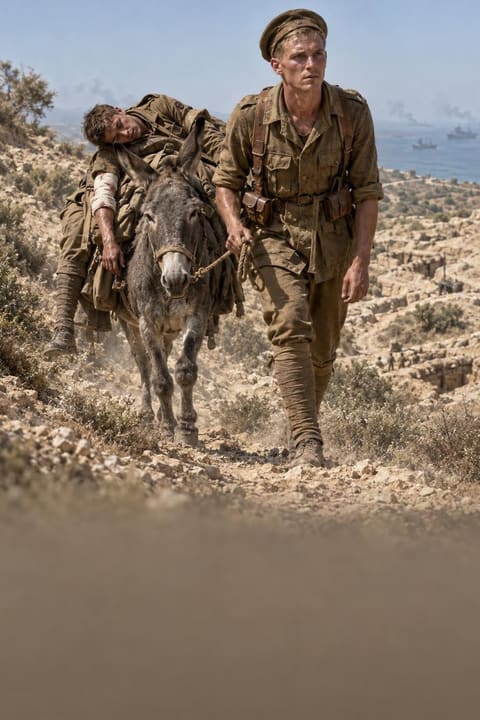
Arthur Martin-Leake was not new to this perilous journey. Years earlier, he had braved similar dangers in South Africa during the Second Boer War. There, he had faced enemy fire to care for wounded soldiers, earning his first Victoria Cross for valor.
But that memory, while vivid, didn’t fully prepare him for the horrors of the Western Front. Yet here he was again, a solitary figure under a gray November sky in 1917, sealing his place in history as a man of rare courage.
Read next: The Nurse Who Refused to Lie and Faced the Firing Squad
Beyond the protective embrace of the trenches, no man's land was a hellscape. Every inch was a reminder of ongoing conflict—a maze of shell craters and the sad remains of human endeavor.
It wasn't a hero’s path but a reality he embraced, driven by a compulsion that didn’t seek recognition. This time, it was a young German soldier who lay wounded, his life ebbing away without tender care. Martin-Leake understood that war didn’t calculate based on the side one fell on.
The Battle of Passchendaele had rendered the landscape into a soggy quagmire, where the line between survival and oblivion was paper-thin. British artillery was silent, the men silent witnesses to Martin-Leake's lone mission of mercy.
The tense atmosphere demanded a careful sense of balance; not a sound was to betray him, not a misplaced step to finish what war had started. His heart thudded with the gravity of what lay ahead, but each pace forward sent out a wave of hope—to one injured soul, at least—that compassion had not been lost in this mire of destruction.
A Courage Unto Itself
Reaching the German soldier, Martin-Leake knelt on ground that startled at his touch. Faces flashed in his memory—faces he had stared into as life slipped away. It was these moments that revealed the essence of his bravery: it lay not in the absence of fear but the ability to act despite it.
As his fingers worked methodically to bind wounds and administer aid, there was no room for the enmity that had fueled the war. Compassion, not malice, commanded this patch of earth.
The guns restrained themselves, a respectful silence hanging heavy around his labors. It was a temporary respite—a tacit agreement perhaps—between fighters who understood the preciousness and fragility of life. When Arthur began his measured return, whispers of his deed traversed the trenches, and they knew they watched a scene of real heroism played out amid the chaos.
In quiet moments later, huddled in the muck and mire, soldiers on both sides would recall the sight of Martin-Leake in no man’s land—a towering testament to humanity’s depth in adversity. His actions reminded those present that the battlefield was more than a crucible of violence; it was also a proving ground for the enduring spirit of mercy.
Read next: The Letter That Made Britain Stop for Two Minutes Every Year
A Story of Quiet Impact
Recognition aside, Arthur Martin-Leake sought not fame but the clarity to do what few others dared. As the first man to be awarded the Victoria Cross twice, he held a mirror up to the values soldiers wished to embody but couldn’t always uphold in the storm of war. He became a beacon, a reminder that courage often wears the most unassuming cloak and walks the most daunting path.
The night he walked into no man’s land alone stretched beyond its moment in history. It cast a light on the intrinsic value of every human life and the limitless courage found in soldiers whose defining acts were not of destruction but of creation—the creation of a second chance.
The legacy of such a night lies not just in the recognition of a specific act but in the endless potential for such acts when humanity is tested by its own worst imaginings.
Passchendaele was a chapter in a war whose noise devoured lives and echoed through history. But Captain Arthur Martin-Leake’s moment within it emerged as a striking chord of humanity.
The mud of Flanders bore witness to sounds and sights that textbooks often overlook—yet these moments, unheralded, became as enduring as the war itself. The true stories not always told are not ones of victory in battle, but the reminders of what it means to stand for life amid the specter of death.